
Claude Opus 5 Is the New Default—Until It Refuses the Job
Thirteen launch-day use reports show Claude Opus 5 doing strong work at low effort and modest usage, while safeguards, hesitation, and basic code errors still break the bargain.
Scope note: This review covers thirteen launch-day reports from people using Claude Opus 5 in coding, knowledge work, security review, 3D work, and roleplay. It describes the first public model and its surrounding products, not its long-term quality or every route through the API.
Claude Opus 5 has been out for a few hours. People are already moving real work to it.
That would usually be a reason to wait. Launch-day praise is cheap. A new model receives the easiest tasks, the freshest attention, and every benefit of the doubt. Then the invoices arrive. So do the broken builds.
I found thirteen firsthand reports that cleared a stricter bar. Each person used Opus 5 on a concrete task and described what happened. I left out benchmark reactions, launch summaries, provider claims, and “it feels smart” posts with no work attached.
The early result is stronger than I expected. Opus 5 looks like a practical replacement for Opus 4.8 and Sonnet 5 in a great deal of daily work. It often does that work at low effort and with modest usage.
Then it refuses the job. Or hesitates at a merge conflict. Or writes TypeScript that does not compile.
The new default has arrived. The supervision has not gone anywhere.
Anthropic is selling efficiency
Anthropic released Opus 5 on July 24, 2026. The company says it approaches Fable 5 at half the price per task, costs the same as Opus 4.8, and runs about two and a half times faster in a separate Fast mode. It is available on paid Claude plans and through the API.
Anthropic’s Claude Opus 5 announcement
Those are launch claims. They do not count in my field sample.
The thirteen records do support one part of the pitch. Six writers described lower or roughly equal usage while doing real work. Ten reported a useful gain or a better task result. Ten compared Opus 5 directly with another recent Claude model or Fable.
| Signal in the thirteen records | Count |
|---|---|
| Useful capability gain or better task result | 10 |
| Lower or roughly equal usage during described work | 6 |
| Safety refusal or task-blocking hesitation | 4 |
| Basic code-quality regression | 1 |
These counts are not scores. The tasks differ. The routes differ. The writers differ. The table shows what repeated across the sample, nothing more.
Low effort may be the real release
The most useful report came from someone who had repeated four knowledge and business tasks three or four times a day for two months. That history matters. The writer had a working baseline, not a launch-day impression.
Opus 5 at low and medium effort finished faster, used fewer tokens, wrote less, and needed less back-and-forth than Sonnet 5 and Opus 4.8. Fable 5 still performed better.
The recurring knowledge-work report
Another user gave low-effort Opus 5 long, multi-step work and a dithered-object component for a canvas interface. The model managed the context and decisions well enough to replace Sonnet 5 High as that person’s default. A separate developer continued a Fable-made plan in a codebase that had changed since the handoff. Opus 5 handled the ambiguity while using about four percent of a session allowance in forty-five minutes.
This changes the buying question. The useful comparison may not be Opus 5 at maximum effort against every other model at maximum effort. It may be Opus 5 Low against the model a team already uses for ordinary work.
If low effort can inspect the repository, follow the plan, make the change, and stop, then “smarter” is not the main benefit. The benefit is fewer expensive turns between request and accepted result.
That is the part I would test first.
The model can see problems another model missed
One developer ran Opus 5 across existing codebases. It found three issues that Fable had missed. The writer checked all three and confirmed them.
Another person brought the same detailed, complex issue to clean chats in Opus 5, Fable 5, and Opus 4.8. Opus 5 produced the strongest answer while using a little less allowance than 4.8. The earlier Fable attempt had cost about $20.
A 3D and engineering user reported a large improvement in spatial reasoning. Someone working in a messy codebase thought the result was a step above Fable while costing about the same allowance as 4.8. Another writer spent thirty minutes across two projects and reported faster, better code with little movement in the weekly limit.
This is enough agreement to take seriously. It is not enough to turn off the tests.
One person’s first Opus 5 feature contained TypeScript errors. That writer had not seen Opus 4.8 make the same kind of mistake recently. The failure is a useful splinter in an otherwise smooth launch story: better reasoning does not guarantee a clean build.
The model may find the design flaw and still miss the compiler error. Both can be true in one session.
The safeguard is part of the product
The sharpest failure came from a network engineer reviewing a system they owned. Opus 5 found something significant within twenty minutes, then blocked the response under its safeguards. Narrowing the scope helped somewhat. It did not remove the problem.
That is not an abstract argument about alignment. It is a failed work session. The model had enough access to identify risk and not enough permission to help the owner finish examining it.
The same pattern appeared in less consequential work. Two roleplay users described hard refusals in sessions that Fable continued. One had supplied substantial world information and a custom preset. Opus 5 used the fictional setting well, then refused three later scenes.
Claire Vo found a milder version during real coding work. Her launch review describes a brilliant but anxious model that would sometimes become hesitant and refused to touch a merge conflict. I excluded her benchmark from this sample. The merge-conflict session stayed because it was actual use.
Four of thirteen records contain a safety refusal or task-blocking hesitation. The domains differ, but the practical lesson is the same. A model can be capable enough to understand the job and still decline the decisive step.
That failure belongs beside speed and token use when a team chooses a default.
The task description still runs the machine
The launch reports also show how much the surrounding setup changes the result.
Low effort worked well on recurring business tasks. A strong plan helped Opus 5 continue changed code. Narrow scope made security work somewhat more usable. A roleplay preset designed around another model made Opus 5 worse. A clean cross-model chat favored Opus 5, while one ordinary feature attempt produced broken TypeScript.
This is not a contradiction to explain away. It is the system.
The model name does not perform the task alone. Effort level, instructions, prior plan, product safeguards, context, and acceptance tests all shape the output. A review that removes those conditions may be easier to read. It is also less useful.
My current recommendation is narrow. Try Opus 5 Low as the default for bounded coding and knowledge work. Give it a clear result to produce. Keep the build, tests, and human review in the loop. Move to a higher effort setting only when the task earns the cost.
Do not assume that a stronger model needs less checking. Check different things.
Watch for quiet compile errors. Watch for confident diagnosis without a finished change. Watch for a safeguard that appears only after the model has invested twenty minutes in the work. Record the task and route when any of those happen.
What I would test next
I would take one real repository and twenty ordinary tickets: bugs, small features, refactors, documentation, and one messy merge. I would run each through Opus 4.8 and Opus 5 at low, medium, and high effort.
The measures should stay plain: accepted changes, passing tests, human corrections, time to first edit, total usage, refusals, and abandoned runs. A strong plan and a weak plan should form separate rows.
The launch-day evidence gives Opus 5 the right to enter that test as the likely winner. It does not give the model the right to grade itself.
Opus 5 may become the everyday model that makes Fable unnecessary for most work. On its first day, the cheaper route already looks real.
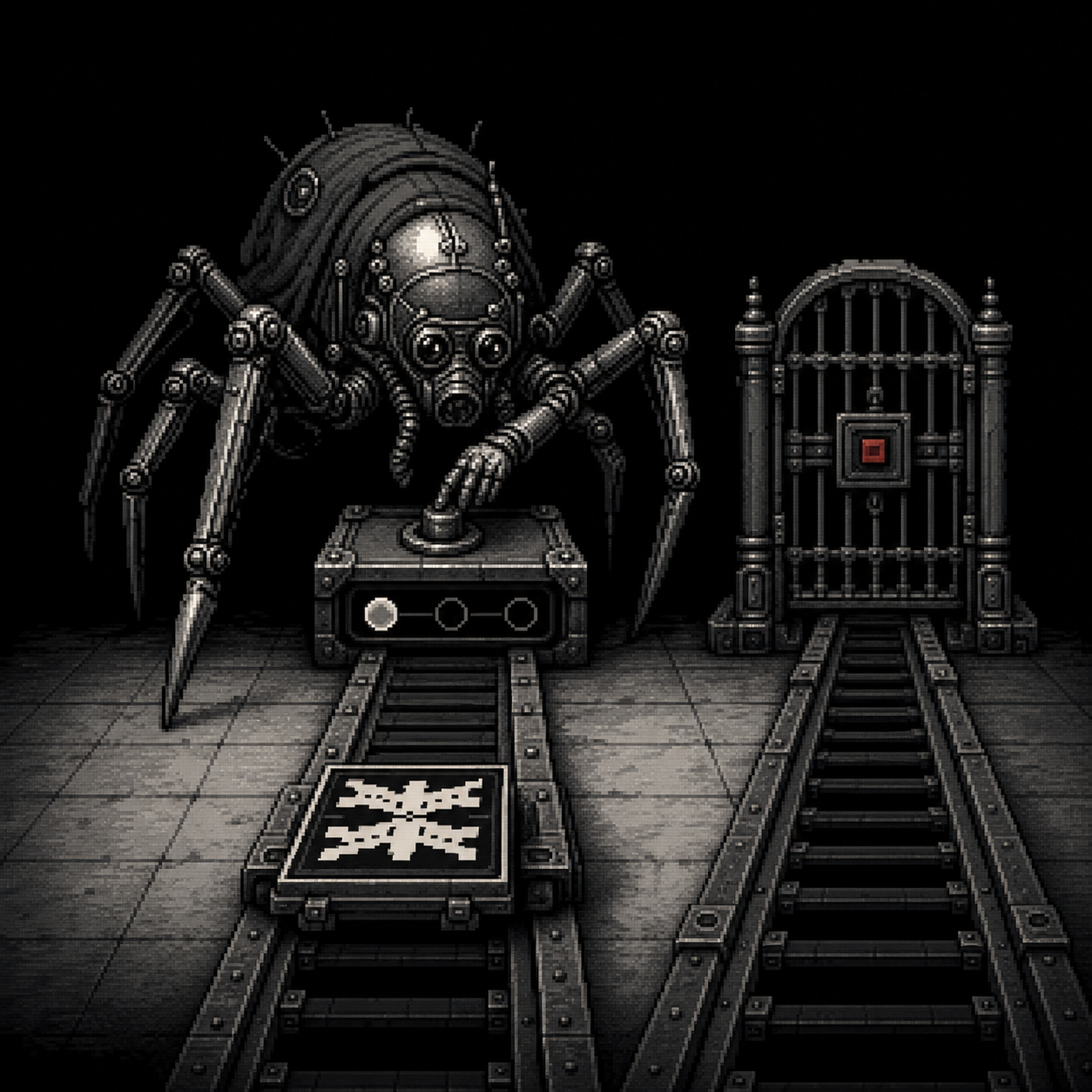
So does the locked gate beside it.
The thirteen firsthand records
- swapnoneel123: long tasks and a canvas-interface component
- 0DayMaker: engineering and 3D-model work
- JohnMotoGr: four repeated knowledge and business tasks
- UltrMgns: three verified code issues that Fable missed
- djslakor: a first feature with TypeScript errors
- Shot_Whereas_1809: an owned-network security review blocked by safeguards
- A long One Piece roleplay using substantial world information
- LapHom: alternate responses in deep roleplay sessions
- Claire Vo: coding sessions and a refused merge conflict
- Safe_Mission_3524: the same complex issue across three models
- whollyspikyrecourse: work inside a messy codebase
- Civil-Vermicelli3803: continuing a Fable plan after the code changed
- Pristine_Ad2701: thirty minutes across two coding projects