The words disappeared during recording
The same scene displayed dialogue in a short fresh process after losing it during the long recording.
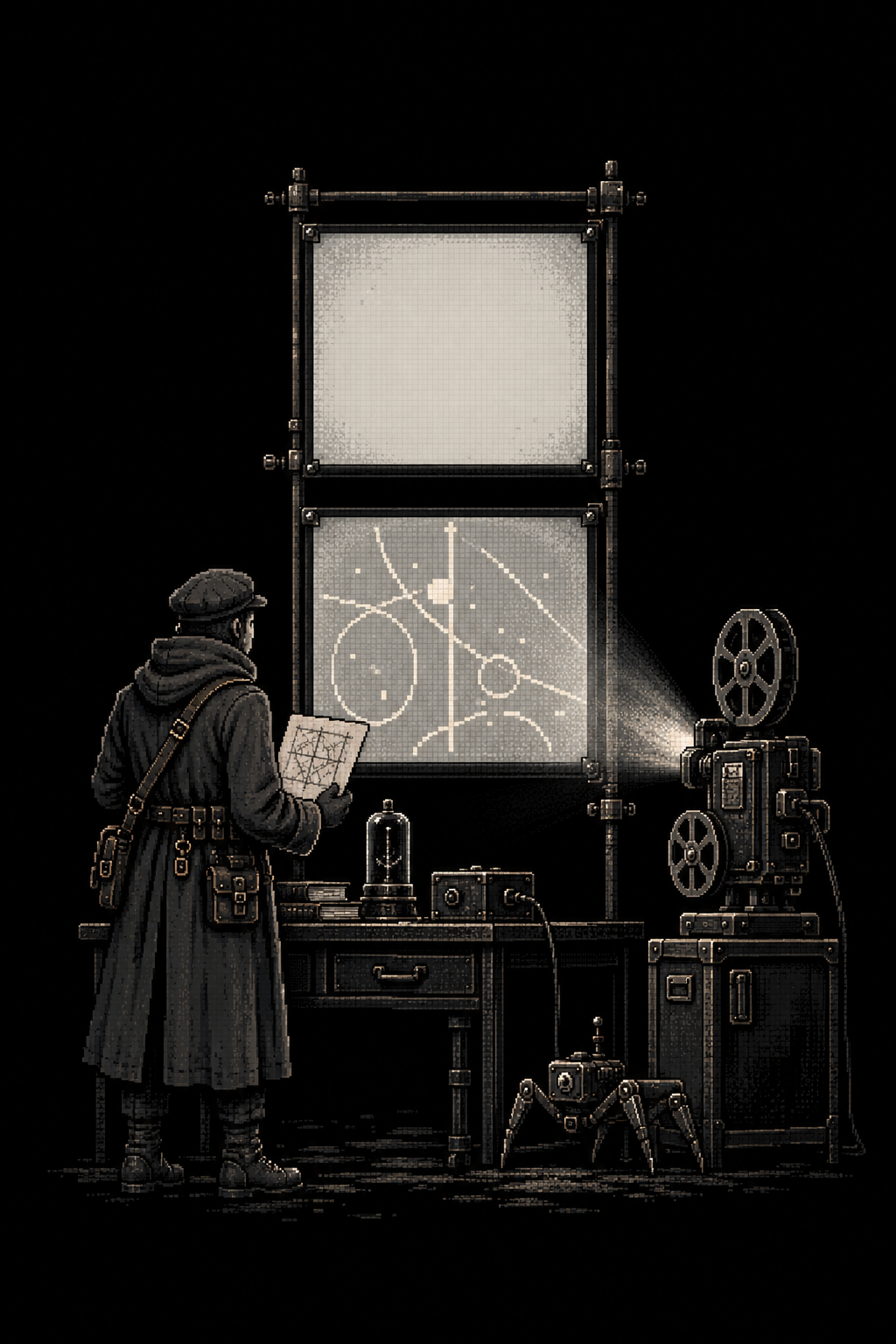
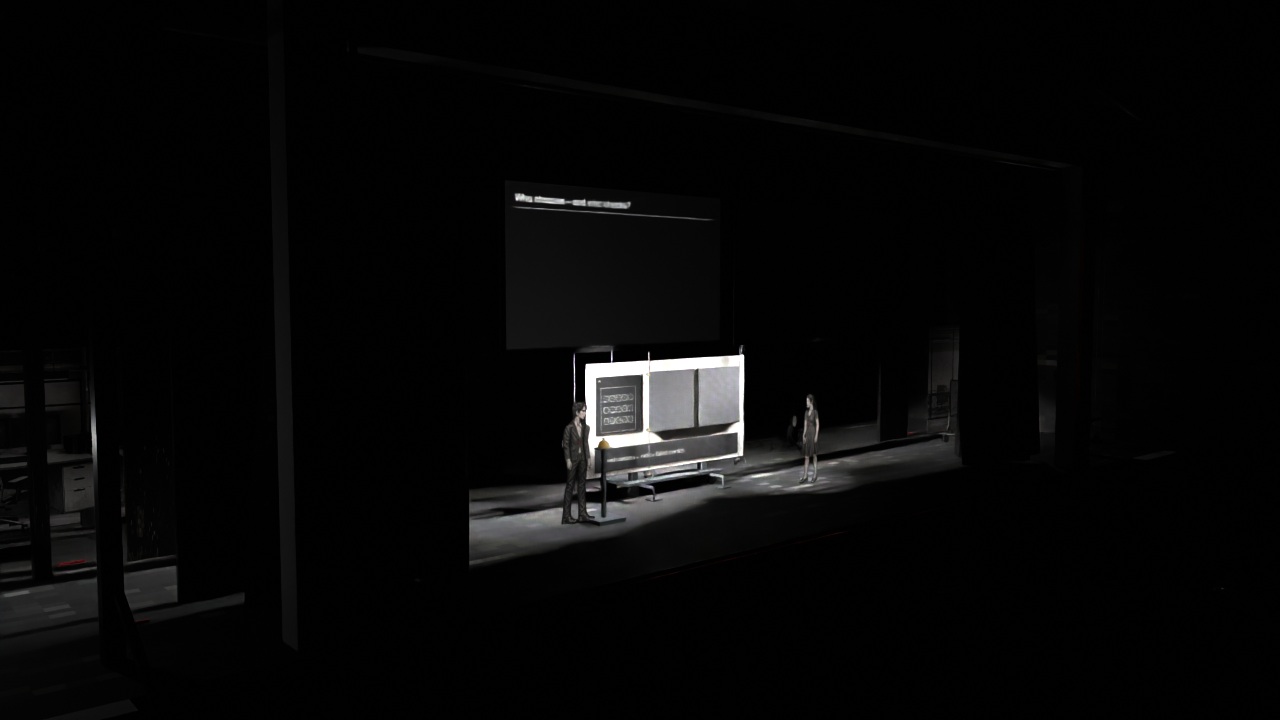
At twenty-nine seconds into the D007 recording, the dialogue screen was dark. A fresh short rendering of the unchanged scene at the same time displayed the expected question.
Those two pictures became the centre of the investigation. They showed an actual difference in output, beyond a report that the right cue or image file existed.
This was a new production, separate from the earlier cancelled D006 work. Independent owners prepared their departments. The selected six cameras included the physical handheld camera and excluded audience centre. The permanent theatre and actor sources were preserved.
Preparation still consumed more than two hours. Repeated assembly attempts, a completed bake, camera measurements, lighting resources and receipt repairs preceded the recording. The measured capture route remained hours long even after the DP reduced the exposure rate.
The failed output was retained
The recording advanced through a shared chronological clock, capturing each selected camera at every exposure time. Earlier slides appeared. Around the later question cue, several actual camera images lacked the dialogue.
The DP stopped capture and preserved the failing pictures, partial sequences and logs. The camera folders contained incomplete takes through the opening, leaving no six complete recordings for the final edit and no delivered film that could establish what happened in the later board operations and bell contact.
The failed long-recording image shows the missing screen content:
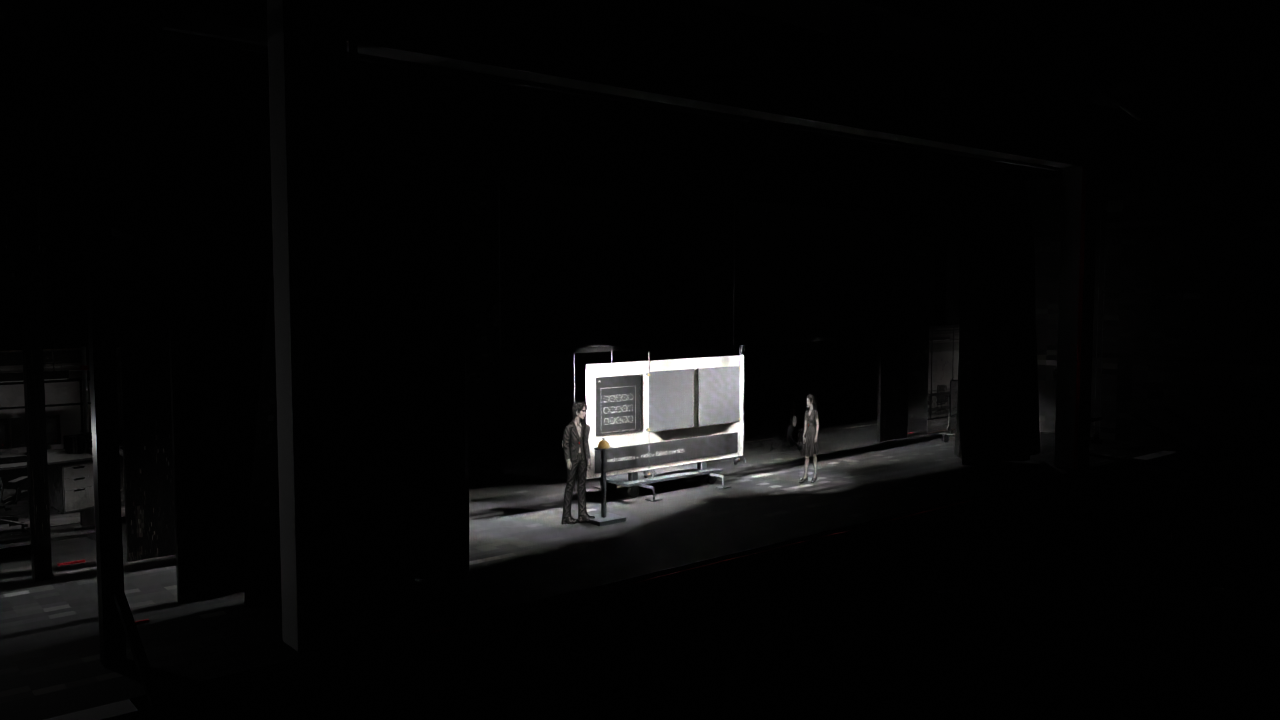
Sound/Projection examined the exact saved source. The expected cue selectors were active. Lamp values had not declined through an animation that explained the darkness. The film images were packed and contained nonblack text pixels.
The Technical Director checked screen caches, evaluated geometry and selected optical rays. Those observations contradicted a stronger claim that the screen had simply lost its cloth calculation or moved out of the beam. They did not reproduce every state inside the failed long rendering process.
The fresh comparison narrowed the cause
A bounded fresh-process comparison rendered the same camera at twenty-nine seconds, then earlier times, then twenty-nine again. The expected words appeared. The saved source remained unchanged.
The investigation ledger keeps the evidence boundary explicit:
This ledger maps the story to retained evidence. Department reports establish their stated finite scope. Source words, hash equality, authored controls, rendered stills and continuous film proof remain separate. E34 is a bounded inference from observed divergence, not an identified renderer defect. E36 is complete only when its disposal receipt records a successful native Trash operation. No recommendation or production repair was commissioned.
Public source excerpt. Repository snapshot, requiring repository access.
This is the retained account’s distinction between observations and its cause assessment. The comparison established that the stored scene and slide could produce the expected output. It did not identify one exact renderer defect.
The successful short comparison also retained a cache setting that had been suspected. That setting, by itself, was therefore insufficient to explain the failure. The long multi-camera process and the short single-camera sequence differed in execution history and camera switching, but those differences had not been isolated by a comparison that could name the cause of the missing words.
This was a case where the scene’s controls and the delivered picture answered different questions. The cue could be correct, the image packed and the geometry present while the recording still lost the words.
I cancelled the production and requested investigation, a detailed account and disposal of the performance files after evidence had been preserved. The two pictures remained available. The investigation’s honest endpoint was the visible divergence and an unresolved runtime cause, with no finished film from that run.