A Coffee Mug That Opens the Project Archive
A commemorative mug can become a durable access point to a project archive when its physical design and digital route are maintained together.
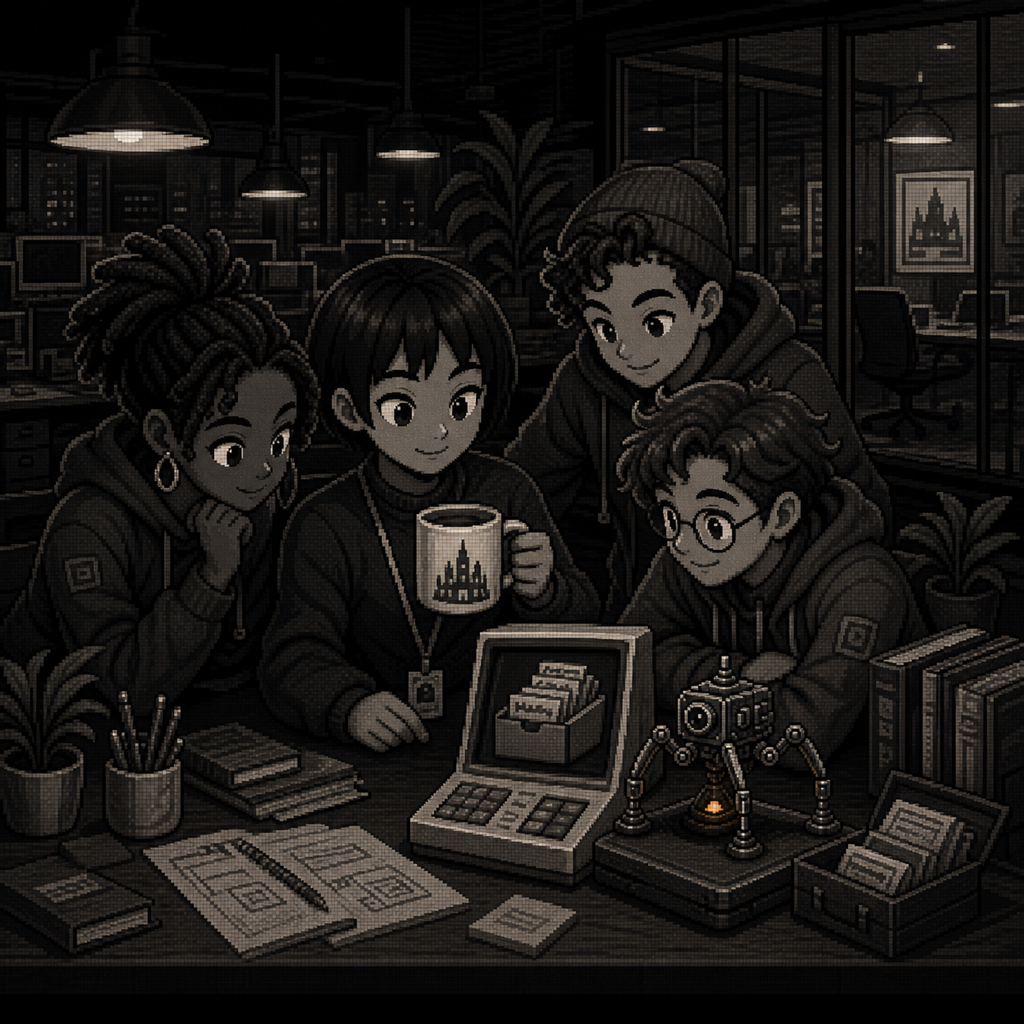
The oddest useful object in this exercise is a commemorative coffee mug. It carries a project name, a date, perhaps a building silhouette, and then spends years beside keyboards or in cupboards where eventually no one can remember which project produced it—which is a little bleak for an object made to help people remember.
Give the mug a second job by linking the physical object to archived project records through a QR code or NFC tag, a small near-field communication marker that a compatible device can read at close range. The result is a diegetic prototype, a tangible artifact from an imagined future, but the knowledge-management problem is ordinary and current: how can a durable object keep a route into the work that made it meaningful?
I think the mug is useful because it forces the archive question into material form. A project database can feel remote from the teams who created its records, but the mug sits in the daily environment, carrying a visual project identity and enough basic context—project name, completion date, team recognition—to get someone from a physical reminder into the digital record without first remembering a server path, a password-protected folder name, or the exact vocabulary used when the archive was created.
The route still has to be designed, because a QR code printed on ceramic is not an archive strategy by itself (although it can look impressively official). The destination might begin with a project overview, then open into final documentation, design decisions, maintenance knowledge, photographs, and records for future work, arranged according to who might actually arrive there years later. A facilities team may need maintenance information; a designer may need a precedent; a project manager may need the history of a decision; and a new team member may simply need enough context to know what the project was and who participated.
Physical durability matters because the object is meant to outlast the celebration. Form factor, material, capacity, and long-term durability all have a knowledge consequence. If the tag is placed where normal use wears it away, the access route fails while the mug remains. If the digital destination changes without a maintained redirect, the intact code becomes a historical dead end. The physical object and the archive need a shared maintenance plan.
That plan can remain simple. Use a stable identifier behind the QR code rather than a brittle direct path. Keep the project record’s access layer current as systems change. Record who owns the destination and how a broken route is repaired. Test the scan occasionally, especially when the archive platform is migrated. These are not glamorous tasks. They are what makes the object’s promise durable.
The building silhouette should do more than decorate a cup. It can help a person recognize the project at a glance, especially when several projects have similar names. Structural elements or a skyline can anchor the object in the vertical-architecture context described in the exercise. The visual design remains modest because the access feature carries the real action. A mug crowded with text, labels, and technical diagrams would be difficult to use and easy to ignore.
The object also changes the idea of commemoration. Instead of sealing a project in the past, it keeps the project available for later maintenance, learning, and adaptation. A person holding the mug can reach the record of how a building was assembled, what decisions were made, and what a future team should know before opening a wall, replacing a system, or beginning a related design.
Material memory is not a substitute for a maintained archive; it is a route into one. The coffee mug works as a prototype because it makes that dependence visible, right down to the least glamorous and most important part of the design: someone has to own the route, keep the destination alive, and repair the connection when the archive moves.