
Concrete Questions Anchor Expert Memory
Specific questions about a typical day, a worksite, and its people give expert memory the context needed for a useful record.
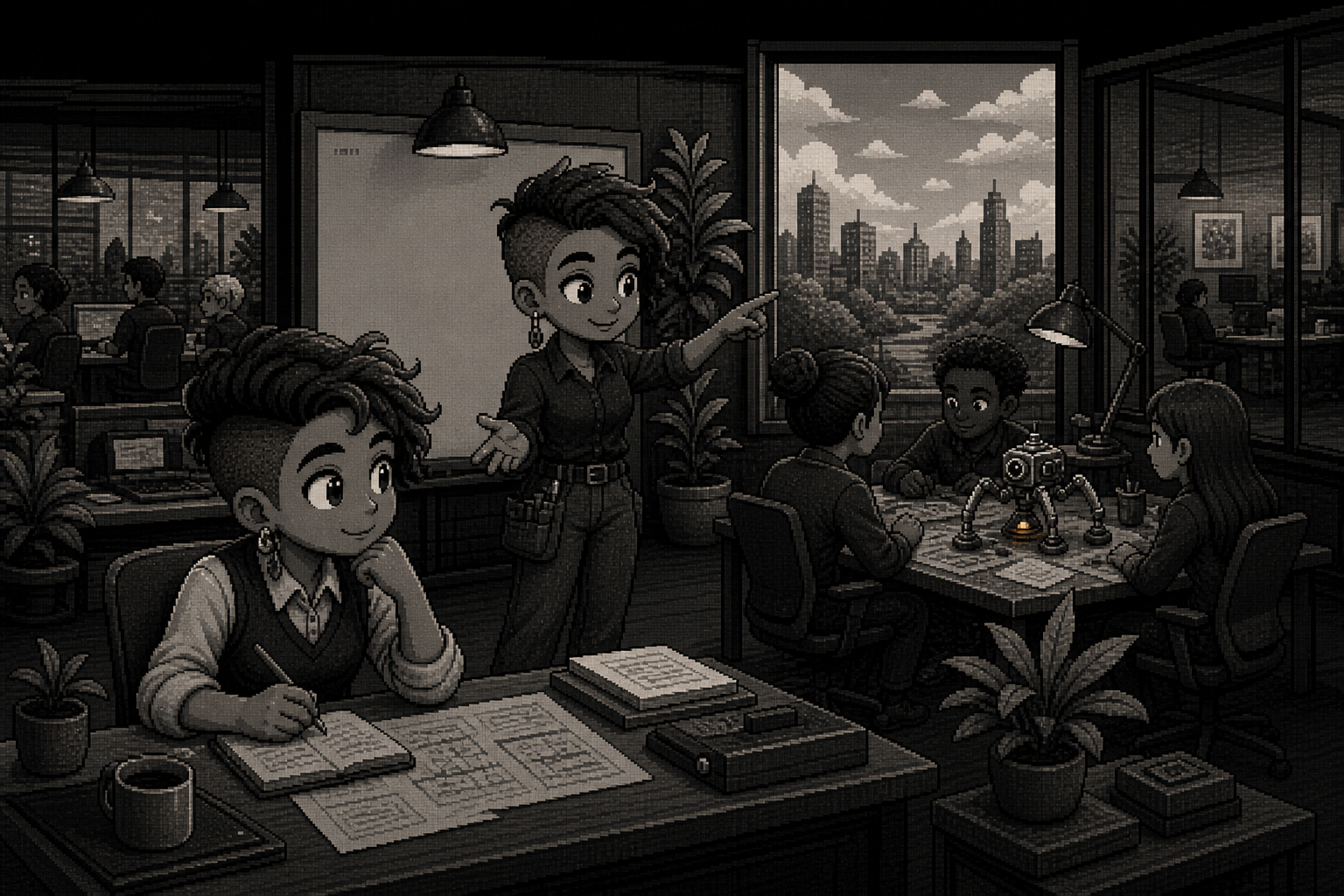
The question “What do you know about this?” is open-ended, polite, and often so large that an expert has nowhere useful to begin.
People’s memories hang on substantial hooks. I love that phrase because it gives the interviewer something practical to do: ask about a typical day, a family gathering, the coworkers on a shift, the arrangement of a factory floor, or the training required for a job. Those details do not distract from expertise; they give the answer a recoverable setting, which lets another person understand how the knowledge was made and when it might apply.
This matters especially in knowledge capture. Organizations often know that an experienced worker, researcher, technician, or manager has important judgment that has never reached a procedure or database. They schedule an interview and ask for lessons learned. The expert may offer a short summary, a polished principle, or the language they use when speaking to senior leadership. Each may be true. None necessarily reveals the observations, tools, relationships, and timing behind the judgment.
A concrete question changes the scale. Instead of asking a factory worker to explain their expertise in the abstract, ask what a usual shift looked like: who arrived first, which coworkers they relied on, what they inspected before a process began, what training prepared them, and what happened when the equipment did not behave as expected. The narrator does not have to invent a theory of their own knowledge before they can answer; if there is a theory worth finding, it can emerge from the work that produced it.
The same approach works outside a worksite. A family gathering can provide hooks for a social history. The interviewer might ask who was present, what people ate, where they sat, what time of year it was, and what else was happening in their lives. The detail is not sentimental garnish. It locates an account in a set of relationships and conditions. A later reader can see whether a memory concerns a routine, an exception, a conflict, or a change over time.
Avoid jargon and theoretical concepts unless they are part of the interviewee’s own experience. That is an important boundary. Technical language can be precise when the narrator uses it in the work being described. It becomes a barrier when the interviewer uses it to force an account into a research category before the speaker has established what occurred. The interviewer’s task is not to show how much framework they brought to the room.
Asking about the environment often opens a route to the practical detail that a broad question misses. What did the person eat that day? What was the weather like? What else was going on in their life? These are not mandatory prompts and should not become a ritual—the oral-history equivalent of asking everyone to describe the weather—but they demonstrate an interest in the narrator as a person rather than as a quotation waiting to be drafted into someone else’s argument.
Concrete questions also make later verification easier. If an expert describes a decision in relation to a particular coworker, process, room, tool, or season, an interviewer has more routes for checking names, dates, procedures, and related records. The detail may reveal a contradiction, but it can also reveal why two apparently conflicting accounts were both reasonable under different conditions. Abstract summary often hides that distinction.
There is a restraint built into the method. A hook should give the person a place to start, not lead them toward an answer. “Describe the work process from the beginning” invites a sequence. “Was the training inadequate?” inserts a judgment. A useful question remains concrete while allowing the narrator to decide what the concrete detail meant.
For an interview about a factory, the work can proceed through components: coworkers, work processes, job training, the layout of the environment, and a typical day. For a different subject, the components will change. The principle does not. Ask for the situation in which a person had to notice, decide, make, repair, or explain something. Then let the account retain the objects and conditions that made the knowledge possible.
An expert answer becomes more useful when we can place it back into the day that produced it, among the people, tools, weather, meals, interruptions, and decisions that gave the knowledge its shape. The substantial hooks help the narrator remember, and later they help the rest of us understand what, exactly, we have been told.