
Observe Communities Without Domesticating Them
A light observation system can support informal communities of practice without turning their knowledge into a managed program.
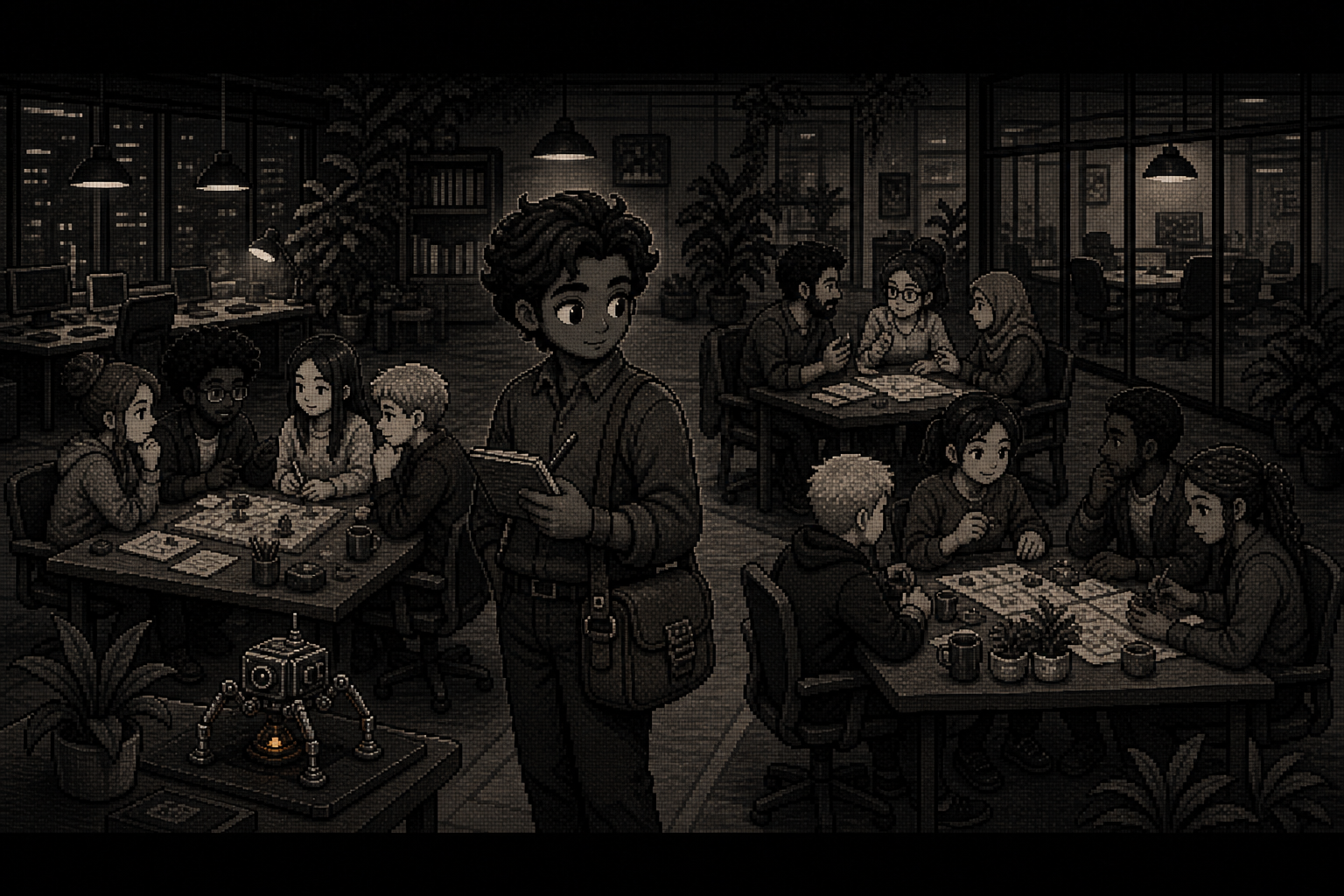
An informal community can be easy to miss because it does not look like a program. People return to a shared problem, develop a common vocabulary, exchange practical knowledge, and make something useful together; the group may have no charter, manager, or visible place in the organization chart and still be doing some of the organization’s most consequential learning.
The difficulty begins when an organization notices such a group and decides, with the best managerial intentions, to improve it by managing it. I would begin by wildcrafting instead: observe one informal community weekly for eight weeks, document who participates, what practice binds them, how they interact, and what knowledge they create, but do not intervene yet. The record may reveal the community’s natural cycle and what can be harvested without trampling the plants.
Constellation is the imagined next step, a tool for observing community boundaries and engagement patterns. Its proper task is not to turn every community into a managed asset. It is to help facilitators recognize where light support is warranted and where attention should remain respectful.
Observation comes before intervention
The eight-week practice starts with a narrow discipline. Choose one community already forming. Watch who joins, which practice holds the group together, how participants interact, and what they make available to one another. The observer does not arrive with a structure to impose.
This sequence matters because a community’s shape may not be visible at the first meeting. Participation may change. A regular conversation may depend on a few people who connect otherwise separate practices. Knowledge may move through routine exchanges that would disappear if the group had to report itself through a formal template.
An observation record gives a facilitator a basis for later judgment. It can show a community that needs no more than room and recognition. It can show a community whose work is invisible despite its value. It can also show where people are isolated by different domain vocabularies and cannot easily transfer knowledge across a boundary.
The map should not become a command
Imagine a language-engineering community whose participation favors speech-recognition specialists while linguistic anthropologists remain peripheral. An endangered-language preservation community operates invisibly without support, and domain vocabularies limit transfer between the groups.
These observations do not prescribe one intervention. A map can show a boundary or a peripheral participant without establishing that the correct response is to reorganize the group. The participant may be peripheral because of a real difference in work, access, time, or interest. The community may be invisible because it needs support, or because exposure would alter the conditions that make it productive.
The restraint resembles Star Trek’s Prime Directive: observe, but do not interfere destructively. The comparison supplies a limit, not a romantic excuse to ignore a community. A facilitator should enable natural evolution rather than impose a structure that changes what the community is.
A tool can make light support more precise
The proposed ancestor of Constellation automates parts of the observation practice. It creates interfaces for lightweight tracking, uses language-model analysis to detect naturally forming communities and their health patterns, and recommends interventions that support rather than control.
The foundation can grow toward a view of community ecology. It may help identify cross-community transfer opportunities, recognize groups that need support without bureaucracy, and distinguish communities that should remain wild from those that would benefit from light cultivation. Each possibility depends on the same restraint that governed the manual observation.
The system can surface a pattern. It cannot decide that a group is better when it becomes visible, formal, or measurable. That decision belongs to the people who understand the community and the conditions under which it makes knowledge.
Support the practice, not the appearance of management
Communities of practice thrive through the practice that binds their members. The organization may have a role in protecting time, providing a route to another group, or recognizing a preservation effort that has remained unseen. It should not confuse that role with ownership.
Wildcrafting asks the facilitator to learn the community’s actual form before asking it to become anything else. The eight weeks may reveal a need for room, recognition, a route to another group, or no intervention at all; that last answer can feel suspiciously like inactivity, but it may be the only support that leaves the community’s knowledge alive.