
Research With Decision Makers in the Room
Linkage and Exchange brings decision makers into research formulation and conduct so findings have a route into the decisions they are meant to inform.
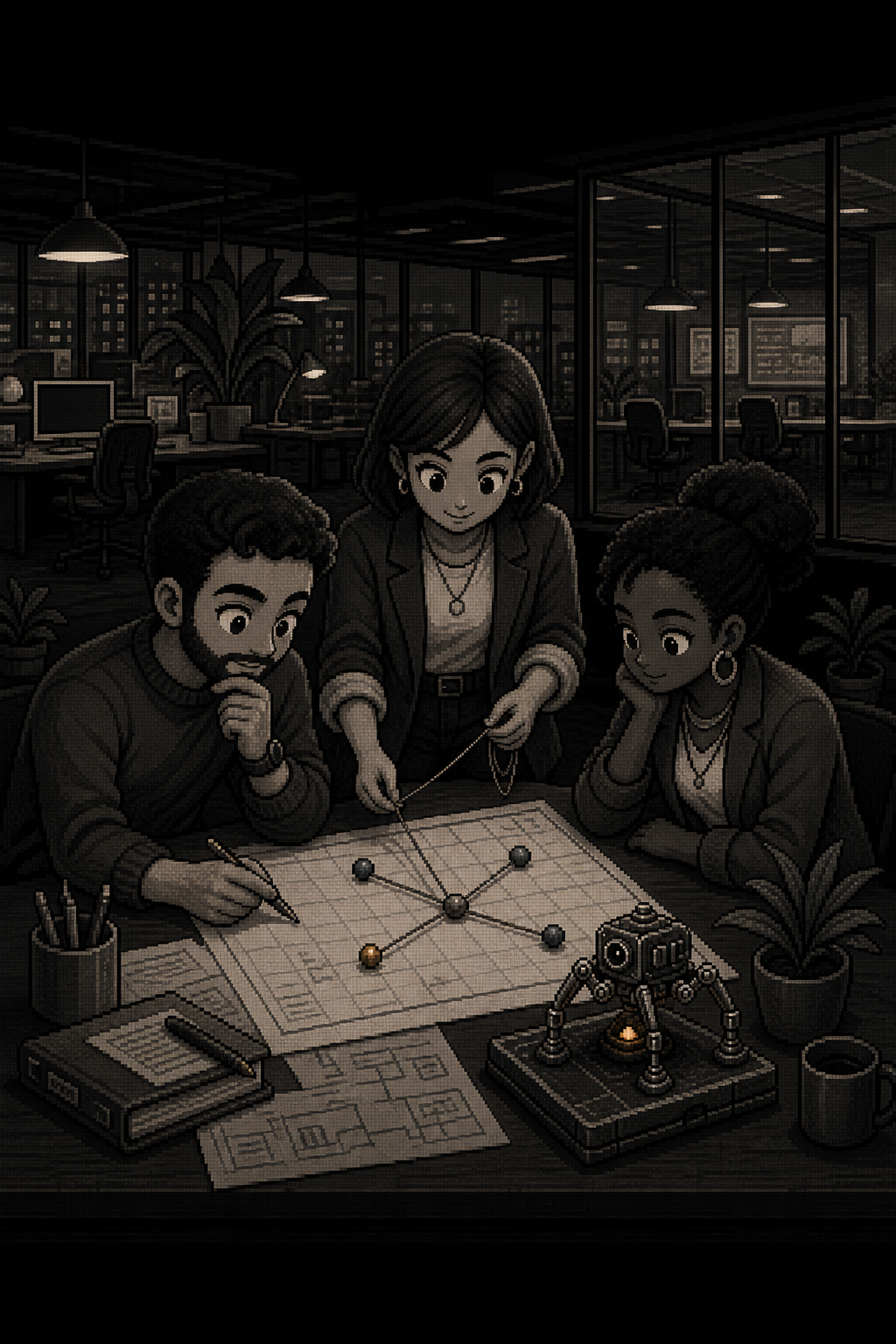
Research often reaches decision makers after the hard choices have already been made: the question was framed, the method selected, the work completed, and the findings compressed into a report. The handoff then asks a busy person to recognize their own situation in a finished piece of work and act on it quickly, which may explain why so many good reports enjoy quiet lives.
Jonathan Lomas’s Linkage and Exchange model begins earlier. The model rests on evidence that bringing decision makers who can use research results into the formulation and conduct of the work is the best predictor of seeing findings applied. It also emphasizes the one-to-one encounter as an efficient way to transfer findings. The core feature is bringing people together.
That proposition changes the broker’s job. Circulating the finished summary is not enough; the broker has to establish a relation between the people making or using decisions and the people conducting the research while the question remains open enough to be shaped by the conditions of use.
Decision makers do not need to direct results. Their involvement should not become a mechanism for selecting an answer before the evidence is gathered. They can identify the decisions they face, the timing of those decisions, the constraints that will affect implementation, and the practical distinctions a research team might otherwise miss. Researchers retain responsibility for method, evidence, and honest conclusions. The exchange improves the route from finding to action; it does not remove the independence of inquiry.
The formulation stage is the first opportunity. A researcher may be interested in a broad problem. A decision maker may be facing a specific choice within it. Bringing them together can clarify what question would be useful, what existing knowledge matters, which users or stakeholders must be considered, and what form of result will be usable at the decision point. The conversation can also reveal that the proposed research is premature, too narrow, or aimed at the wrong decision entirely.
The conduct stage continues the connection. Participants can discuss emerging questions, help locate relevant context, and identify when a finding needs careful interpretation before it reaches a larger audience. This does not mean that every research step becomes a committee meeting. One-to-one contact is valuable precisely because it can be focused and responsive. A broker can arrange the encounters, maintain a clear account of what was discussed, and prevent the relationship from becoming dependent on unrecorded personal memory.
Application becomes more plausible because the eventual finding has a known destination. The decision maker understands the research question and its limits. The researchers understand the setting where the result will be used. The broker can connect the result to the relevant meeting, policy process, operational team, or implementation record. The report still matters, but it arrives as part of an existing exchange rather than as an object seeking a recipient.
There are limits. Some decisions are politically charged, time-sensitive, or constrained by interests that a research relationship cannot resolve. A linkage process can also exclude people if it brings only senior decision makers into the room. The broker should ask whose knowledge is needed for formulation and who will carry the consequences of application. The model is strongest when it expands the relevant conversation without sacrificing the evidence standard.
The practical prompt is simple. Before beginning the next research project, identify the people who could use the results and invite them into the formulation of the question. Ask what decision is coming, what information is missing, and what conditions shape the available action. Keep the research independent, document the relation, and continue the exchange through the work.
Findings are more likely to be applied when they have been connected to the decision before they become a finished report. Begin the conversation with the question, continue it through the evidence, and keep a usable record of the decision that follows; the report then arrives inside a relationship that already knows what it is for.