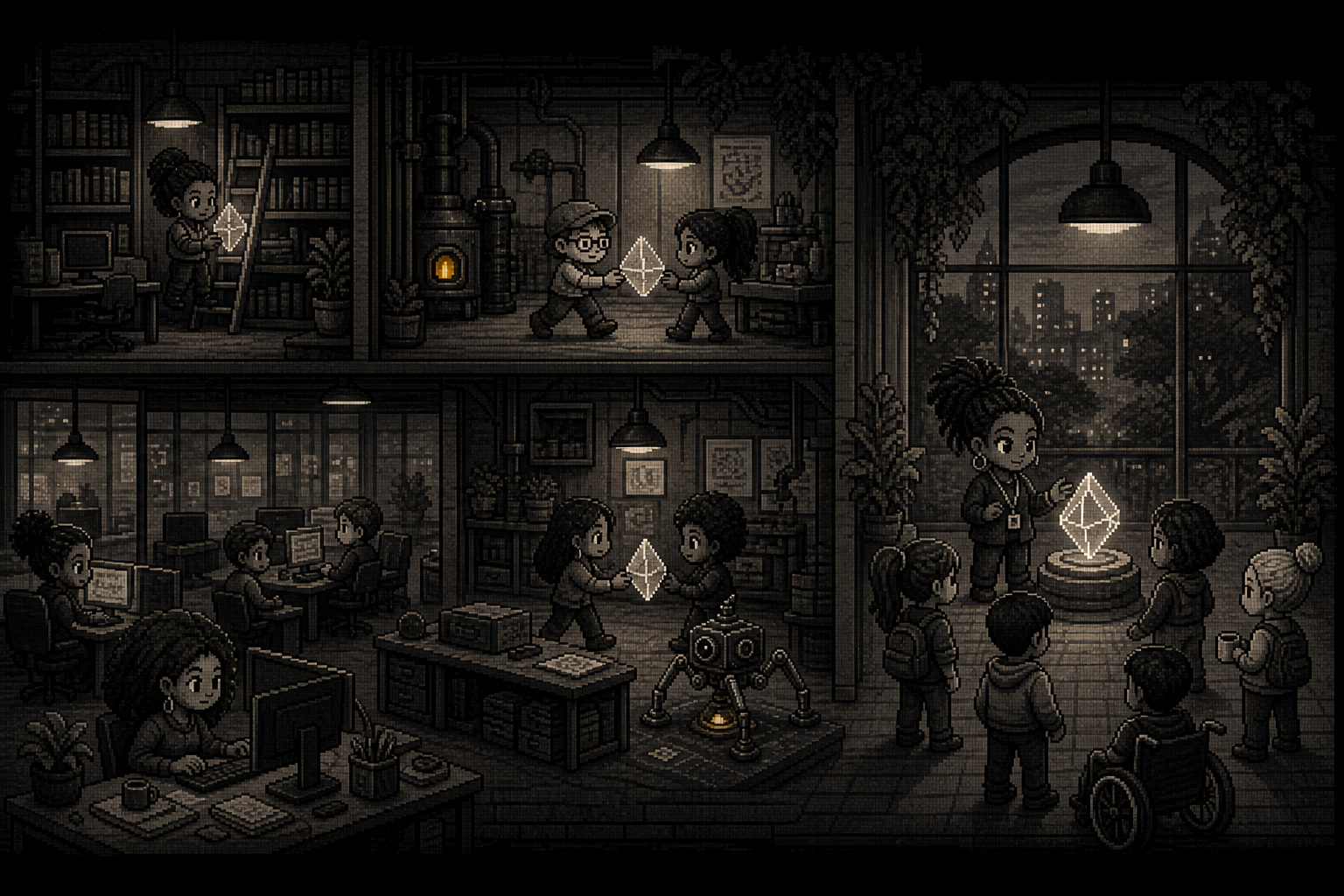
Smart Mirrors and Critical Knowledge
Philco's fermentation mirrors show why retirement timing, local conditions, and single-specialist risk require different knowledge-transfer plans.
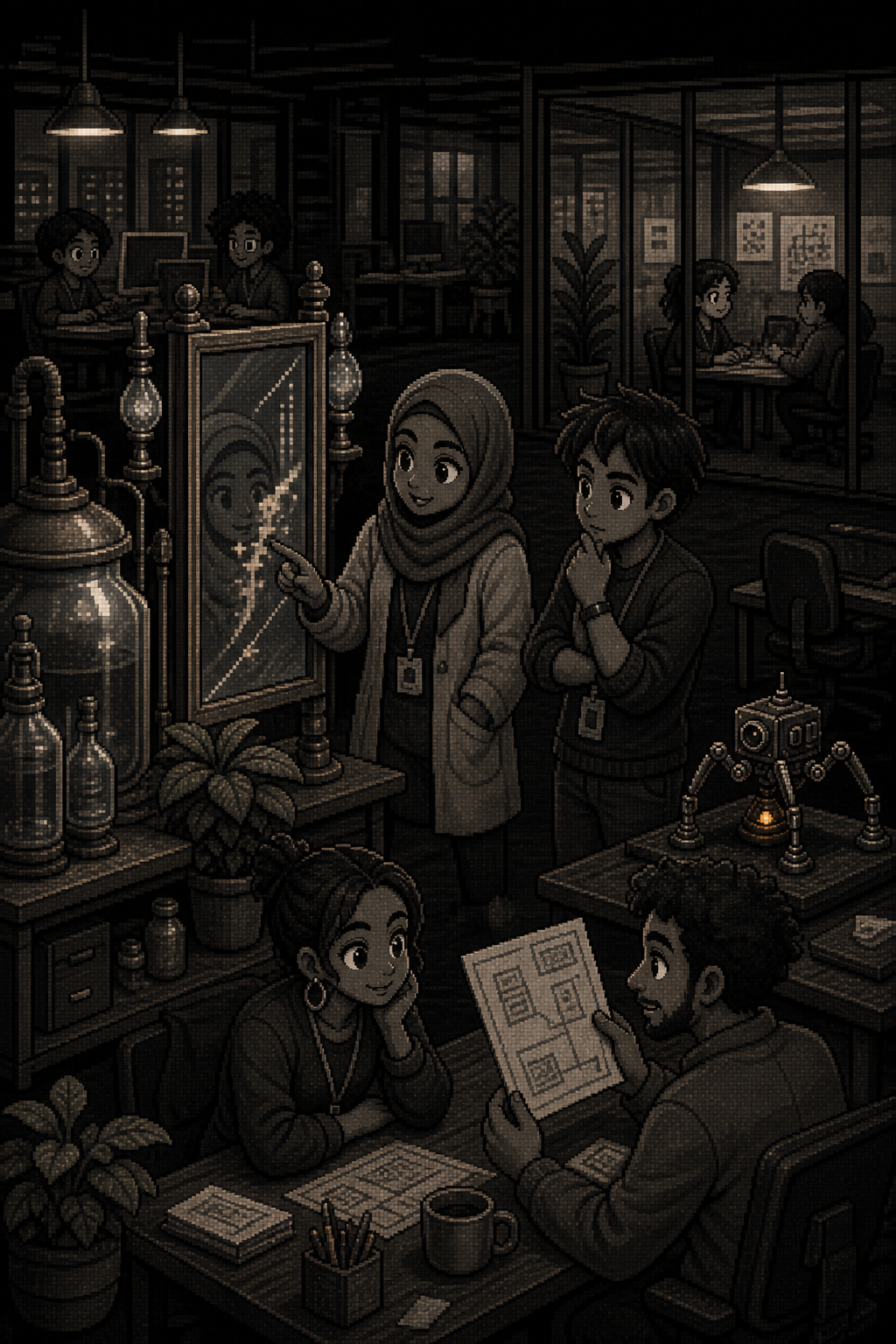
Philco makes smart mirrors for plant-based food production facilities, fermentation labs, and cultured-protein factories, a sentence that sounds pleasantly absurd until the mirrors begin showing fermentation metrics, contamination alerts, and process cues on the same reflective surface technicians consult while working.
The setting is speculative, but its knowledge-continuity problem is ordinary. Experienced technicians can notice visual signs of fermentation trouble before instruments confirm a problem. They have timing intuitions about temperature-sensitive processes. They use troubleshooting heuristics that prevent equipment problems from damaging a batch. Much of that knowledge lives in senior staff who are approaching retirement, while newer workers have not yet had enough experience to develop the same judgment independently.
Elena Vasquez manages knowledge continuity at Philco. She opens Critical Path, an internal tool whose name expands to Continuity Response in Technical Intelligence and Capabilities Assessment and Learning. The tool identifies dependencies, expertise concentration, succession vulnerabilities, and transfer requirements. Its useful output is not a generic warning that knowledge should be documented. It identifies distinct risks that call for distinct transfer plans.
In this scenario, three senior fermentation technicians will retire within eighteen months, and their ability to recognize contamination patterns from visual cues alone prevents production losses worth millions annually. This is not simply a matter of writing a procedure. The transfer plan needs structured apprenticeship, with retiring technicians working alongside designated successors over an extended period. Video documentation can capture the visual assessment process and the narration of decisions, but the recording supports the apprenticeship; it does not replace the time spent looking, comparing, and deciding in the production setting.
The mirror calibration specialist presents another risk. This person developed proprietary techniques for aligning sensor accuracy with visual display precision and is the only employee who can troubleshoot calibration drift. Here the vulnerability is a single point of failure: one person’s absence can interrupt a capability with no immediate backup. The recommended plan combines procedural documentation, hands-on training sessions, and redundancy by training two additional specialists. The number matters because one replacement merely moves the single point of failure to a new person.
Regional production facilities hold a third kind of knowledge. Technicians have adapted processes to local water chemistry and ambient conditions, but the adaptations remain undocumented and inaccessible to people moving between sites. This knowledge is not identical at each location, so a single universal guide may conceal the conditions that produced the difference. The response is systematic documentation in which site technicians collaborate on capture and produce guides that make the local knowledge explicit and transferable.
The three plans illustrate the discipline of matching a transfer method to the expertise. Apprenticeship fits visual judgment and timing; documentation plus hands-on training fits a specialized procedure that can be taught and practiced; collaborative local guides fit knowledge developed under conditions that vary by place. “Capture it in a database” would treat three different risks as one familiar task and lose the reason each plan exists.
The smart mirror makes the tacit part visible without making it simple. A technician sees the reflective surface, the fermentation equipment, and the condition of the work in the same moment. That arrangement can support an experienced judgment, but the system cannot assume that it has extracted the judgment merely because it displays the data. The knowledge transfer has to include the cues the technician notices, the alternatives considered, the timing of intervention, and the conditions where a cue can mislead.
The scenario ends with Elena preparing promotional coupons for discounted calibration services. That detail introduces a further tension. Critical knowledge intelligence can identify a scarce capability that has commercial value. It can also reveal a vulnerability that needs internal attention before it becomes a premium service message. The knowledge manager has to keep the continuity problem visible even when the information has obvious marketing uses.
Critical Path earns its place when it turns a broad concern about retirement into a specific plan with a timeline, a type of expertise, and a transfer method. The senior technician, calibration specialist, and regional team do not need the same intervention, and a system should understand why their knowledge differs before it offers the wonderfully universal solution of asking everyone to write more documentation.