Why changing one profile cannot complete an online identity transition
Research on online identity transitions shows why names, photographs, tags, and audiences cannot all be changed through one profile field, with implications for library-managed websites and records.
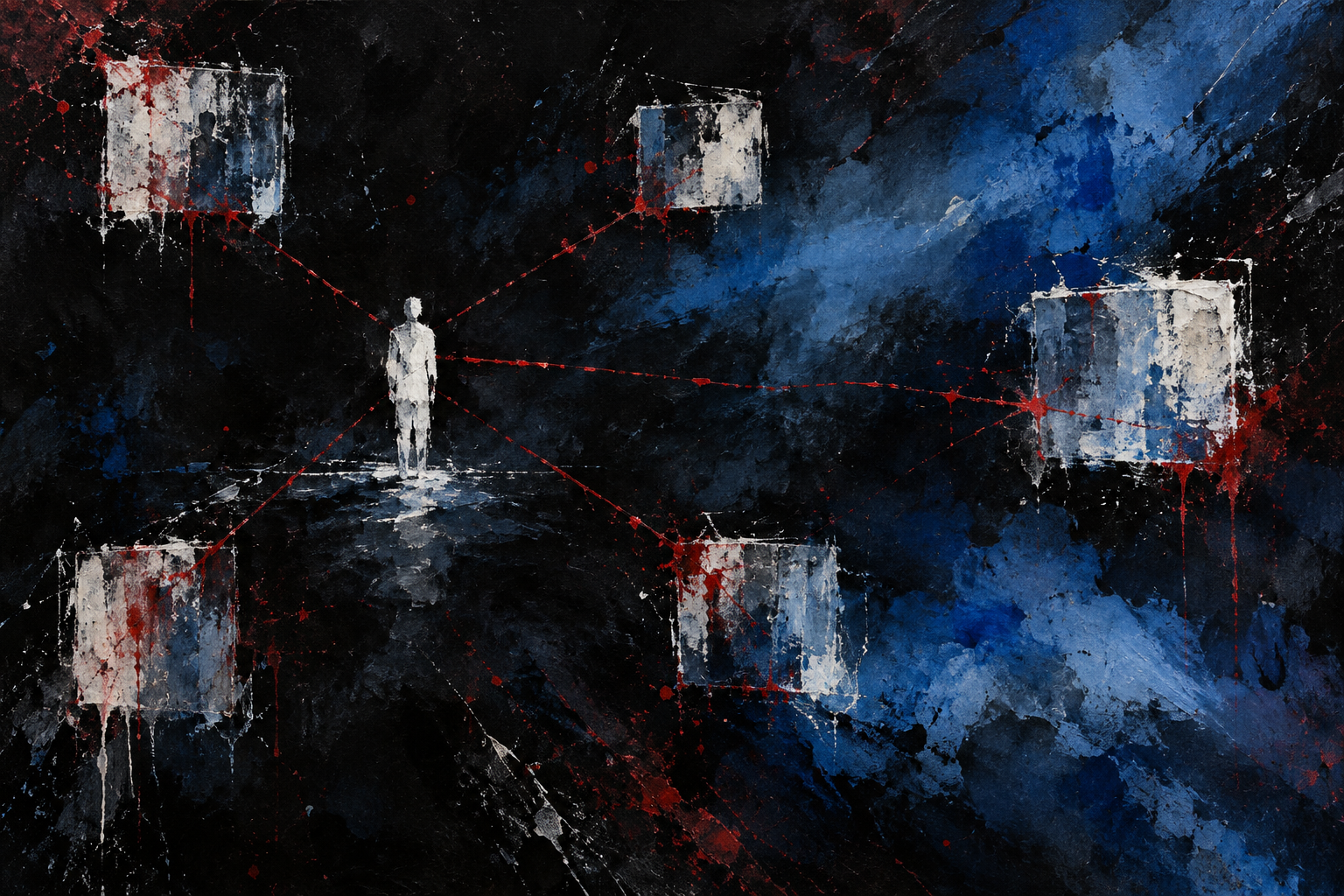
Changing a name on a profile does not change the caption someone else wrote, the photograph a group posted, or the audience that remembers an earlier introduction. The person has made a decision. The surrounding records remain distributed among other people and systems.
Oliver L. Haimson, Jed R. Brubaker, Lynn Dombrowski, and Gillian R. Hayes examined that problem in Digital Footprints and Changing Networks During Online Identity Transitions. Their 2016 paper analyzes open-ended survey responses from 283 transgender people who transitioned while using Facebook.
The study gives librarians a more exact problem than an out-of-date profile. A library that publishes event photographs, contributor information, research profiles, or digital exhibitions may hold only some of the representations a person wants to change. Each controlled copy and each audience needs to be considered in its actual context.
The record and its audience change together
Haimson and colleagues identify work on self-presentation alongside work on the people permitted to encounter it. Participants described managing traces of a prior identity and the social networks through which those traces could become visible. The study reports those experiences within its historical platform setting.
That distinction matters because a successful edit can leave the audience relationship unchanged. Conversely, changing who can see a record can alter its consequences even when the underlying material remains. The person is managing a relation among content, context, and access, rather than operating one complete identity switch.
The Atlas interprets this as a distributed transition. It asks how older traces remain active through records the subject does not wholly control. The interpretation does not imply that every old photograph causes harm or that all participants want the same kind of disappearance.
Rena Bivens and Haimson’s comparative platform study adds a related distinction between user-facing categories and other data systems. Its historical analysis shows why an interface’s apparent flexibility cannot be assumed to describe every classification operating behind it.
Those findings do not establish the present configuration of Facebook or any other service. A current claim requires a current check. Their durable analytical contribution is the instruction to examine each layer before treating a visible change as proof that every consequential representation has changed.
A library may hold several versions of the same introduction
Imagine a library-managed author event with a booking record, a public programme page, a photograph caption, and a later exhibition entry. The example is hypothetical, but the decision is familiar: a contributor asks the institution to change how it identifies them.
Staff first need to locate the representations the institution controls, because the request may concern a public description that was copied from an administrative field even though the two records now serve different purposes and have different audiences. Searching only the current programme page could leave an earlier caption untouched.
I would ask the contributor which result they want and where they have encountered the old representation. That conversation can establish a bounded request without making the person responsible for discovering every internal copy or explaining why their identity changed.
The institution then needs its own inventory of the relevant controlled pages and records. Distinguish an update the library can make from a request it must send to another publisher, and explain any material limit rather than promising to erase an entire online history.
The IFLA privacy statement supports attention to the consequences of information practices and the user’s position. It does not decide every archival or publication question. The actual purpose, permissions, and governance of the material still matter.
Describe the scope of the change
A completion message should say what changed and where the institution checked it. The contributor may need to know whether an old caption remains publicly searchable, whether the current event page uses the requested name, or whether an externally hosted photograph needs another contact.
The answer should preserve the distinction between a controlled record and another person’s contribution. A library may be able to revise its own caption immediately while needing a separate decision about a deposited object, an attributed historical document, or an independent publication.
This is where the study’s attention to audiences becomes professionally useful. A record used internally to preserve a justified administrative connection need not have the same exposure as a public event page. The institution should examine whether the existing arrangement actually needs to make those two contexts equivalent.
For an academic library, the request might cross a repository and a departmental site. For a public library, it might cross a programme page and a community collection. Those settings change the ownership and purpose of the records, so they require a local account rather than a single promise about every name field.
Build the next request into ordinary stewardship
I would add one operational question to the management of a small digital collection: when a represented person requests a change, can staff identify the controlled displays and the person authorized to decide each one? Keep the answer alongside the publication workflow.
That record should avoid turning the request itself into another unnecessary disclosure. Staff need enough information to identify the affected material and act on the agreed change, with access appropriate to that task.
The research’s contribution is to make the distributed work visible. A transition can remain incomplete because representations and audiences are held across a network, even when the person has already made their own position clear.
After completing the requested changes, check one affected page through its ordinary public route and one relevant internal record through its authorized route. Tell the contributor which representations now match the agreed result and provide a usable contact for any remaining controlled copy they encounter.