Monoprice Modern Retro: The Pads Matter
Twelve published use records show why stock pads, modifications and playback conditions change the verdict on these inexpensive headphones.
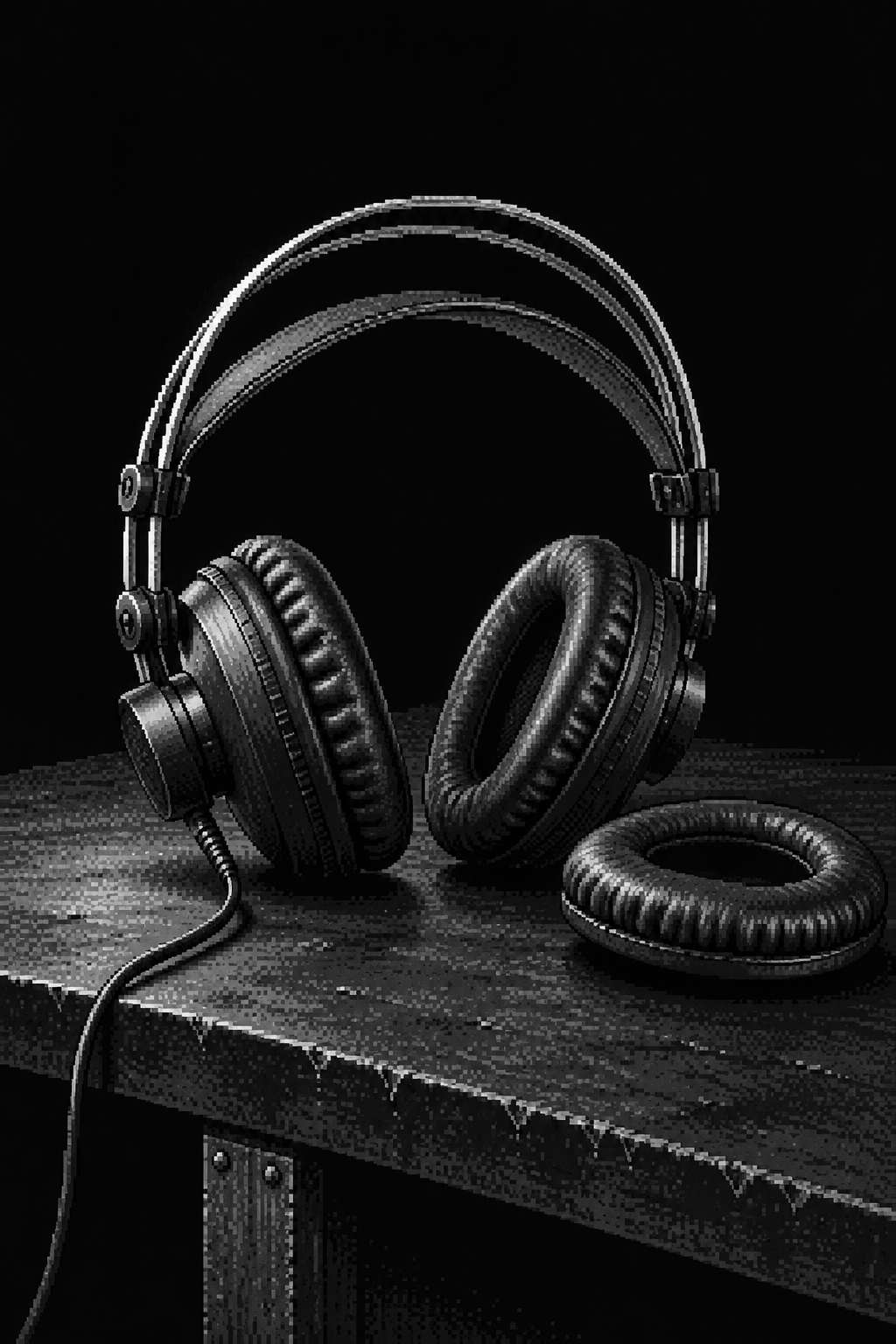
Scope note: This literature review compares twelve published use records for the Monoprice Modern Retro, product 16150, including stock cushions, replacement pads, amplification and other modifications. It evaluates the reported headphone-and-setup combinations without treating every modified result as a result from the boxed product.
Several owners praise the Monoprice Modern Retro after replacing its ear pads. Another owner returned the headphones because the bass overwhelmed the music. Positive reports about this inexpensive pair therefore raise a question before they settle a purchase: which headphone-and-pad combination did the writer actually hear?
Twelve non-manufacturer write-ups describe an appealing bass-heavy option for home listening, with disagreements about comfort, tonal balance and the value of added equipment. The strongest favorable accounts identify their modifications. Reading those conditions alongside the criticism gives a more useful assessment than treating the product name as one consistent listening result.
Each qualifying writer used the exact model and supplied a concrete observation. The sample combines editorial reviews, short owner reports, modification records and a longer ownership follow-up. Six writers contribute separate records within one HifiGuides discussion, which limits the breadth of the sample.
The priced object and the reviewed setups
The model is Modern Retro, product 16150, with catalog ID 361e68f6c543b3533dcd. The manufacturer specification identifies wired over-ear headphones with 50 mm drivers. That specification sits outside the review count and cannot establish how a recording sounds through them.
A dated retail observation on 9 October 2026 recorded $29.99 USD in the Walmart listing, with Monoprice Inc named as seller, Add to cart and shipping available. That was the item price before checkout tax, for the stock headphones.
The source window runs from 2018 to 2024. Older purchase figures describe those writers’ costs rather than the current offer. Replacement cushions, amplifiers and cable work add to the price of a setup, and most comparisons do not report matched playback levels.
Bass enjoyment and precise placement differ
Max_Settings’s detailed review describes strong impact during electronic music and action games, with a broad apparent listening space. The same writer found weaker placement of individual sounds when trying to locate quiet footsteps in competitive games.
Those observations describe two different qualities. A recording can seem to extend beyond the listener’s head while the direction of a particular sound remains unclear. Max_Settings’s account supports enjoyment of impact and apparent width, without establishing precise positioning for every instrument or game event.
SupOrSalad’s comparison with the AKG K240 and Samson SR850 found the Retro darker and less tiring, with bass that could intrude on the middle frequencies. The writer also heard a smaller apparent space than through the two partly open designs. That comparison qualifies the strongest claims about spaciousness while preserving the owner’s enjoyment.
The HifiGuides discussion contains a sharp disagreement. Thatoneguy335 ordinarily enjoys added bass but returned the Retro after finding it overpowering during music listening. ragecandy, using Brainwavz pleather pads, strongly preferred its presentation to familiar budget alternatives. Their pad conditions and preferences differ; the discussion does not isolate which difference explains the verdicts.
Taken together, these reports support an attraction to pronounced bass. They provide little basis for promising an evenly balanced presentation to someone judging a recording’s mix.
Pad changes alter the object under review
Dom’s SonicElevation review describes enjoyable listening from a laptop without extra amplification or software equalization. Dom also found the thin stock pads limiting for longer sessions. realandR3cys, listening to trance and deep house, reported sweaty stock cushions during a short session in a separate owner account.
The accounts concern actual wearing conditions, with comfort judgments attached to the people who wore the headphones. They do not establish one wear duration or comfort score for every listener.
John_Muller reported more comfortable wear and stronger bass after fitting Yaxi pads. JJPablo combined replacement pads, internal damping and an amplifier, then described a fuller middle range.
Those are reports about modified systems. JJPablo changed several parts, so attributing the entire result to the cushion alone would go beyond the comparison. John_Muller’s result likewise concerns the named pads rather than an arbitrary replacement.
AJCxZ0 reported little audible change after removing material from the driver covers and explicitly said the comparison was uncontrolled. CroissantDog posted a software equalization experiment in the same discussion. Both describe actual interventions, while supplying different kinds of evidence about whether a change helped.
Added equipment changes the price comparison
Steve, writing as Echthroix at In Defense Of The Awkward Moment, tried a borrowed pair through a computer and tablet, then described listening with replacement cushions and an SMSL M3 amplifier. Pink Floyd, Eagles, classical and electronic recordings became more rewarding in the later setup.
The account makes the added equipment visible. It does not isolate amplification from playback loudness and every other difference between the sessions. Dom’s favorable direct-laptop report supplies a counterexample to any general claim that the headphones always need an external amplifier.
Max_Settings also changed the cable arrangement and tried a tube amplifier, but disliked the reduced bass impact through that particular amplifier. A more elaborate setup therefore did not produce a uniformly favorable result, even for a writer who liked the headphones.
The fair cost comparison concerns the complete combinations described by the writers. A stock pair at the dated retail price and a pair with new pads, cable work and amplification are different purchases; a review of one cannot quietly supply the verdict for the other.
Longer ownership adds a separate cost
PieMan24601’s 2024 report describes daily use and replacement-pad covering that deteriorated after about two years. The reported failure concerns the added cushions, while the writer remained interested in using the headphones.
That distinction limits the reliability claim. The account establishes wear on a particular replacement pad, rather than failure of the headphone drivers, and introduces another purchase into the cost of continued use.
The unresolved stock-versus-modified comparison
A controlled follow-up would ask a tester to use the stock pads with one playback device, compare a bass-heavy track with a voice-led recording, and record comfort through a normal session. Repeating the same recordings at matched volume after one pad change would help isolate that change before adding an amplifier. This is an unperformed comparison proposed from the published disagreements.
The records support the Modern Retro as an inexpensive candidate for listeners seeking pronounced bass, especially when a cushion change is acceptable. The return and stock-pad complaints remain part of that judgment. A useful recommendation must identify the exact headphone-and-pad combination behind it, along with the cost of the additions.
The twelve qualifying write-ups
These are twelve distinct writers, including short owner reviews and modification records. Multiple updates from one writer count once. Six writers contribute separate records within one HifiGuides discussion; that concentration limits the sample’s breadth.
- Dom, SonicElevation, 19 January 2019: direct laptop listening and stock-pad comfort; affiliate links present.
- Steve / Echthroix, In Defense Of The Awkward Moment, 11 September 2019: borrowed pair, replacement pads, and amplified music listening.
- Max_Settings, Linus Tech Tips, 15 April 2018: music, gaming, pad changes, and amplifier comparisons; offered paid cable work.
- SupOrSalad, Reddit, February 2021: three-headphone listening comparison.
- realandR3cys, Reddit, 7 June 2022: music listening and stock-pad heat.
- John_Muller, HifiGuides, 9 June 2019: stock and Yaxi-pad listening, laptop and amplifier.
- Thatoneguy335, HifiGuides, 26 July 2019: purchase, music listening, and return.
- AJCxZ0, HifiGuides, September 2019 and May 2020: pad and driver-cover work; locate the named author’s two reports.
- JJPablo, HifiGuides, 2 December 2020: pad and internal-damping comparison.
- ragecandy, HifiGuides, 23 March 2021: listening with Brainwavz pleather pads.
- CroissantDog, HifiGuides, 7 November 2021: actual equalization experiment; locate post 20.
- PieMan24601, Reddit, 31 July 2024: daily ownership and replacement-pad deterioration, read with the same writer’s 2022 follow-up.
Owner posts generally leave incentives, playback levels, and test controls undisclosed. The observations remain individual experiences, manufacturer sales claims stay outside the count, and aggregate ratings do not replace the written records.