
Myconomicon: A Grimoire Beyond the Psychedelic Mushroom
Seventeen essays bring fungi, folklore, cultivation, and magical practice together in an illustrated mushroom grimoire.
Snow fungus turns up in a sweet soup with dates and sugar. Shiitake grows through prepared wood. A wood ear brings a very different shape to the table, and a history of names and associations with it. There is plenty here before the conversation reaches a psychedelic mushroom.
That wider company is the subject of my Myconomicon: A Mushroom Grimoire. The opening essay asks what gets left out when mushroom magic concentrates on the psychedelic species. The rest of the book follows other fungi through food, folklore, ecology, cultivation, and the ways a magician might work with them.
The edition gathers seventeen essays in three parts, Mushroomkin, Forest Spirits, and Offerings. Each essay has a particular fungus to attend to. The chapter titles give them another set of names, including the Sun King’s Princess, the Mourning Dragon, Tiny Moons, and Fragrant Offerings. Scientific names accompany the specimen plates, while the essays develop the magical identities.
Following a fungus through the sources
The Tree Ear chapter begins with relations between species, then follows attention, foraging, and the history carried by a mushroom’s name until elder-tree folklore enters alongside the research and cultivation accounts. The essay moves from those materials into a proposed magical use of an ear-shaped fungus, with its associations with listening and the dead.
In Tiny Moons, the opening moves through punk aesthetics and direct action before reaching Tremella fuciformis, snow fungus. A dessert soup sits in the same essay as a magical account of the fungus. Its common names, physical form, and ways of being prepared all participate in that account.
The shiitake essay pays attention to wood, growing methods, fragrance, and offerings, following a relationship that takes time because there are materials to choose and conditions to maintain before a mushroom arrives. Food preparation gives it another route into daily practice. Across these essays, the work keeps returning to the particular fungus and the activities through which people encounter it.
I call the fungi spirit-forms within this magical practice. That term identifies the approach the essays take. The sources include scholarship and scientific studies, which I use in developing the magical readings. The chapter notes let a reader follow a cited account back to its source and distinguish it from the interpretation built around it.
Plates and sigils
The illustrations give those two kinds of attention their own space. Specimen plates draw on Victorian mycological illustration, and white-on-black splatter sigils accompany the magical work. A plate asks you to look at a fungus’s shape; the sigil offers an image for the practice discussed in its essay.
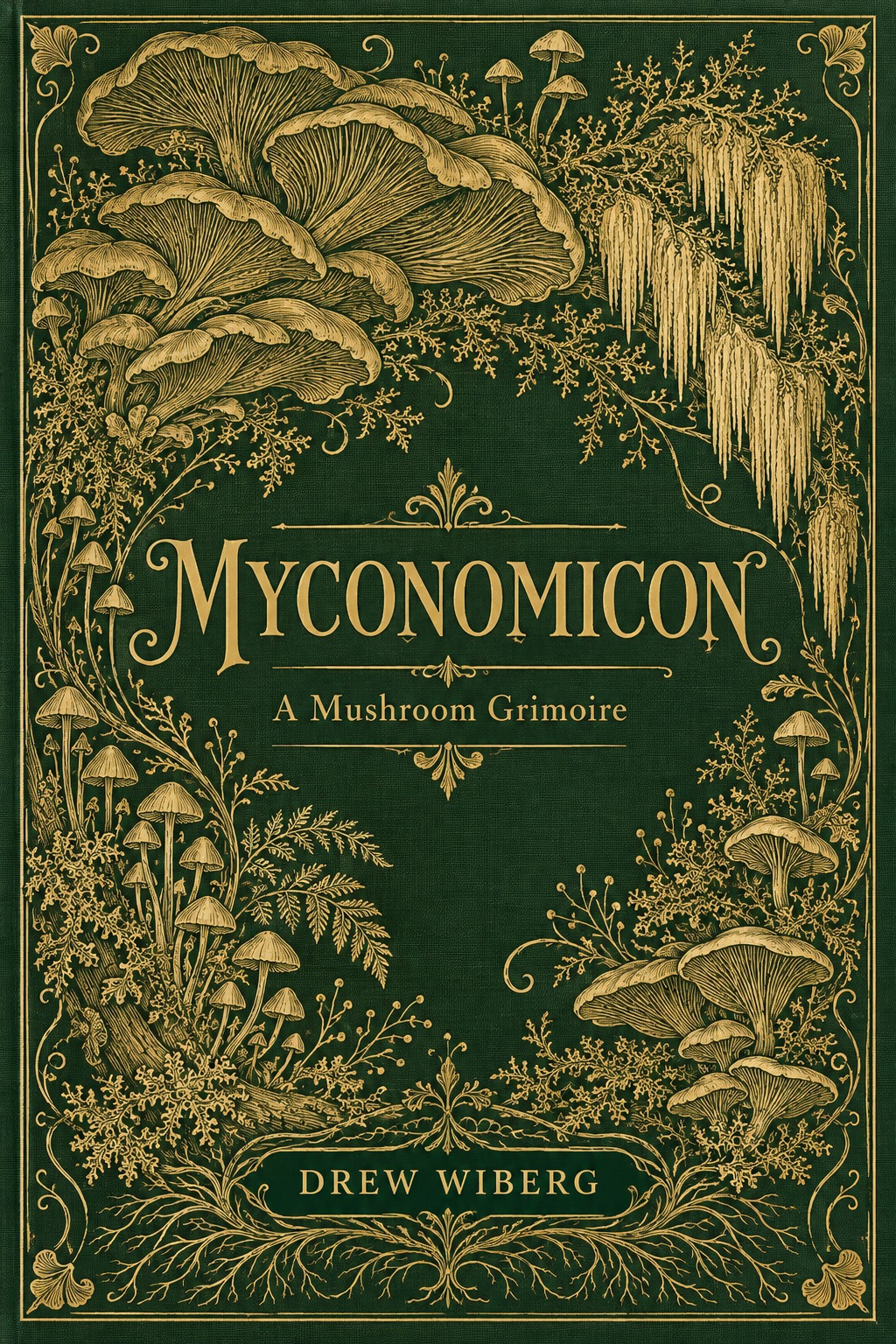
The cover uses a dark green field crowded with gold caps, gills, and branching growth. The illustration note identifies the historical design references, including late-Victorian decorated bindings and the specimen work of Anna Maria Hussey and Frances Reed. The cover and plate compositions were created with generative image tools for this edition; the text is mine.
You can begin with the contents and choose the fungus that draws your attention. The snow fungus will take you toward a soup, the wood ear toward an account of listening, and the shiitake toward wood, fragrance, and an offering. Each has an essay and a source trail to follow.
The Kindle edition is available on Amazon. Read Myconomicon on Kindle, or see the book catalog for the current status of each edition.