When a fan's monster enters a commercial rulebook
The route into Fiend Folio reveals how editing, credit and payment complicate the history of fan contribution.
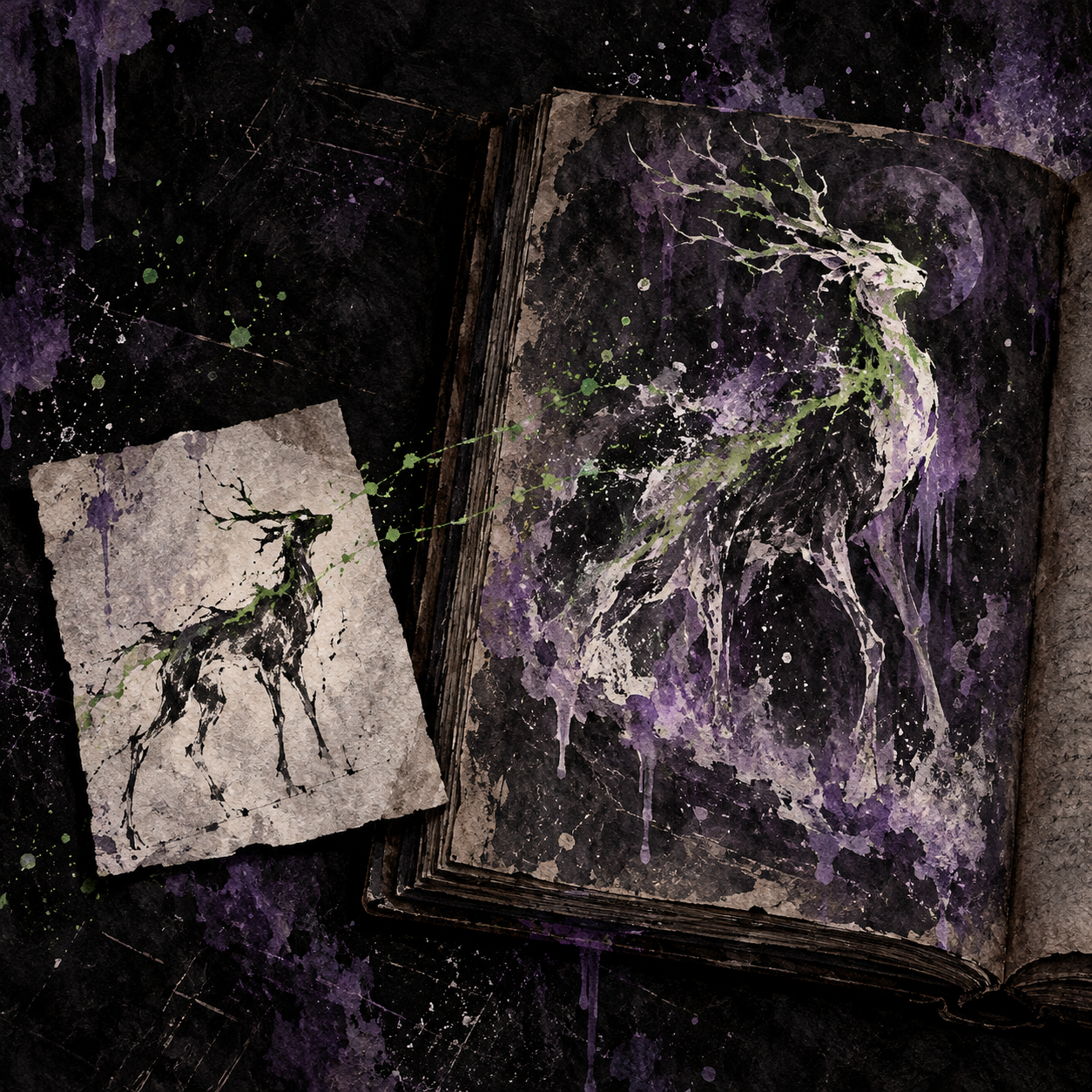
A monster can begin as a solution to a very local problem. A referee needs something for a particular landscape or a particular group, writes it down, and sends it to a magazine. Later, another reader encounters the creature in a commercial rulebook. The final entry may make the invention appear complete and self-contained, although several people and several decisions stand between those two moments.
The contributors to Fiend Folio give us a way to examine that movement. Their accounts complicate the easy story in which a fan makes something, a publisher recognizes its value, and everybody receives an appropriate reward. They also help librarians ask what a record needs to retain when a collective publication is known chiefly by its title.
Scope note: The principal evidence is a small retrospective interview study. White Dwarf and Fiend Folio are commercial publications considered here because their contributors also participated in wider fan and zine networks.
What the contributors remembered
Ian Sturrock and Tom Apperley’s 2021 study presents five contributors’ accounts of their different relationships with the hobby, editorial changes, and uneven experiences of payment and recognition, while explicitly noting the long interval since the events and the absence of retained correspondence among their interviewees.
One important detail is the variation in routes. Some monsters appeared in the magazine before the book; other submissions went into the book without that earlier appearance. A general statement that every creature travelled from a home campaign through a published magazine entry would therefore be wrong. The stages have to be established for the specific contribution.
The study also reports a payment whose practical value was affected by the contributor’s location and banking circumstances, showing why a nominal amount alone would miss the experience that the contributor described. These interviews support particular accounts of participation, rather than a reliable average wage or a verdict about every contributor’s treatment.
I find that specificity more useful than a single moral classification. Enjoyment, recognition, disappointment and compensation can coexist within one person’s account. An interpretation should be able to describe those relations without turning the contributor into an illustration of a conclusion decided in advance.
A collective object with unequal decisions
Howard Becker’s “Art as Collective Action” examines how creative work depends on cooperation and conventions. The person identified as the artist works with people whose contributions are often treated as support. Those relationships enable production and constrain the available choices.
Applied cautiously here, that approach changes the questions asked of a monster entry. Who supplied the initial idea? Who selected it, revised the wording, adjusted its rules, illustrated it and placed it among other entries? Which of those activities are credited in the surviving object? The questions identify work that could matter; the evidence must still establish who performed it.
The distinction between contribution and authority is especially important. Several people can contribute to an object while only some decide its final form. Collective production does not imply equal control. Equally, evidence that an editor changed a submission does not by itself establish that the contributor objected. A comparison of versions may identify a change; correspondence or testimony is needed to establish the participants’ response.
That gives the historical enquiry a clear sequence. Identify the earliest surviving version, compare it with the later one, and separate observable differences from explanations of why they occurred. When a stage is missing, record the absence. A plausible account of editorial intention should not quietly become part of the creature’s documented history.
The publication can hide its contributors
An ordinary title search retrieves Fiend Folio. It may not retrieve the earlier work of an individual contributor or the magazine context in which a related idea appeared. That is a description problem with consequences for historical interpretation. Readers tend to study what they can find, and a collection that makes the book visible while leaving its components obscure can reinforce a publisher-centered account of creation.
The ACRL Framework for Information Literacy treats information creation and authority as matters of context and process. Here, a source-comparison exercise can make those questions concrete. Students could examine the credits and an available earlier version, then distinguish the authority to design a creature from the authority to select, revise and publish it.
A university library need not construct an exhaustive contributor database to support that enquiry. A small, checked guide to one documented contribution could connect the relevant records and identify the gaps. Its value would be the relation it establishes, rather than the number of names it contains. A local-history collection could apply the same approach when a donor supplies evidence of their own contribution to a publication.
The work deserves a boundary. An institutional record should not infer legal ownership from a credit, reconstruct a missing agreement from recollection, or expose private correspondence merely because it would complete the story. The enquiry can remain valuable when it ends with an explicitly unresolved question.
What institutions can do with the lesson
The case also matters when a library commissions a game, hosts a collaborative publication or gathers work from a design workshop. The institution then participates in the same kinds of decisions it might otherwise describe from a distance. It chooses how contributors are named, who may revise their material and what compensation or copies they receive.
I would settle those arrangements before soliciting work. A contributor should know what the institution intends to publish, what editorial changes may occur, and how a later reuse would be discussed. Staff should distinguish recognition from payment and check whether the proposed payment can actually be received. Those recommendations follow from the kinds of misunderstanding the historical accounts make visible; they do not assume that every partnership will reproduce those experiences.
For a finished collection item, the immediate task is narrower. Give a reader a reliable route from the book to the identifiable contribution and its documented context. Where the available evidence supports only a creator’s later recollection, attribute it that way. The monster’s statistics may be concise, but the record of its making should retain the people and decisions that the printed entry cannot explain by itself.