AIYIMA D03 review — input choices and remote control
Twelve firsthand written accounts examine the D03's everyday connections, opposing input preferences, tone settings and remote-control limits.
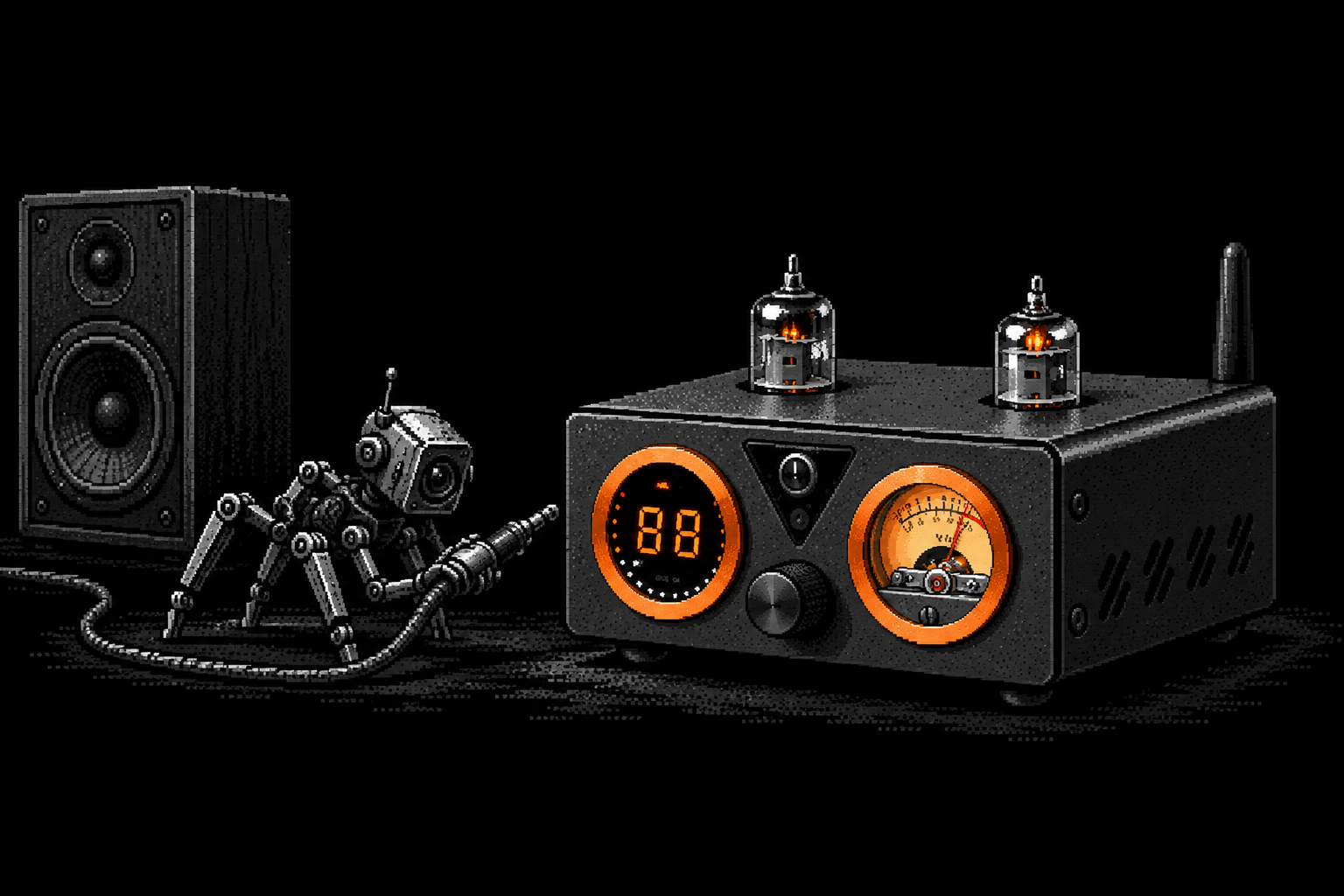
A computer, a television and a pair of passive speakers can turn a small desk into a collection of adapters. The AIYIMA D03 offers several inputs, a remote and a connection for a powered subwoofer in one compact amplifier. Its useful question is whether those connections behave well in the particular system that needs them.
The twelve firsthand written accounts below document working everyday systems alongside input trouble and differing sound preferences. They also contain a practical warning that needs no theory of amplifier sound: a passive subwoofer cannot run from the D03’s line-level sub output.
Scope and exact component
This literature review concerns the AIYIMA D03, catalog ID 3ac4348dae9ba576b43d, with original sources inspected on 25 October 2026. Dated records run from August 2021 to March 2026; several forum comments retain unresolved relative dates. Two longer reviews and ten owner accounts qualify. Seven writers posted through Audiophonics; they are independent author records on one retailer’s moderated page, with that concentration limiting the sample.
Drew has not operated or listened to the D03. George Dobrescu received an AIYIMA sample and uses Amazon affiliate links. robertospeed describes purchasing a unit. Other payment or incentive arrangements are unknown where unstated. Two entries by Franck D. form one record, and the deleted, unattributable forum account does not count.
AIYIMA’s specification page lists RCA, USB, optical, coaxial and Bluetooth inputs, tone controls, passive-speaker terminals and an active-subwoofer output. The factory’s 150-watt-per-channel figure uses a 4-ohm load, 36 volts and 6% distortion. It is not a clean continuous-output measurement made by the writers in this set.
Two reviewers preferred opposite input routes
George Dobrescu used KLH Model 5, NHT C3 and Buchardt S400 speakers. He preferred the D03’s USB conversion to feeding it through the analog input. He also reported clean operation and adequate listening volume with those speakers, while describing reduced low bass.
robertospeed preferred an external Topping D10s feeding the D03, using a Foobar-equipped computer, Q Acoustics 3050i speakers and a 32-volt, 5-amp supply. The writer liked the bass and estimated power by comparison with other amplifiers. That estimate does not become a bench measurement simply because it includes watts.
Their opposite preferences make a universal instruction to bypass or use the internal conversion difficult to defend. The accounts describe different chains without a common matched-level test. A reader can use either as a configuration example, while the preference belongs to the person who made the comparison.
Tone settings can change the comparison
Several Audiophonics owners make the starting state unusually relevant. nicolas s. found the bass control already at +14 on first connection. Hervé N. initially disliked a USB-fed system with Highland Oran 430I speakers and a B&W sub, then preferred it after setting treble to −4 and bass to +8.
Neither result describes a neutral comparison with another amplifier. Both make the displayed settings worth recording before drawing a conclusion. The seller’s explanation to nicolas s. about factory checks remains a secondhand explanation; the owner’s discovered setting is the actual observation.
Eric z. used an external SMSL SU-1 with small speakers near a computer and preferred the D03 for that close listening, while finding a Fosi V3 more forceful. Dobrescu’s reduced-bass impression therefore sits beside several quite different owner judgments. His suggested 70–80 Hz rolloff was a listening estimate, without a response measurement in that review, and cannot establish a built-in high-pass filter.
A remote and a stable input are part of daily use
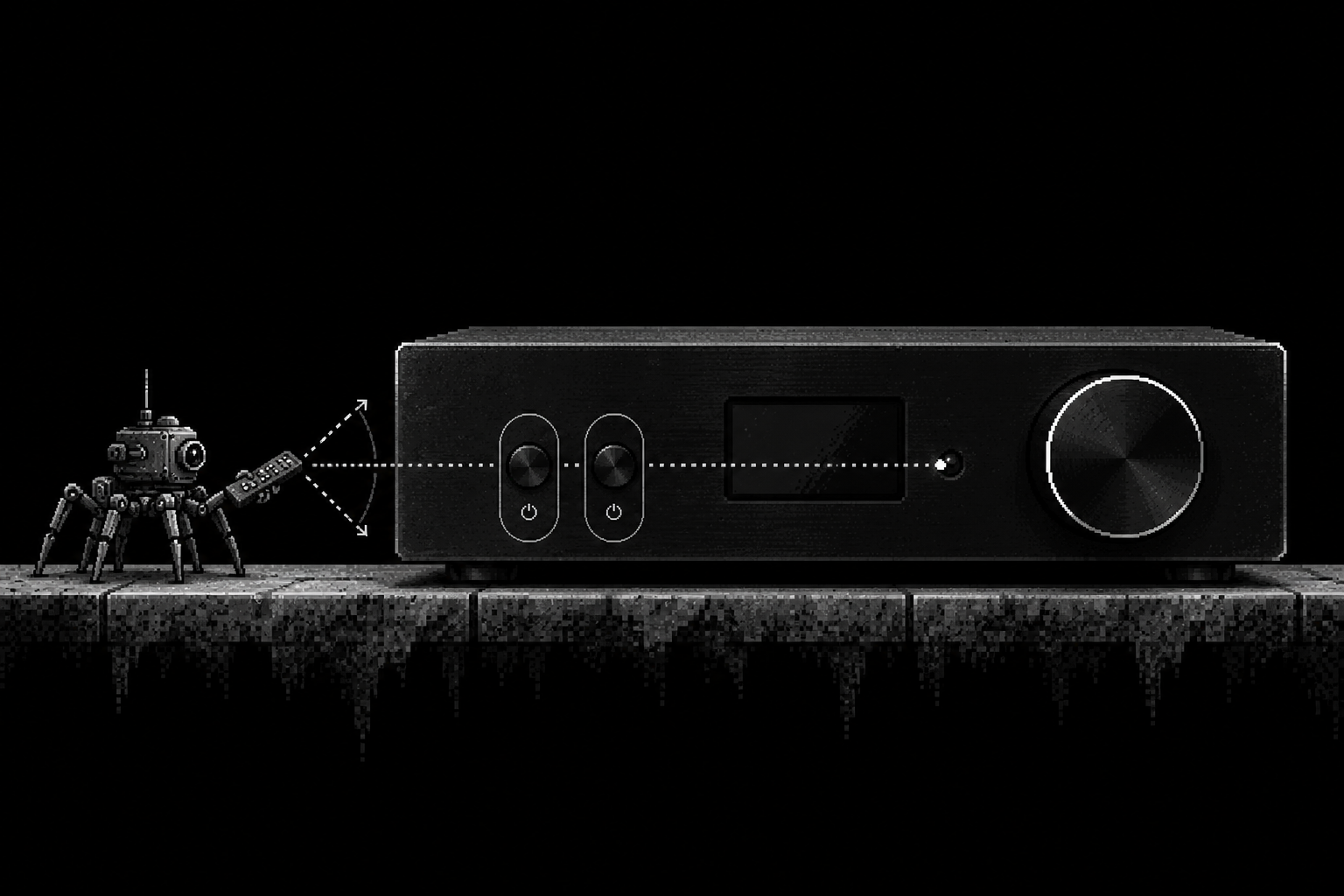
Dobrescu reported a remote that worked from broad angles and Bluetooth that reached another room. Franck D., in the Audiophonics comments, reported much stricter remote aiming and failures when objects obstructed the path, even while enjoying both computer USB and Samsung-phone Bluetooth. Although the two accounts agree that the remote operated, their descriptions do not identify whether the different room geometry, receiver position or individual units caused the disagreement about how carefully it needed aiming.
Timo N. used Bluetooth with Yamaha NS-50F speakers and a Jamo 200 sub in a small living room. The owner’s proposed television connection remained a future option. stripmallsushidude valued the remote and inputs with ELAC Debut 2.0 F5.2 floorstanders for music and television, supplying a separate account of that everyday role.
Emuc64_1 reported six months of daily computer use through optical without trouble. HoagiesNGrinders described more than two years of desk use at over forty hours a week without complaints. Those durations are useful owner histories, though neither establishes a failure rate for everyone else’s D03.
A failed connection needs its exact cause preserved
Audiophonics owner Jean-René N. described intermittent USB disappearance under Windows 11 and conferencing interruptions accompanied by a new-camera message. The writer switched to optical, which worked. The report preserves a functioning alternative without identifying a proven driver fault or showing that current Windows installations reproduce the problem.
The same owner connected a passive home-theater subwoofer and obtained no sound. AIYIMA specifies an active subwoofer connection: the sub needs its own amplifier. Timo N.'s working powered-sub system and Jean-René N.'s silent passive sub do not contradict each other. They involve different electrical requirements.
Physical fit also enters the record. Olivier B. installed a D03 with small Eltax speakers at a friend’s home and liked the result, but found its small terminals awkward with thick speaker wire. The removable terminal caps could unscrew completely. Cable terminations deserve attention before the amplifier disappears behind a monitor.
Current offer and a bounded verdict
On 25 October 2026, DuronTechnologies on Newegg listed the D03 at USD 241.99, with an enabled Add to cart control and product data marked in stock. Displayed shipping was USD 5.99; tax and destination can change the total. Merchant package text specifies a 32-volt, 5-amp supply. These are native USD amounts, without conversion, for this inspected marketplace offer rather than a lowest-price claim.
The D03 has documented value as a small connection hub with speaker power, but the record supports checking its controls and intended input before assigning it a sound character. An unperformed controlled test would begin with neutral tone settings and matched output levels, compare analog and digital routes on the same speakers, then record USB behavior under a named operating-system and driver version. A measured loaded response would resolve the proposed bass cutoff more directly than another adjective.
The twelve firsthand records
- George Dobrescu, Audiophile Heaven — August 2022; supplied unit, three speaker models, digital-input preference; affiliate links.
- robertospeed, Audio Science Review — August 2021; purchased unit, D10s and Q Acoustics chain; contrary input preference.
- stripmallsushidude, owner comment — actual ELAC speaker system, music and TV; remote usefulness.
- HoagiesNGrinders, owner comment — extended desk-use history; setup unspecified.
- Emuc64_1, owner comment — daily optical computer use and working Bluetooth.
- Franck D., Audiophonics — December 2025 and March 2026 entries merged; USB/phone use and remote limitations.
- Timo N., Audiophonics — February 2026; Yamaha speakers and Jamo sub over Bluetooth.
- Hervé N., Audiophonics — January 2026; MacBook USB system improved after tone changes.
- Eric z., Audiophonics — February 2025; SU-1 and small speakers, preference over V3 for near listening.
- nicolas s., Audiophonics — April 2024; own speaker/sub system and initial +14 bass setting.
- Olivier B., Audiophonics — April 2023; actual Eltax installation and terminal handling.
- Jean-René N., Audiophonics — January 2022; Windows USB problems, working optical and failed passive-sub connection.