Two hundred and four drawings, no accepted walk
Prepared images and attached limbs left the work of performing complete actions unfinished.
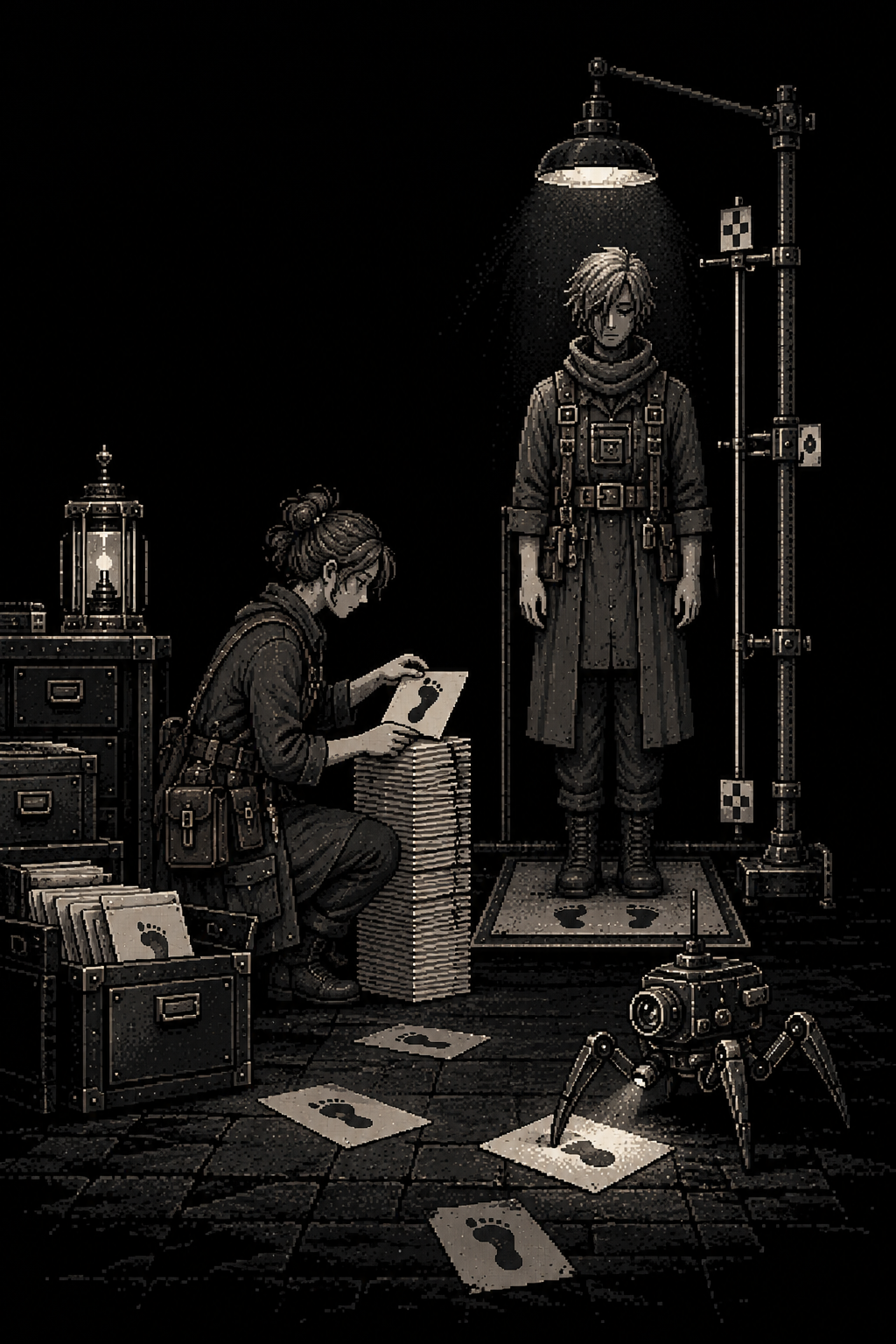
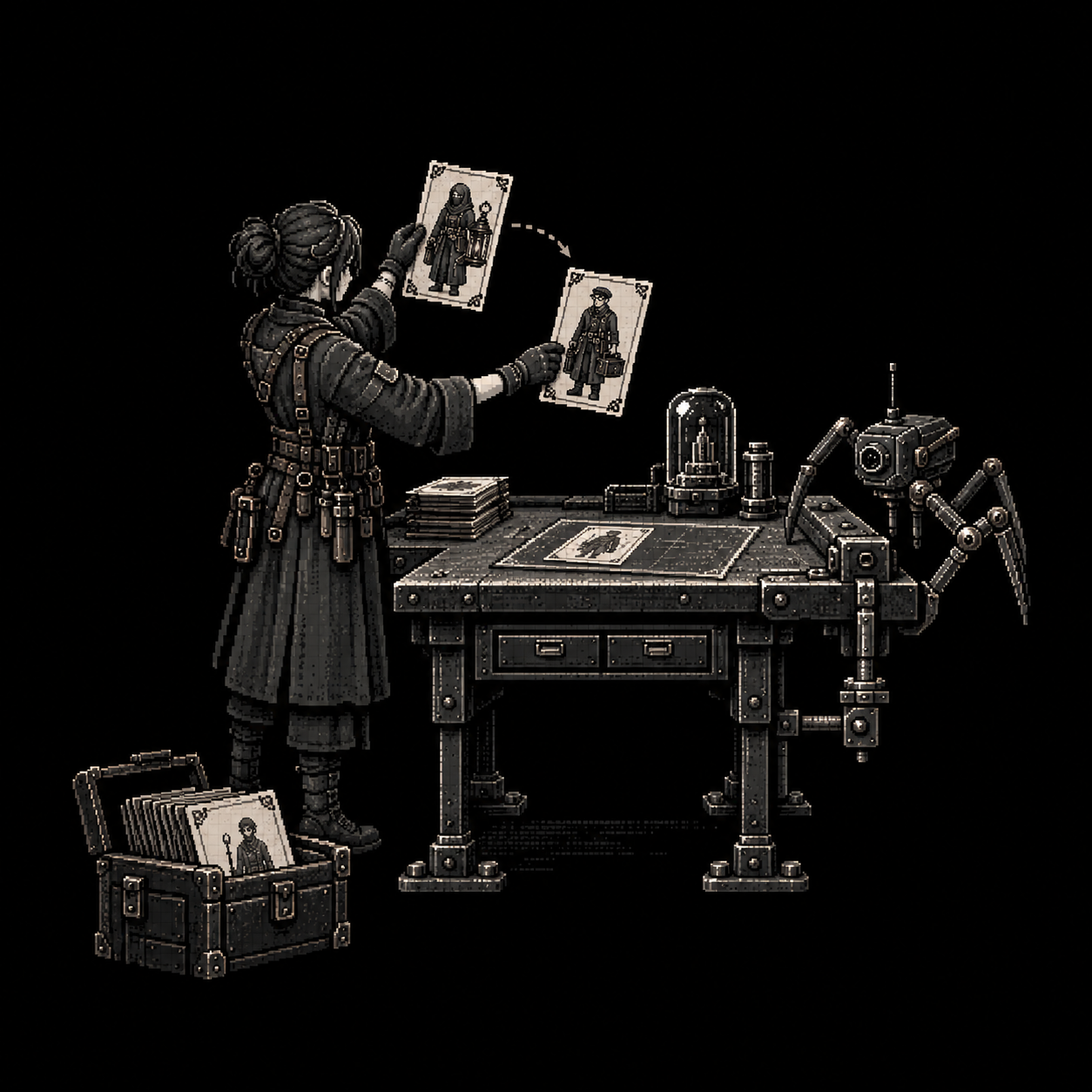
There were 204 prepared drawings in the candidate library and zero accepted action-and-view combinations. The count was real. So was the unfinished work between those pictures.
I wanted broader movement than a few standing poses: crouching, stretching, lifting, throwing, catching, digging and covering, with preparation, effort and recovery. A row of images labelled with those actions could not establish the movement from one state to the next.
The permitted construction changed during the work. I had earlier rejected splitting supplied drawings into parts. Later, I authorized research into rigs, painted three-dimensional figures and more elaborate flat constructions while retaining the environmental stage, so those experiments belonged within the permitted work when they began. Its eventual rejection does not turn it into work the agent had never been allowed to try.
Attached was one useful result
The motion lab exposed basic faults. A startup cube obstructed a doorway. Anatomy became bulky or disconnected. A hand carried the wrong texture, and a drawing folded or split under motion. A review also corrected the description of a mesh: the saved faces were not the triangles the account claimed.
Later versions demonstrated useful engineering behavior. A shared skeleton drove two differently proportioned test bodies through gripping, lifting, turning, placing and releasing a sheet of paper, with reopened files checking selected fingertip contacts around a millimetre apart.
Those were finite achievements. Facial acting, locomotion, nonhuman figures and full viewing remained unfinished in the state record. A convincing grasp did not establish a convincing walk.
I rejected the dimensional actor and requested a return to complete sprites with broader connected action coverage. The resulting catalogue listed twenty categories and 160 named actions. Joseph’s first batch supplied 204 prepared drawings across sixteen families, including both facing directions.
The state record kept the distinction
Codex checked references for walking, stairs and running. Repeated or mixed-direction sheets were rejected and replaced. Transparency, dimensions and file identities were checked. Some short sequences rendered.
The saved library still stated:
  "acceptedActionViewCombinations": 0,
  "status": "Candidate library; motion acceptance remains open",
Public source excerpt. Repository snapshot, requiring repository access.
This is the recorded acceptance state of the candidate library. It shows why an image count could not be used as a count of working performances. The drawings existed, while natural timing, planted support, object continuity and completed review remained open.
A separate editing trial used five seconds of Blender footage in Tesseract, added a fade and exported a playable file. That established a small editing operation on supplied footage. It did not complete the character movement work stored elsewhere.
For the factory, the unresolved unit was an action in a scene. A figure needed to prepare, reach, meet an object, move it and recover. The planted foot had to remain credible while the rest of the body changed. A hand needed to retain the same object through the sequence.
The catalogue offered material for that work, and the rig experiments offered some bounded contact results. Neither could be renamed a finished actor merely because it had a large inventory or a green attachment check. The record remained useful precisely because it kept the accepted count at zero.