Three acts, seven cameras, and a measured clock
A complete equipment film was delivered at four frames per second; the higher-rate production route still required proof.
The first full act produced every required picture, then missed its deadline while closing verification ran. The recording budget had counted rendering work without adequately counting the final checks.
I changed the operating structure to three acts of exactly sixty seconds. Each would be recorded once, in order, on a shared three-minute clock. All seven cameras would record every act. The hands would keep their existing size, and ordinary occlusion would remain acceptable.
I also authorized new permanent camera placements and required separate editable Kintsugi Synth music for each act. Slides and a bell alone did not fulfil the musical soundtrack requirement. The closed earlier commissions kept their original policies.
Include the work at the end
Maintenance retained actual full-act throughput as a floor for new estimates and added the measured closing-verification cost. A fresh equipment test froze three act limits before launch. The failed first attempt remained failed.
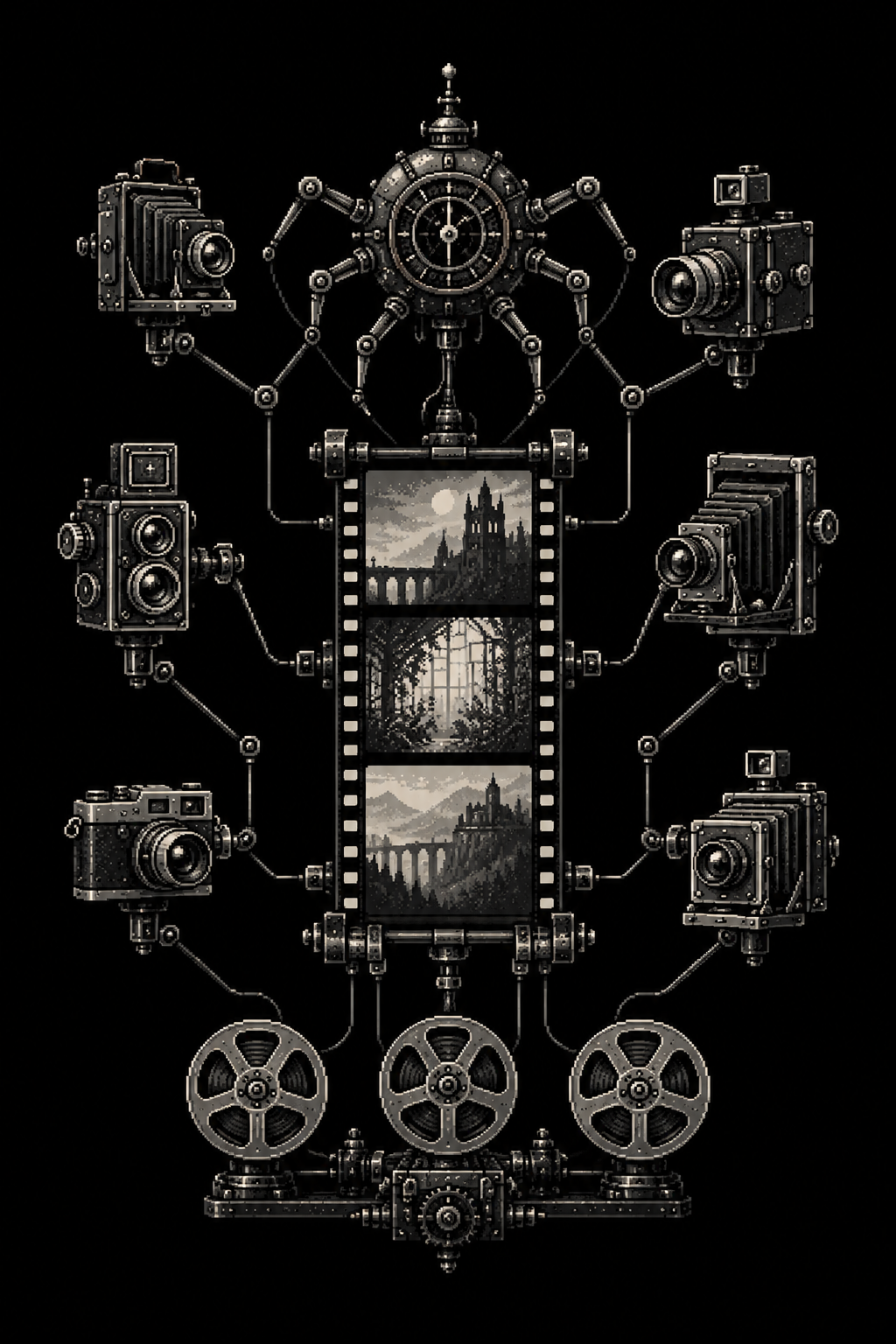
The new test completed all three acts within those limits, with each camera retaining 240 pictures per act at four captured frames per second and 5,040 exposures across the complete three-act, seven-camera recording.
Actual recording times were approximately 749, 696 and 727 seconds, totalling thirty-six minutes and twelve seconds. The real editor then combined the three recordings and soundtracks. Encoding, complete file checks, operating-system sound playback and local delivery finished within the diagnostic post window.
This was a complete equipment demonstration with simulated owner and readiness records. It was not a new performance of the supplied script by the live crew. The preparation figures assembled from separately measured components were also distinct from a measured combined crew run.
Three editable synth arrangements produced sixty-second music tracks. Their delivery levels were measured, and operating-system playback was recorded. Numerical signal checks and playback remained separate from a claim that the assistant had listened to and judged the complete soundtrack.
Raise the picture rate
Four pictures per second still made movement visibly stepped. I directed the production target to twenty-four frames per second.
A two-second native test captured forty-eight exposure times from each camera, 336 images in total. The held camera had a distinct recorded transform at each exposure. The encoded sample contained the expected forty-eight frames and passed complete decode. Repeated four-fps pictures had not supplied the higher cadence.
The capability record retained the boundary:
  "qualified": false,
  "target_capture_fps": 24,
  "qualification_scope": "Two-second 24-fps native sample passed for all seven cameras, encoding and complete decode. Full-act recording and post-production timing at 24 fps remain unqualified.",
Public source excerpt. Repository snapshot, requiring repository access.
These fields establish the short sample and the unfinished sustained qualification. The completed lower-rate measurement cannot supply a deadline for the higher-rate production route. More exposures are an exact workload count, not an already measured render duration.
By the evening of 11 October, further diagnostics had not qualified full-length capture. Some finite repairs passed their own checks, including large-file hashing and profile bindings, while other renderer and mesh candidates remained unadopted because their separate results had not qualified the full-length capture route. I then requested a separate model-led repair handoff, which stopped on a provider session limit.
At this article’s source check, that repair remained incomplete. No new commission had started, and the required full crew delivery and repeat run were still missing. Those are the current results, rather than an ending assembled from the smaller successes.
The factory now has accepted reusable components and a completed lower-rate equipment route. The next completed claim must join the actual script, independent crew, higher-rate seven-camera capture, three soundtracks and local release, then demonstrate the same route again. The retained record leaves a clear place for that result when it exists.