The film factory needs a showrunner
The next operating direction gives the model responsibility for workable staging, timely adaptation and an actual film inside the clock.
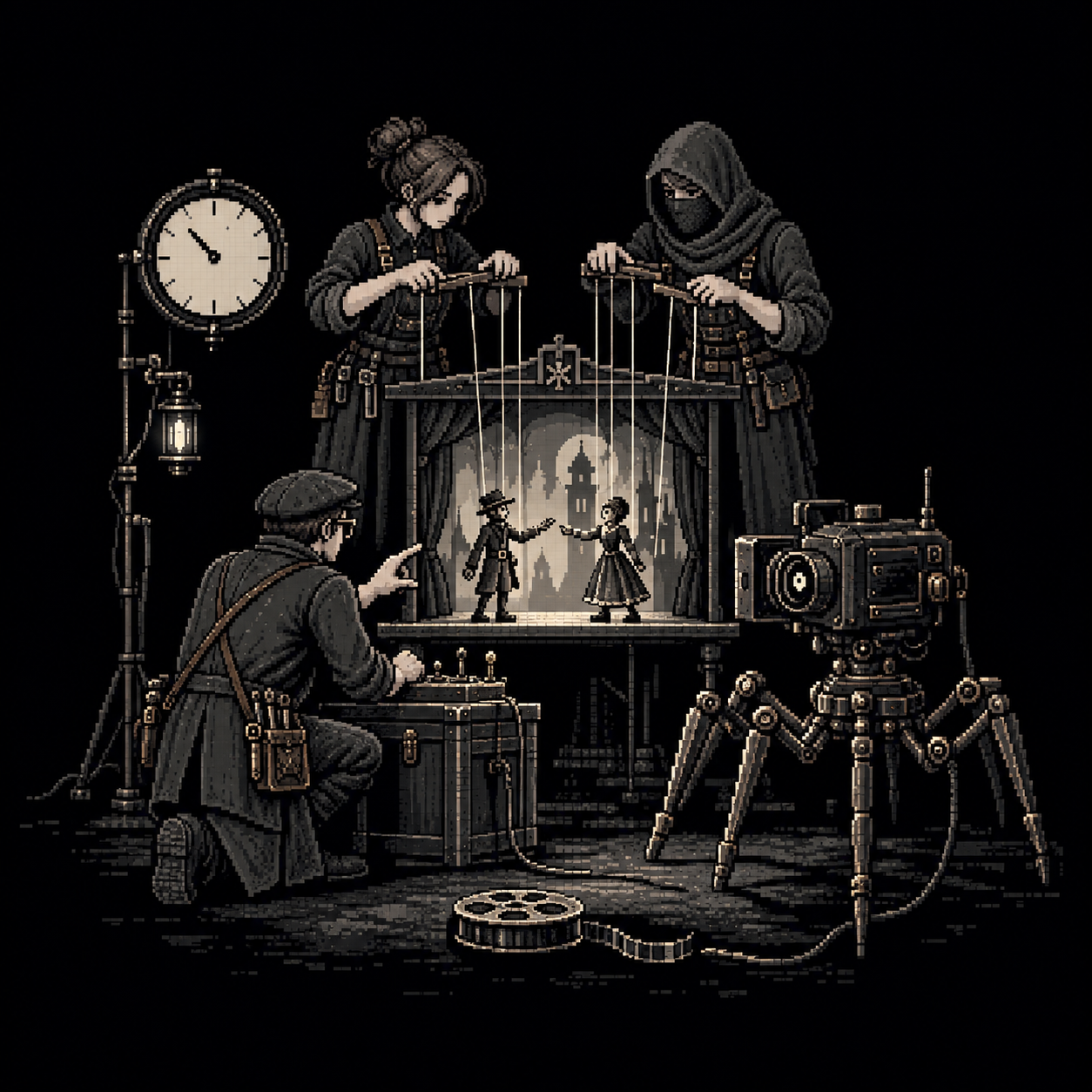
The theatre, puppets and recording system exist. After four more preparation windows, the factory still had no filmed act. I want the model to decide what the crew can perform, respond to failures while there is time, and finish a film inside the production budget.
That is the showrunner direction relayed into this task from my October 14 conversation about stalled work. The practical question concerns footage and delivery. Are the people preparing, performing and assembling something useful, or does the operation keep spending its clock deciding whether it may begin?
Give judgment to the model
My renovation request kept independent creative responsibility with the crew. The Director supplies the script’s required actions and coordinates dependencies. The performer chooses the movement, the scenery owner chooses placements and handling with the relevant crew, and the photography owner chooses views and cuts within the script’s directions.
The software has concrete work to do. It operates supported controls, preserves contributions and saved scenes, enforces actual permissions and the clock, and returns truthful observations. It must not turn an available measurement into a substitute for the model’s decision about what the show needs.
The recorded project instruction states the finish:
The required completion is autonomous films from two different scripts, then a repeat without bespoke repair.
Public source excerpt. Repository snapshot, requiring repository access.
This is a specified requirement from the renovation authority, preserved in the source snapshot. It is not an implemented success condition that has already passed. None of the four new commissions produced an acceptance film, and the different-script performance and repeat are still missing.
Spend the clock on the performance
The proposed Director inspects the script, available assets, current owner choices, actual capability evidence and remaining time before choosing executable staging, supplying the independent owners, and trying difficult related beats as soon as their inputs exist. A failed contact returns to its actual owner with the measured cause; the owner chooses another reachable means within the obligation.
The scene writer should combine and observe those choices without requiring every department to finish first. An owner waiting on a supplier needs the supplier’s new information, rather than another launch with the same inputs. A failure near the beginning should reach the crew promptly enough to affect its next decision.
The Director also needs to preserve time for filming and editing. The recording route now has full-length equipment measurements, so the remaining time can be compared with an actual workload instead of a hopeful estimate from two seconds. The model must stop adding preparation while capture and post still fit, then obtain the footage and deliver the assembly.
An imperfect gesture or missed cue can remain in an act. The script’s dialogue, action order, visible consequences and explicit viewpoints still govern the performance. Resilience means choosing a workable response within those requirements; it does not make the original dramatic obligations disappear.
Keep the take policy explicit
The current rules call for three complete sixty-second acts, recorded once each from the checked scene, so a method that continuously captures revised staging and assembles several takes would change those rules. The coordination message asked for inspection and a proposal only, so this account does not claim that continuous capture has been authorized or built.
Early combined observations and an earlier recording decision fit the existing remit. A different take policy needs my direct change. The older stopped shows and the four closed preparation failures remain closed while that distinction is preserved.
I also enabled Claude Code remote access to the actual repository with editing capability. That gives me a way to act on the project directly. It does not establish that the proposed showrunner loop has delivered anything.
The next report must be able to identify a completed film, its retained footage and its finish inside the original clock. After that, the factory still owes the different script and the repeat through the same reusable method.