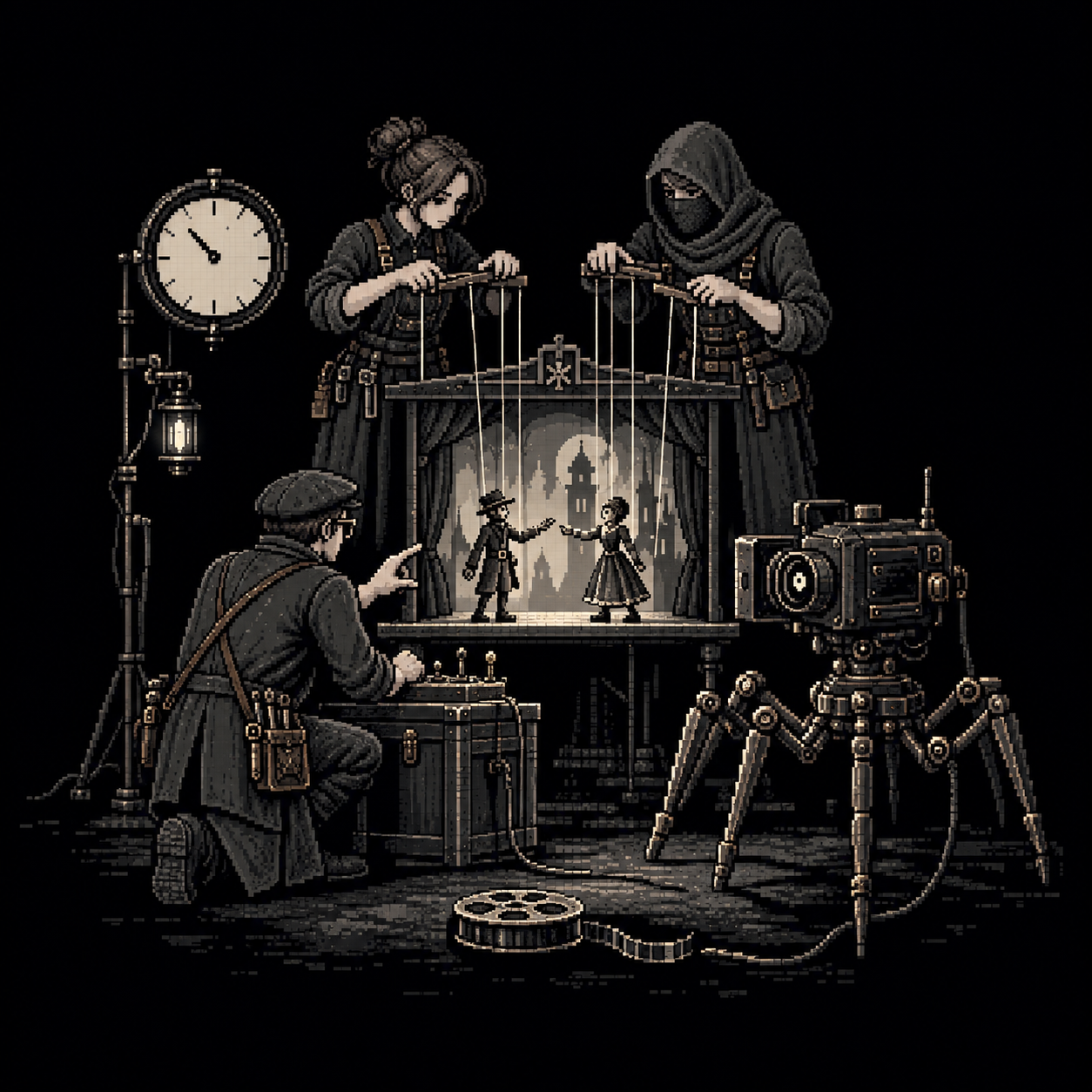
One plan finally reached the cameras
After a showrunner stopped during act three, the Film Factory moved to one cue book and a cached build through the permanent theatre.
The first showrunner agent reached the third act and stopped twenty seconds before its end. Two acts were complete. The third held 960 of its required 1,440 pictures, and the whole play still had no finished recording.
I had asked for a repeatable way to film numbered scripts in my Blender theatre. The room, scenery, painted rod puppets, projectors and seven cameras already existed. After attempts with separate department agents, one showrunner had taken responsibility for the whole production. It got further, but its deadline still ended the film before the final bell and fade.
The next change concerned how a film was built from the model’s decisions. One agent would write a complete cue book. Software would translate that book into the supported equipment controls, perform and measure the scene, record it, and cut the footage.
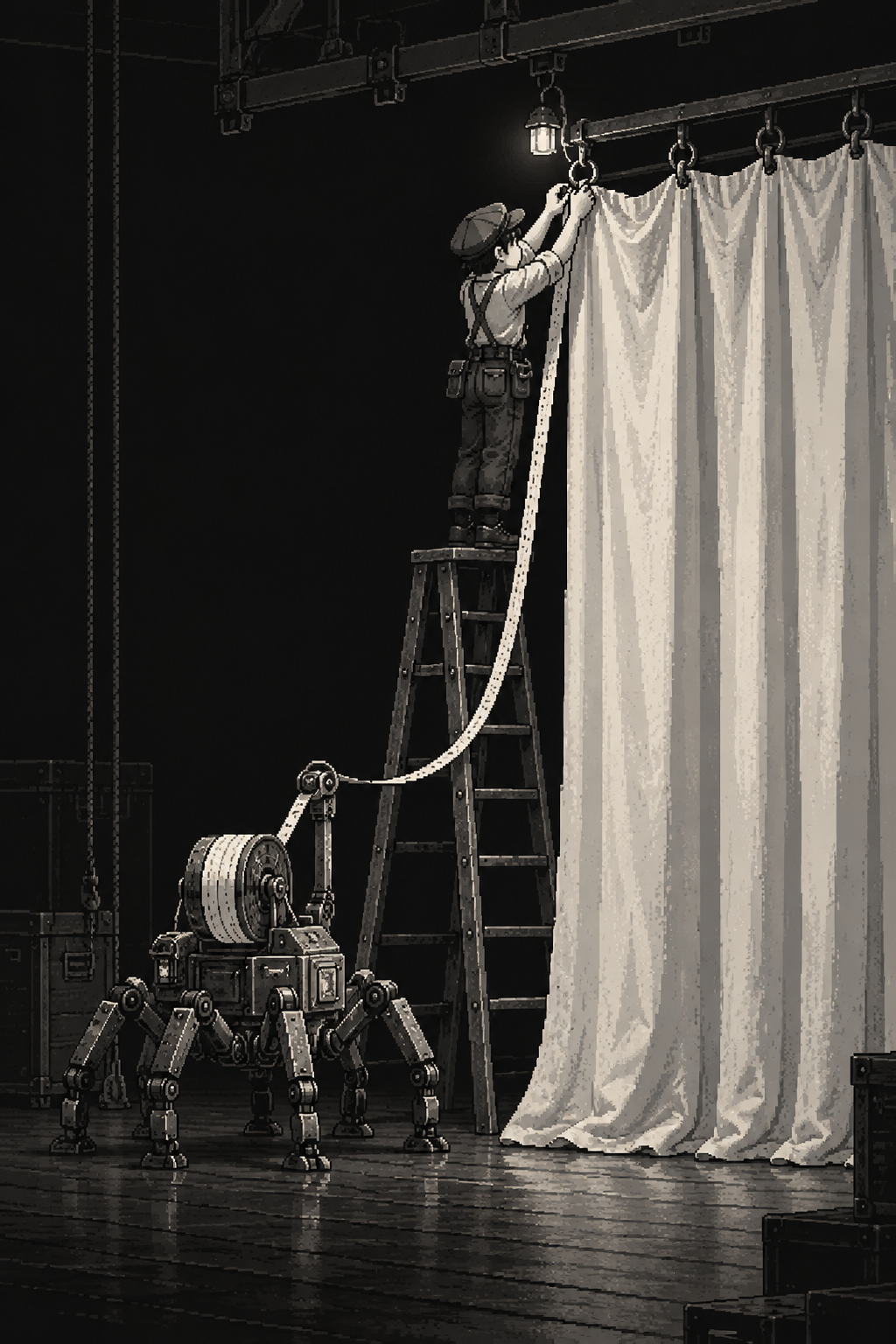
The clock included work between the acts
The showrunner’s successful preparation mattered. It assembled the scene, corrected a camera direction that contradicted its own measurement, and passed all twenty-five required actions, including a bell contact that a preceding crew had missed. Preparation finished with eleven minutes to spare.
Capture then exposed a budget error. The three act allowances totalled 764 seconds, but repeated hashing and take verification consumed 95, 65 and 25 seconds before and between the acts. Those operations came out of the same deadline as rendering. The implementer’s diagnosis also identified heavy memory pressure on the shared Mac and substantially slower rendering in act three.
The closed run stayed closed. Its repair added explicit verification allowances and more capture margin. A subsequent launch then spent its continuations receiving a Claude plan usage-limit message, without producing an accepted proposal. Neither result established the repeatable factory I had requested.
These failures did not show that the theatre could never perform the script. They showed that removing the departmental negotiation was insufficient while the remaining route could still turn recoverable work into another closed production.
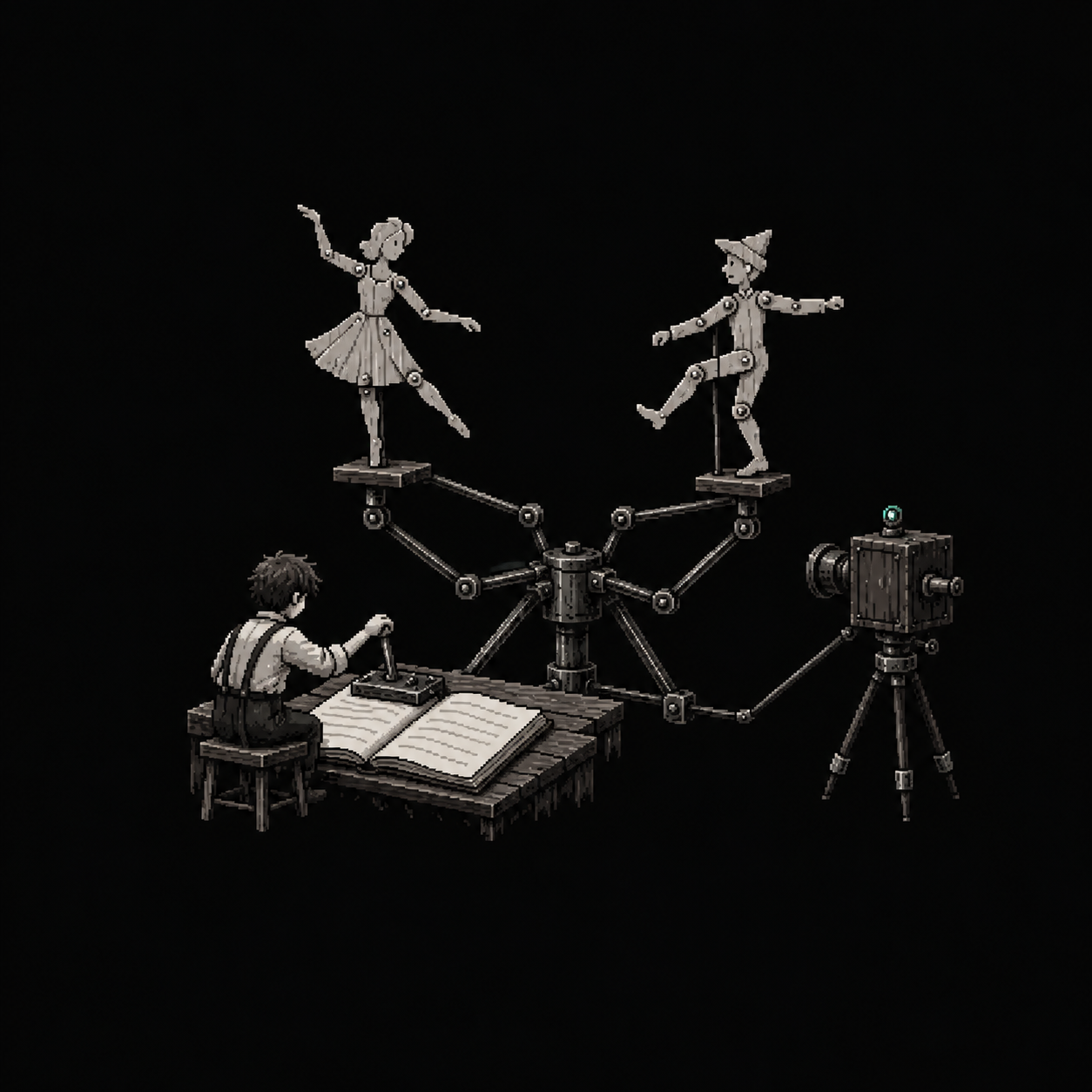
Put the decisions in one book
On October 17, I restated what I needed: use the existing Blender environment, let models make the decisions needed to execute the script, and reduce the mechanical harness around them. I also rejected an approach that made me return to approve every intermediate stage.
Claude Code completed the film compiler, a build system whose source is a prompt book. The book names every cue on one 180-second clock. It includes actor movements, gestures, scenery handling, lights, screen timing, camera choices and music. The planner receives the exact script, packaged dialogue cards, timed blocks, standing directions and a catalogue of equipment it can actually use.
The book contains actions such as enter, approach, touch, turn and release. Each has an implemented meaning. The planner chooses the action and its dramatic purpose; the software calculates the rod tracks and equipment inputs. A checker returns the particular cue that is too fast, conflicts with another action or names something absent from the catalogue.
The runner’s sequence is explicit:
STAGES = ['prepare', 'plan', 'compile', 'media', 'sound', 'stage', 'fog', 'camera', 'shoot', 'cut', 'report']
Exact source and provenance. Retained source file.
This is the route implemented in the repository, not a claim that naming eleven stages makes a film. The later delivery records supply that evidence. Here, the change is that the model can express one coherent production while the build executes and checks its parts.
Preserve work that already passed
Each completed stage records the identities of its inputs. Matching work can be reused after a restart; changed inputs cause the affected stage to run again. A fresh performance preserves its predecessor in history. A separate camera stage allows a framing correction without rebuilding unrelated physical simulation.
I authorized this route with changed operating rules. The old crew, preparation clock, one-take policy and gold handoffs were retired for new productions. The theatre, puppets, hand size, exact script, three sixty-second acts, seven selected cameras and actual 24-fps recording stayed binding. So did the physical acceptance limits. The earlier commissions retain their original rules and failed results.
The old code was not discarded wholesale. Recording, editing, geometry and storage routines remained useful libraries. Their former coordination entrypoints moved into a retired folder. The question for the next build became whether the cue book could carry a complete performance through those retained tools, including the curtain data loaded by the scene the cameras would record.