Navigation, Not Certainty
Knowledge work under uncertainty needs scenarios, decision points, transparent process, and the relationships that help people use them.
People ask for predictions when they are under pressure to decide, and the request sounds reasonable enough: tell us what will happen, which technology will matter, where to invest. The difficulty begins when a knowledge practitioner mistakes the pressure for evidence and answers with a certainty the work cannot support.
I prefer the role of navigator to oracle. Offer scenarios, options, and decision points; teach colleagues how to read signals and see how patterns relate; make the process transparent enough that nobody confuses the craft of interpretation with a private source of certainty. Oracles have better robes, admittedly, but navigators leave a route someone else can inspect.
Navigation is not a weaker version of expertise. It is expertise suited to uncertain conditions. A route can be revised when evidence changes. A false prediction tends to hide the conditions under which it was made, then leaves a group with little to examine when it fails.
A scenario is an aid to judgment
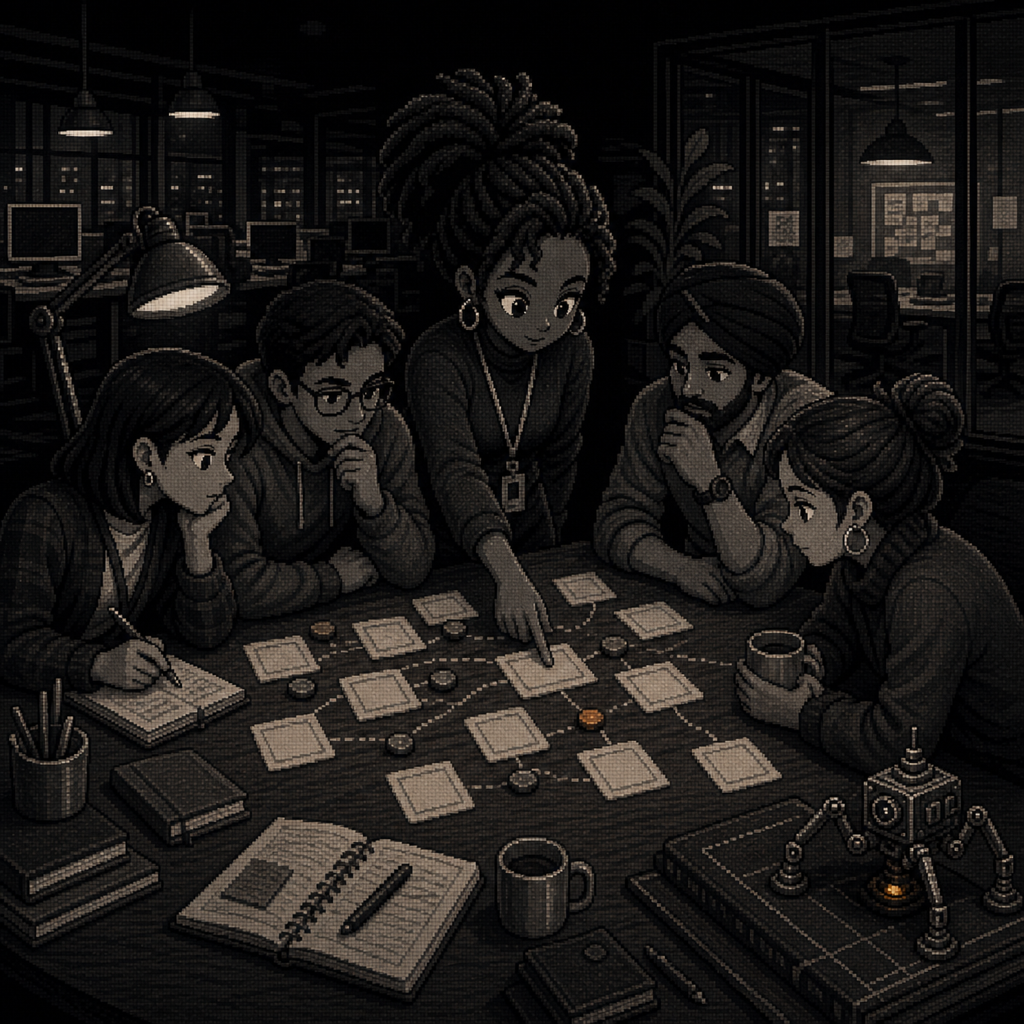
A scenario does not say that one future will arrive. It gives people a way to consider a possible condition and ask what they would do if it emerged. Options make the available choices visible. Decision points identify the moments when new evidence should change a course of action.
This approach does not ask colleagues to abandon judgment. It gives them more of it. Instead of receiving a sealed forecast, they can see the signals being considered, the uncertainties that remain, and the decisions that would follow under different conditions. The knowledge practitioner becomes a guide through an evidence field, not a speaker who claims to stand above it.
Transparency is the practical requirement. If the method is hidden, colleagues may mistake a disciplined interpretation for mysticism. If the process is visible, they can challenge an assumption, contribute a missing condition, or recognize when a signal has changed. Collaboration enters through the method itself.
Systems need people who will use them
Sophisticated systems do not sustain themselves. A taxonomy needs champions. An analytics dashboard needs curious users. A knowledge system becomes useful through the people who rely on it, identify its limits, and help shape the interventions around it.
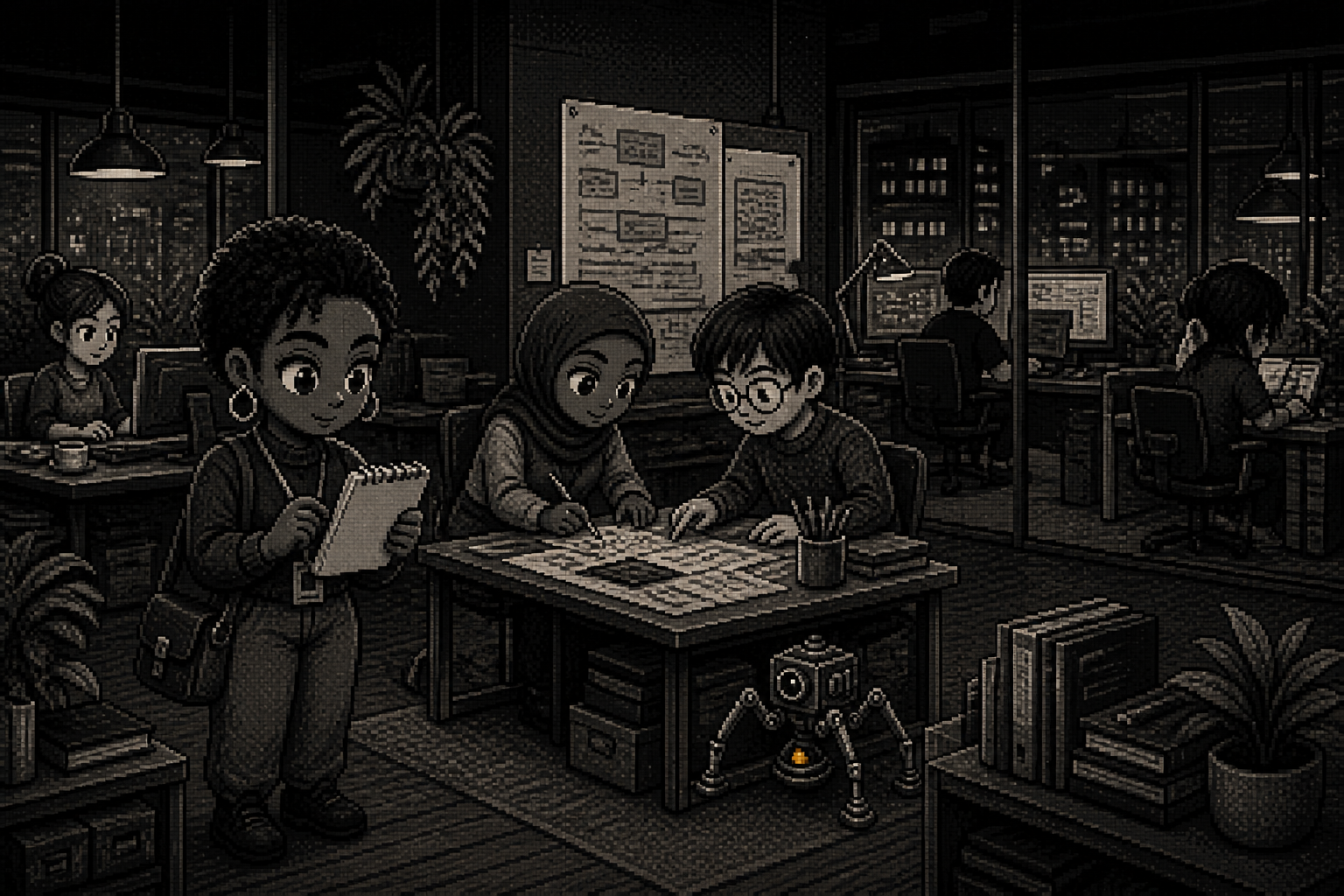
This is why relationships deserve sustained attention. A practitioner needs to understand the constraints of the people who will use a system. Co-design is not an ornamental workshop stage. It is the way a route becomes connected to the terrain people actually have to cross.
Even bringing pastries to an early workshop recognizes an ordinary condition. Attention is not guaranteed because a system is elegant. People have schedules, priorities, and fatigue. The relationships built through repeated contact become the coalitions that can defend experimentation when budgets tighten or a pilot stalls.
Preserve the work while it is happening
Documentation gives navigation a memory. Capture experiments, hypotheses, and recurring questions, then build a cadence for sharing those reflections. The form may be a monthly memo, audio journal, or mural wall. What matters is that the record carries the work forward.
These artifacts help a new collaborator enter without replaying old missteps. They also show leadership that progress can accumulate even when the route changes direction. A project may feel stalled on a given day while its records reveal a sequence of decisions, tests, and revisions that would otherwise disappear.
The record should not pretend that every experiment succeeded. A navigator needs failed routes as well as successful ones. They show which hypothesis did not hold, which signal was misread, and which option remains open. The point is not to make uncertainty look productive by definition. It is to retain enough evidence to learn from it.
Protect the person doing the navigation
Futures work can be tiring. An organization says it is too busy to plan, pilots stall, and language that seems practical to one group sounds like science fiction to colleagues focused on quarterly metrics. A practitioner needs community and deliberate recovery in order to keep doing the work.
This is not separate from knowledge management. A system that depends on one exhausted interpreter has no durable route. Sustaining the person sustains the capacity to read evidence, convene people, and preserve the work as it changes.
Navigation offers visible routes through evidence, decisions that can be reconsidered, and records that let the next person see how the group arrived where it is. That may feel less satisfying than a prediction when the pressure is high, but after the signal changes—and it will—the route gives everyone something better than a failed oracle to examine.