The Digital Open-Air Market Needs an Answer
Idea channels work when priorities, routing, participation, and regular feedback make employee contributions visible and answerable.

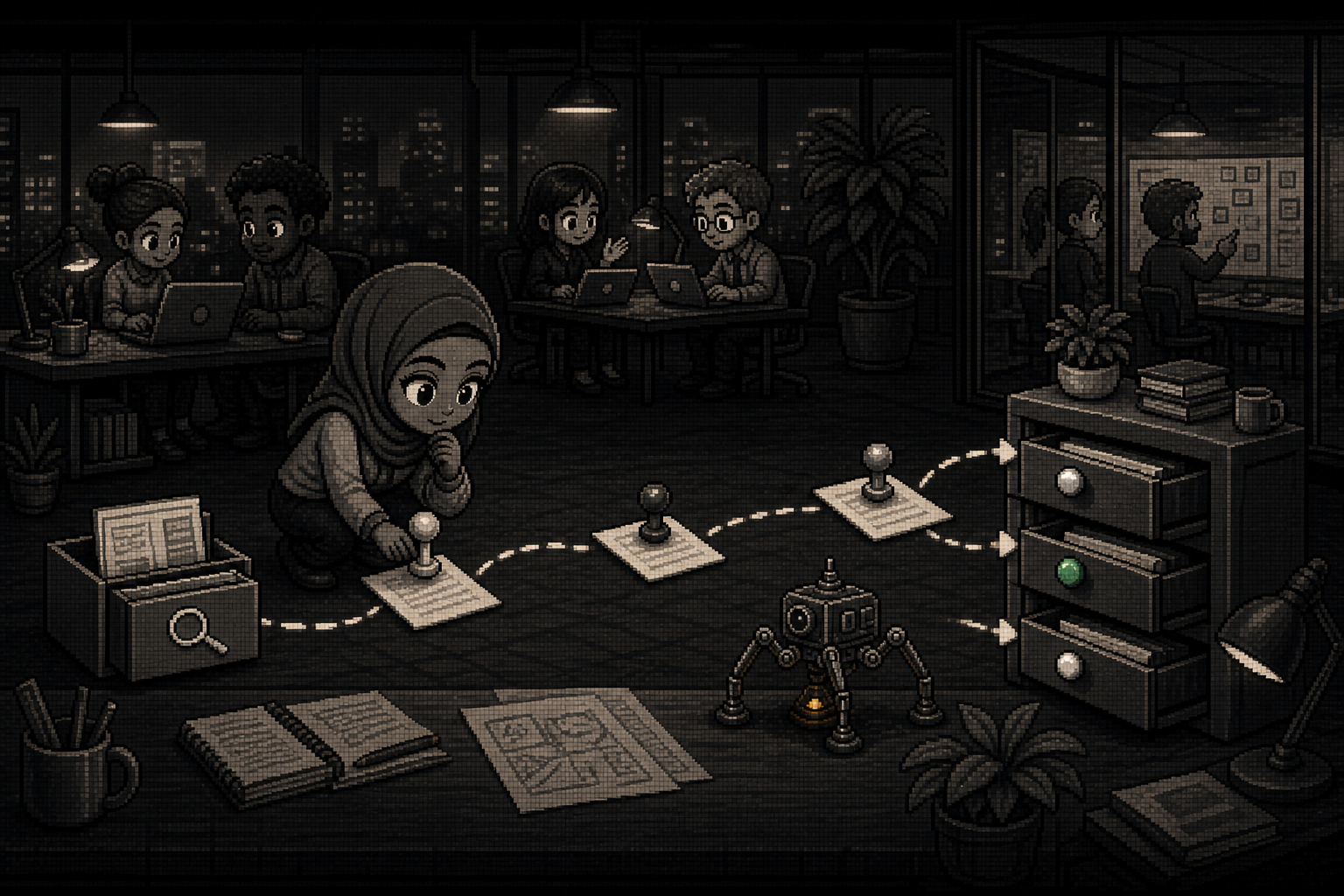
An idea channel can invite contributions with great ceremony and then become quiet in a more damaging way. People submit thoughts, the platform receives them, and no answer returns from the people who own the work; the channel remains open, but participation learns the actual rule: put something in and expect it to disappear.
The open-air market comparison gives idea management a more useful shape. In this arrangement, people contribute ideas that address visible organizational needs. Priorities are visible enough to guide those contributions. Suggestions can be categorized by their authors or routed through automated keyword matching. The channel gives people a way to participate and makes the needs worth addressing more explicit.
The comparison is not an argument for no governance at all. It asks a sharper question: when participation grows organically, who sets the terms of exchange, and who remains responsible for answering the people who take part?
Make the needs visible before asking for supply
An innovation marketplace has a supply side. Employees bring ideas that may address organizational needs. The market only becomes useful when those needs are visible enough for contributors to recognize where their suggestions belong.
This is not a demand for a rigid catalog that predicts every useful idea. The requirement is transparency about priorities, not exhaustive control. A contributor should be able to see the areas where attention would be valuable, then connect an idea to one of those areas without being forced through an elaborate administrative process.
Manual categories offer one route. Automated keyword matching offers another. Both are forms of routing: they help an idea reach a domain where someone can understand its relevance. The route does not have to decide the idea’s value in advance. It has to make a conversation possible with the people whose work the idea touches.
Organic classification has a real job
Hashtags in a dedicated information channel may reproduce part of the marketplace structure. They let participants classify material as the channel grows, with little overt intervention by a knowledge manager. This kind of shared labeling, often called a folksonomy, has drawn skepticism in structured information environments. The skepticism is understandable when stable records need strict and durable classification.
Idea management has a different condition. A new suggestion may not fit a settled category because the point of the suggestion is that it identifies an emerging connection or need. A flexible label can make that connection findable before the organization knows whether it deserves a formal place.
The flexibility is useful only if the channel remains legible. People need a way to recognize which labels carry related ideas and which route a contribution toward a relevant group. The market can be organic without being indifferent. A lightweight structure gives participants enough orientation to add something that another person can see and consider.
A platform cannot carry the whole program
A knowledge manager with a technology platform can only take an idea-management program so far. The system can collect submissions, show priorities, preserve categories, and route keywords. It cannot supply the human willingness to monitor the channel and respond to contributions.
That willingness belongs with individual stakeholders and communities of practice. They know the work that an idea might change. They are also the people who can explain why an idea fits, does not fit, needs more development, or should travel to another domain. Without their regular attention, the platform performs intake but not exchange.
This is the point where the market image becomes demanding. A market is more than goods arranged on a surface; it depends on people who notice what is offered, respond, and maintain the conditions for another exchange. The same applies to an idea channel, although software has made the empty stall look much more impressive. A contribution needs a return path.
Feedback prevents the idea black hole
An initiative cannot be allowed to become an idea black hole. This is not a complaint about every idea being rejected. Rejection can be informative when it comes with a real response. Silence is different. It removes the contributor’s ability to understand what happened and leaves the community unable to learn from the exchange.
Regular feedback can be minimal. It still needs to come from leaders in the areas the ideas intersect with. A short answer can say that the contribution has been seen, that it belongs elsewhere, that conditions make it impractical now, or that the group needs to examine it further. The important part is that the channel demonstrates a relation between participation and response.
I would judge the digital open-air market by whether it makes needs visible, lets people contribute, routes ideas toward relevant practice, and returns an answer. Remove that last part and the market becomes storage with a louder sign, while contributors—quite reasonably—take their next useful idea somewhere a person might answer them.