Connection and isolation in Kairo
Kairo makes technological connection coexist with disappearance, prompting a closer distinction between an available channel and a library relationship that someone actually sustains.
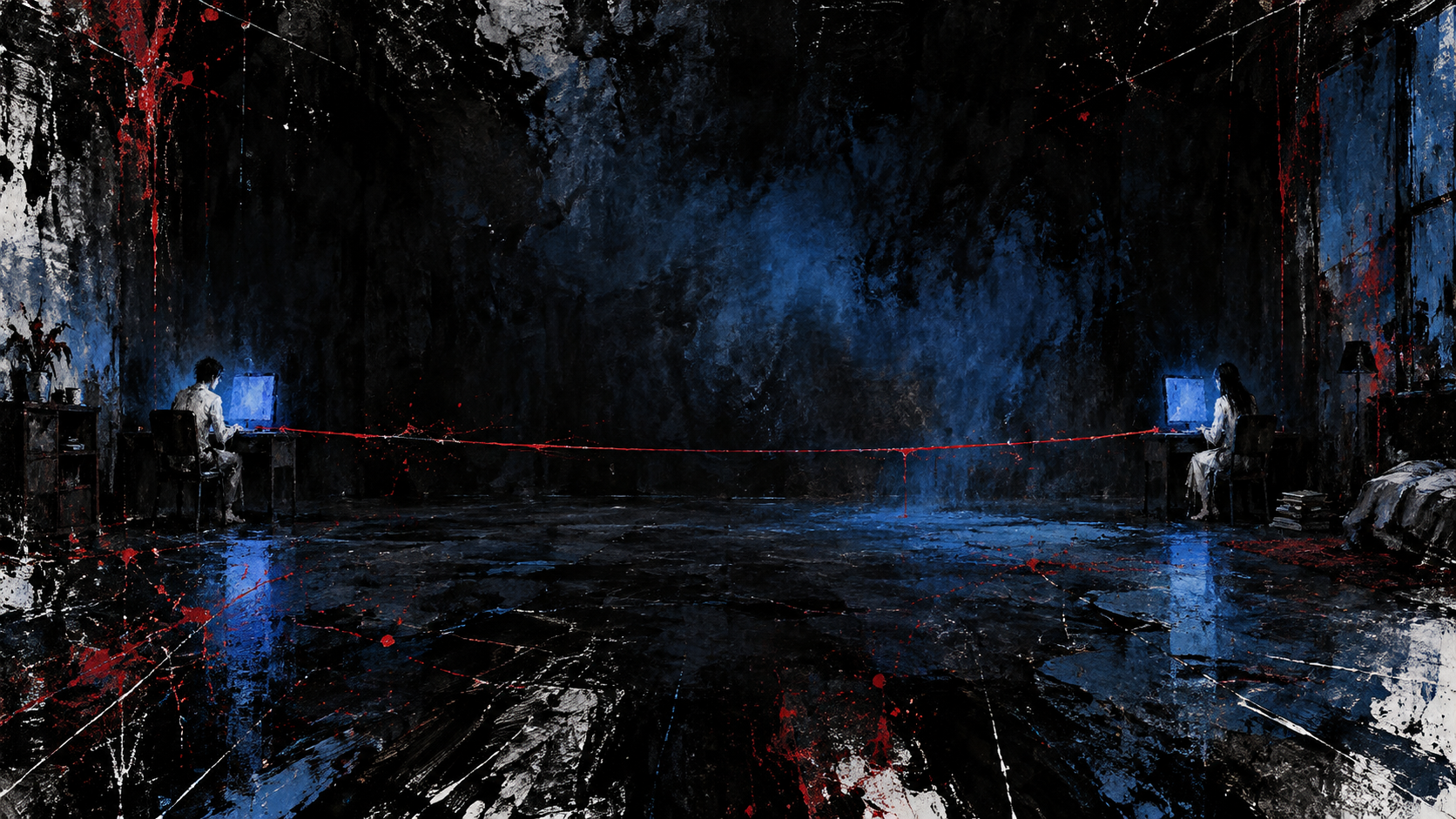
A message can reach a system without reaching a person who will answer it. The interface may confirm delivery, display a connection, or keep a channel open. Those are useful states, but none alone establishes that the relationship the sender sought has begun.
Kiyoshi Kurosawa’s Kairo, released in Japan in 2001 and also known as Pulse, makes that gap central to its horror. The licensed description identifies technological breakdown, a website inviting ghost contact, disappearing friends and coworkers, and a city growing empty. This essay concerns the Japanese film rather than the later American remake.
The professional comparison begins with the promise of contact. A library can make remote help available through a channel whose technical operation is easier to count than the human response it was introduced to support. The film offers a precise question about that difference, while actual service evidence must determine whether it exists locally.
A network keeps connecting as people disappear
The Atlas treats Kairo as a case in which the ordinary promise of connection remains recognizable while its social guarantee fails. Screens, communication lines, private rooms, and urban routes continue providing the forms through which people might reach one another. Their continued operation does not sustain the people using them.
Adam Lovasz’s article abstract describes communication technology becoming a conduit for disappearance rather than connection. His reading develops repetition and spectral posthumanism as critical concepts. The full argument requires the article; the abstract does not license an account of every scene or an empirical conclusion about internet use.
The difference between technical availability and social presence helps keep the film’s mechanism visible. A connected interface can communicate an image of someone while leaving their situation inaccessible, just as a route can exist while the person who might use it becomes less able to act. Neither condition reduces to the absence of machinery.
The Atlas’s case record links that distinction to the film’s rooms and increasingly deserted city. A room is ordinarily a place where someone can withdraw and remain present elsewhere through communication. In the case analysis, the room and the network cease to support that ordinary relation between refuge and contact.
I would keep a discussion close to one attempted connection. What does the character expect the medium to accomplish? What sign suggests that the connection exists? What remains unknown about the other person? The sequence gives participants evidence to distinguish contact, representation, and response without requiring a single diagnosis of the entire film.
The same restraint matters when considering loneliness. The film can support an interpretation about isolation, but its constructed events cannot establish the effects of a real communication platform or explain the circumstances of actual people. A reader’s experience belongs to evidence that the film does not supply.
The reply is part of the service
Remote reference offers a bounded professional comparison. A library may advertise email, chat, or a request form. The useful question is whether the advertised route brings a reader into a response process whose responsibility, timing, and continuation they can understand.
The RUSA behavioral guidelines make engagement, listening, searching, and follow-up professional concerns. These guidelines support examining the quality of the encounter. They do not establish that a connected chat session or a submitted form has met the reader’s need.
Take a hypothetical question submitted after staffed hours. An automatic acknowledgment could accurately confirm receipt while leaving the sender unsure whether anyone will respond, when a reply should arrive, or whether they should try another route. Each uncertainty concerns the service’s organization rather than the reader’s ability to operate the form.
A local review could follow that one question from submission to a responsible staff member, then through any referral. Record where ownership changes and what the reader is told. The question may legitimately require a different department, but the transfer needs a named next action and a responsible recipient if it is to preserve the relationship the library has already offered.
This review should avoid treating silence as a complete explanation. A person who stops replying may have obtained what they needed, changed plans, lost access, or decided not to continue. Follow-up should be proportionate and voluntary. The institution needs evidence before turning an absent response into a story about the user.
Make a limited promise that someone can keep
For one remote channel, I would put the expected response period and the alternative route beside the submission control. The wording should describe actual staffed practice. A promise that nobody has authority or time to fulfill only makes the interface’s confirmation more misleading.
Then test a handoff that requires another unit. Establish who tells the reader about the referral, who receives the unresolved question, and what happens if the receiving unit cannot help. The responsible person should be able to explain the next step without sending the reader back to an unchanged form.
For a Kairo programme, that concrete sequence can open a discussion about what the film asks viewers to expect from a network. The professional comparison remains useful because it concerns an observable gap between connecting and sustaining a relation.
After changing the channel’s explanation, submit a legitimate test question through the advertised route and follow its actual response. Check whether the answer, delay, and handoff match the promise a reader was given at the screen.