The working account and displaced performer in Cam
Cam separates an active online identity from the person whose work created it, sharpening library questions about account recovery, record correction, and the authority to represent someone.

An account can remain visible after its owner loses the ability to change it. Other people still encounter the profile, the name, and the work attached to it. The person represented there must now persuade an institution that the continuing representation has become a problem.
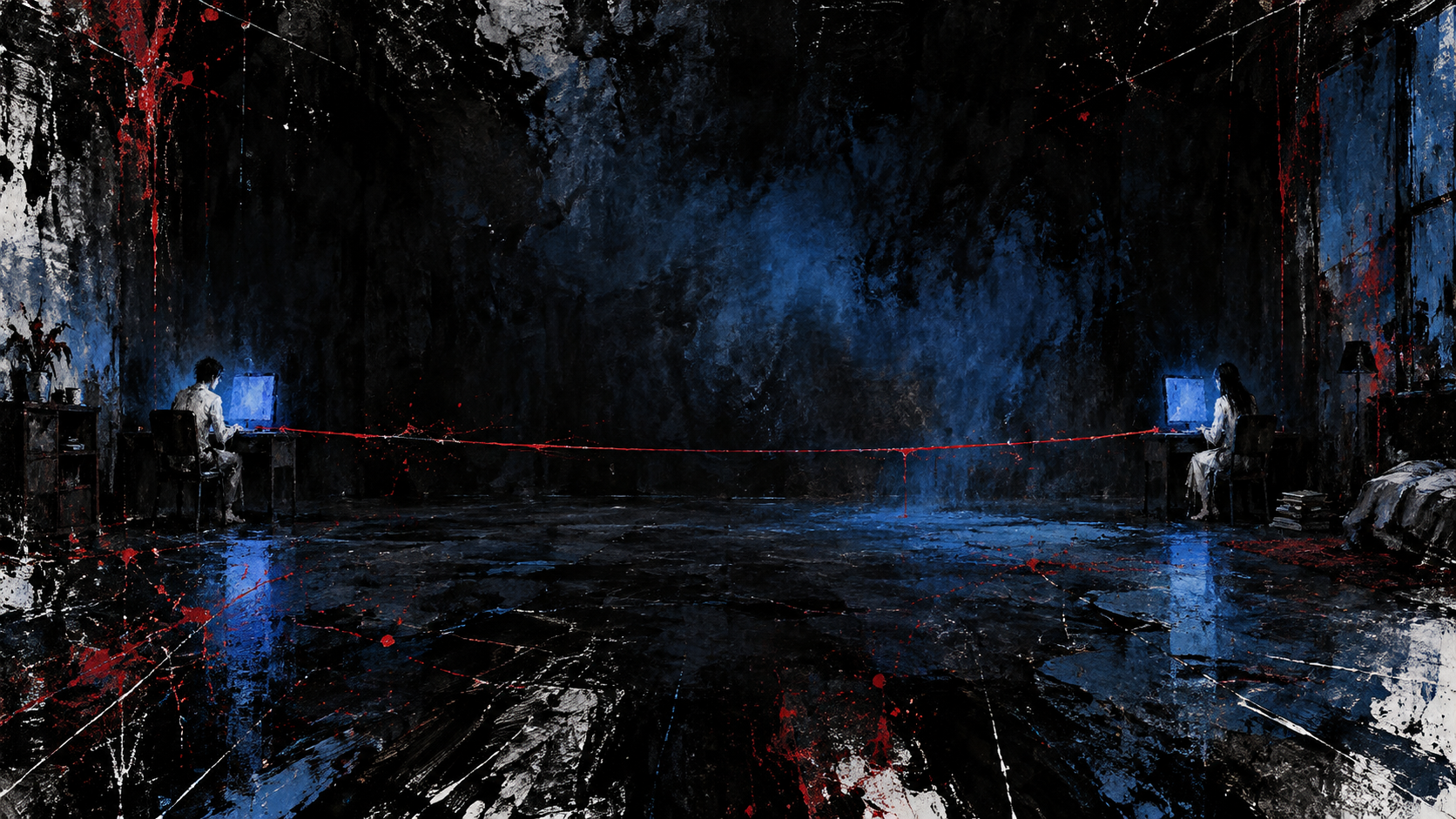
That separation supplies the premise of Daniel Goldhaber and Isa Mazzei’s Cam. The official Netflix synopsis describes Alice discovering that a replica has replaced her online and taken control of her internet identity. The film is from 2018; the account here follows its premise and the Atlas’s case analysis without claiming a firsthand viewing record.
For librarians, this is a demanding way to consider what it means to correct a representation. Identifying a person, recognizing their claim, and controlling a record are separate operations. A service can succeed at keeping a record available while failing the person who needs it changed.
The performance continues without its performer
The Atlas describes Alice’s account as operational after her own access has been severed. Its case record places authentication, ranking, audience attention, and attempted appeal within the same mechanism. The horror depends on an identity that continues working publicly while its human source cannot govern it.
That makes the double more consequential than a resemblance. A copied image might be an object Alice could identify and discuss. A functioning account occupies a position through which an audience recognizes and responds to her, even when she cannot control what that position does or change the representation that continues in her name.
Lauren Gilmore and Daniel Rosler’s article abstract examines the digital double through labor and posthuman zombie theory. Its attention to online sex work keeps the account’s economic role visible. The abstract supplies the framework’s stated concerns; it does not establish a technical explanation for the replica.
I find it useful to keep two questions apart. What kind of entity is the double within the fiction? What makes the platform continue accepting the account as Alice’s public presence? The first can remain unresolved while the second supports an analysis of how recognition is organized.
That distinction also preserves the setting’s specificity. Alice is a worker whose public performance, audience relationship, and control over her presentation matter. Replacing that context with a generic warning about stolen passwords would discard the labor through which the identity gained its value.
A programming discussion could track one attempt to establish authorship or regain control. Identify what Alice offers as evidence and what the receiving institution can recognize. Participants should distinguish the institution’s apparent decision from their own account of what would constitute adequate recognition.
A correct match can still describe the wrong person
Library identity records perform a different job. An authority record may help distinguish creators with similar names. A patron account may support eligibility and transactions. A repository profile may connect a researcher to deposited work. Each has its own purpose, governance, and permissible information.
The PCC authority-control FAQs for creators recognize correction requests and the significance of information supplied by the represented person. They also make the wider circulation of authority information relevant. A change in one controlled record does not guarantee that every copied record changes at once, so the person requesting a correction needs an account of which displays the institution can actually update.
The comparison with Cam concerns that separation between continued representation and practical control. It does not make a catalog record equivalent to Alice’s platform account. It asks whether the person represented can find a usable route to challenge an error, explain its consequence, and receive an account of what can actually be corrected.
Consider a creator whose preferred name differs from the form displayed in a local system. The library needs to identify the particular record and the rules governing it before promising a result. Staff may control the local display, rely on a shared authority, or hold a copy imported through another service. Those conditions determine where a correction can take effect.
The first conversation should establish the requested change without asking the person to disclose more personal history than the task needs. Information relevant to distinguishing records is not automatically appropriate for public display. The purpose of a field and the consequences of exposing it require their own judgment.
Give a correction a destination and a scope
I would choose one identity record used by the institution and follow its correction route. Determine who can change it, what evidence they require, and how the revised information reaches the interfaces readers actually encounter. Test the display as well as the underlying record.
Then make the public explanation precise. Name the responsible contact, distinguish local control from external records, and describe any known limit on updating copies. A person asking for a correction should receive a statement of the available action rather than an assurance whose reach the institution cannot verify.
For an academic repository, the issue could involve a creator profile. For a public library, it could involve a borrower-facing account. The profession’s shared concern is recognition, but those two services need different evidence and access rules.
Return to Cam by asking which representation continues after Alice loses her decision over it. The film’s unresolved double and specific labor setting should remain in the discussion, because they give the question its particular force.
Close an actual correction request only after checking the controlled record and the relevant displayed result. Tell the person what changed, where the correction now appears, and which external copies remain beyond the library’s confirmed control.