Family photographs and unresolved evidence in Lake Mungo
Lake Mungo makes family images reopen an apparently settled account, sharpening the distinction between preserving a photograph and establishing what it proves.
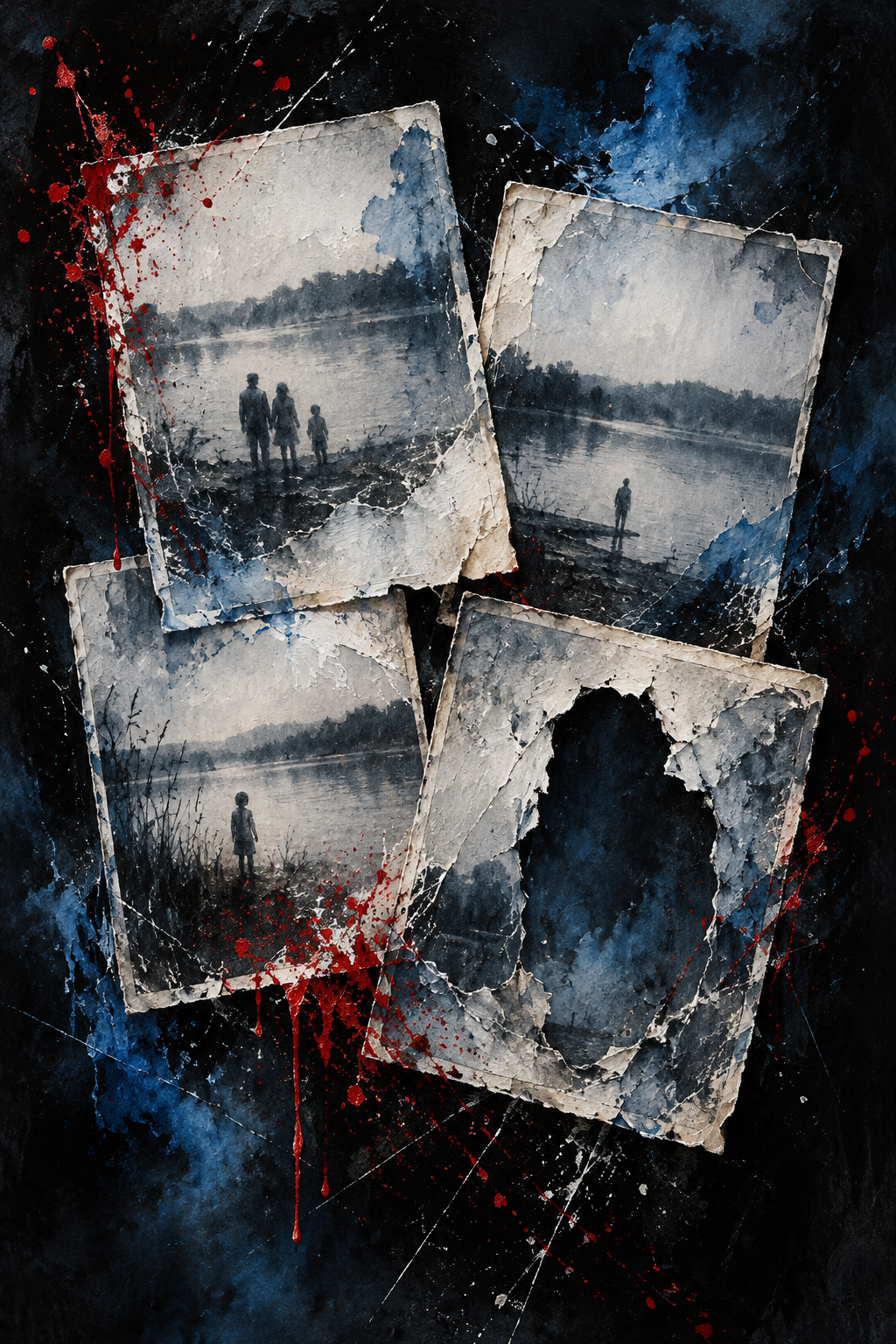
A family photograph arrives with several possible histories. Someone made the image, someone kept it, and someone later decided what to say about it. A library can preserve the file faithfully while still needing to distinguish those acts before describing what the photograph proves, because a reliable copy does not settle the different claims people have attached to its subject.
Joel Anderson’s Lake Mungo makes that distinction unusually difficult. Its documentary form places a grieving family’s images and testimony before the viewer, inviting inspection while repeatedly changing the apparent status of what has been inspected. The film gives an archive an active role in the family’s unfinished account of Alice Palmer.
The National Film and Sound Archive’s record identifies the 2008 Australian film and its performed documentary approach. Its curatorial account supports that description. My analysis follows the Atlas’s case record rather than presenting the fictional material as an actual investigation or claiming to have examined every image in the film.
An image changes its evidential position
The Atlas describes photographs and recordings that are staged, enlarged, reconsidered, or understood differently as other information arrives. Its interpretation concerns a chain that appears to lead from recorded trace to family knowledge but repeatedly opens another question.
This is more demanding than a story in which a false photograph is replaced by a true one. A fabricated image can still be evidence that someone made a fabrication. A genuine recording can remain difficult to interpret. The account of an image’s production and the account of what it represents need not acquire certainty together.
Aviva Briefel’s work-specific article provides a critical reference on the film’s mediated vision. Its accessible notes engage photography, enlargement, mourning, and documentary form. Those notes do not provide the whole argument, so I would not reconstruct Briefel’s thesis from the title and bibliography.
The Atlas’s interpretation can nevertheless be examined on its own terms. Take an image whose status changes and identify what caused the change. Did new testimony alter the account? Did another representation make a detail visible? Did someone disclose an intervention in the image? Each answer gives a different basis for revising a claim.
I find the viewer’s own work important here. Documentary conventions invite attention to testimony and recorded detail, but the film also organizes what the viewer gets to inspect and when. The apparent evidence reaches an audience through a constructed sequence whose choices cannot be treated as transparent access to a family archive.
That distinction keeps the grief in view. Alice’s family does not simply lack enough files. Their relation to a dead person involves incomplete knowledge, interpretation, and the possibility that an apparently settled account has excluded something important. A preservation procedure cannot promise to complete that relation.
Preserve the object and describe the intervention
The NDSA Levels of Digital Preservation supply a professional framework for caring for digital material, including attention to integrity, control, and metadata. They support preservation practice. They do not make an image’s subject matter true merely because the file has remained intact.
For a library holding digitized photographs, that distinction becomes practical when an image is cropped, enhanced, or displayed beside an interpretation. A derivative may help someone inspect a feature. The institution still needs to identify the relation between the derivative and the preserved source, including the transformation that made the feature easier to see.
Consider a hypothetical exhibition built from donated family photographs. A donor’s identification, a date inferred from clothing, and a place documented on the original mount carry different kinds of support. A description that combines them into one confident caption hides the evidence that a later reader would need to assess or revise the account.
I would record those differences in the working description before shortening it for display. Identify what is physically present on the object, what a named contributor supplied, and what staff inferred. The public caption can remain readable while offering a route to the fuller account when the distinction matters.
This is also a reason to preserve disagreement. Two identifications need not become one by choosing whichever arrived first or sounds more plausible. The institution can retain each account with its source and explain what further evidence would help, rather than making uncertainty disappear through a tidy field value that no longer shows how the identification was established.
Put the comparison where readers can inspect it
A library session could place an unaltered scan beside a clearly labeled derivative. Ask participants to identify what the transformation makes visible and what claim still requires information beyond either image. Use material the institution has authority to share, and keep private family information out of an exercise that does not need it.
For a Lake Mungo discussion, make the same distinction through one selected image and its changing context. Participants can track what the film discloses without treating a fictional archive as training data for detecting actual deception.
The professional implication is modest but durable. A well-preserved object should remain available for someone to challenge the description attached to it. That requires keeping the source and the institution’s intervention distinguishable.
When a caption changes, retain the evidence for the earlier and revised identifications in the collection’s appropriate record. Show the reader which account is current and why it changed, so a future correction can begin with an inspectable history rather than another unexplained certainty.