Returning to a world that no longer recognizes its visitor in Return to Oz
Return to Oz turns revisiting a familiar world into a confrontation with damage and changed expectations, giving librarians concrete grounds for descriptions that go beyond franchise familiarity.
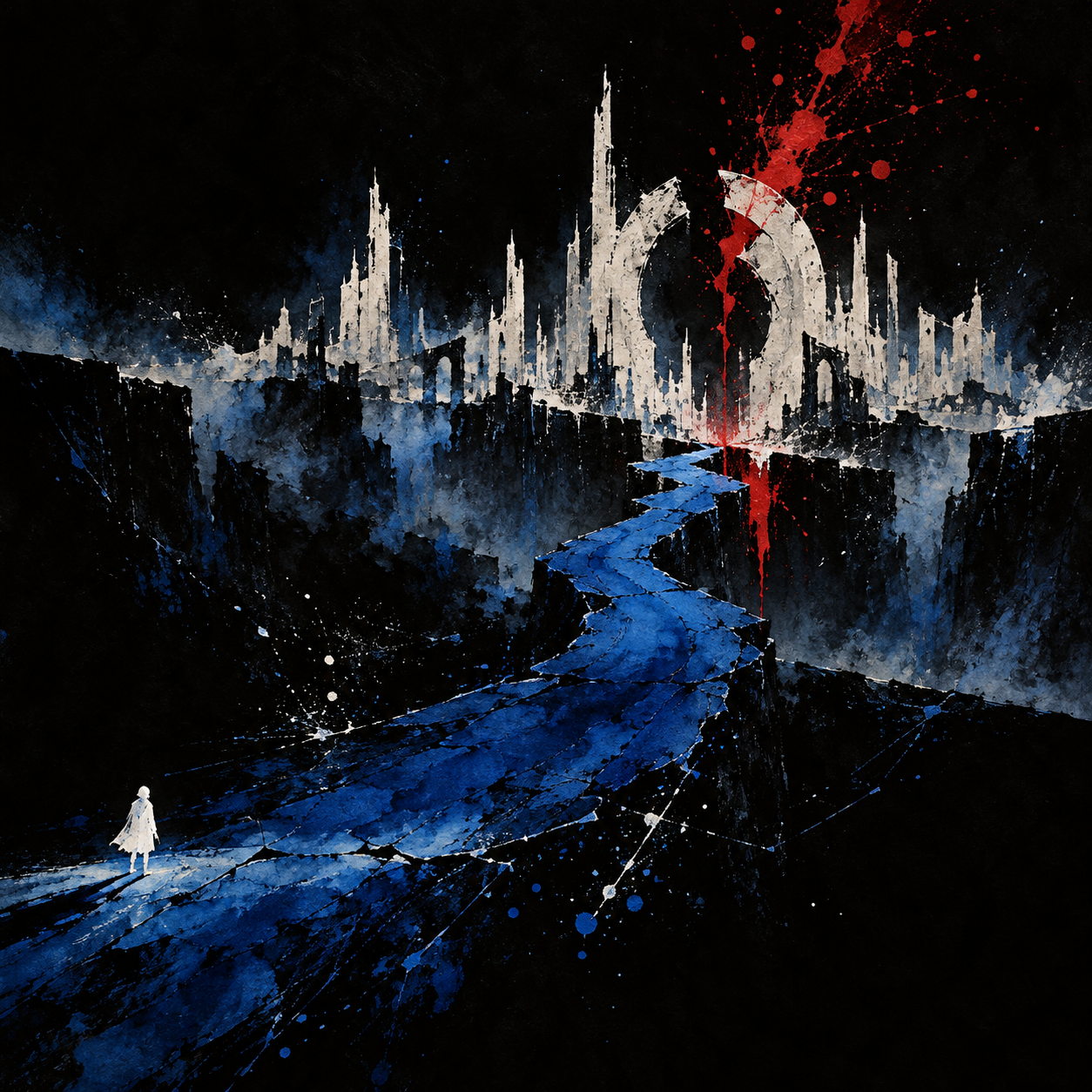
Dorothy goes back to Oz and finds a damaged world. The return carries an expectation of recognition, but familiar names do not guarantee that the place will offer the welcome or security associated with an earlier visit.
Walter Murch’s Return to Oz was released in 1985. Disney’s official film page and D23 archive entry identify the work and describe a journey involving institutional threat and a ruined Emerald City.
For librarians helping a reader choose a film, that change belongs in the description. A familiar title can be useful orientation, but it should not do all the work of explaining the particular object being recommended.
Return does not restore the earlier relation
The Atlas interprets the film through a failed expectation of continuity. The known world remains available as a destination, but reaching it does not reproduce the relation Dorothy expected to recover.
That is an argument about recognition of a changed place. It does not mean that every inhabitant has literally forgotten Dorothy or that every connection to the earlier world has disappeared. The stronger question is what the returning traveler can still rely on.
The D23 account describes the damaged Emerald City and the film’s relation to Ozma of Oz and The Marvelous Land of Oz. Those details give the return a literary and production context. The 1985 work should not be treated simply as a repetition of the 1939 film’s events or style.
Nora Lee’s American Cinematographer article documents the production’s effort to join realism and magic through design, photography, sets, and effects. Its craft account helps explain why the material presentation deserves attention alongside the franchise name.
I find the return especially useful because Dorothy arrives with an existing account of where she is going. A first encounter with an unfamiliar world requires orientation. A return to a changed world also requires reconsidering which prior knowledge remains usable and which expectation now makes the place harder to understand.
That difference gives the ruined city a particular force. The setting can be read against a remembered arrangement, so damage becomes a relation between states of the world rather than an isolated feature that automatically explains the film’s effect.
The Atlas places that relation within its theory of passage. Arrival is physically achieved while the expected transformation fails: returning does not simply restore belonging. A reading can examine that failure while leaving room for renewed relationships and other directions within the story.
Familiarity is one piece of advisory information
A reader may ask for more Oz because they enjoy a book, a particular film, or a remembered character. Those starting points are different. An advisory conversation should establish which connection matters before treating another work with the same name as an obvious match.
The ALSC competencies support responding to children’s interests and evaluating artistic qualities across formats. They offer a professional basis for discussing the work itself. They do not make franchise recognition an adequate account of suitability or preference.
I would describe the film’s changed setting and opening institutional threat in plain language, giving the reader a concrete basis for deciding whether this version supports the experience they are seeking without asking them to infer its contents from the Oz name alone.
The studio’s United States PG classification can be identified as such. It is a classification attached to a source and jurisdiction, distinct from the Atlas’s editorial intensity judgment and from the response of any particular child. Those statements should remain distinguishable in a programme note.
An adult’s memory of being frightened can be valuable in discussion. It establishes that person’s remembered encounter, rather than a measured effect among the film’s original child audience. The production sources do not supply such an audience study.
This is also a reason to keep adaptation relationships clear. A reader may want to compare Murch’s choices with Baum’s novels. Another may want a film with a particular tone. Helping them identify the relevant version makes either enquiry easier without selecting the purpose for them.
Put the changed promise in the programme description
A library screening note can name a return to a damaged Oz and the challenge of relying on remembered knowledge. That gives the audience an exact entry into the film’s central relation without requiring a catalogue of every surprise.
For an academic session, pair one production-design claim from Lee’s article with a bounded part of the setting. Ask how the material presentation supports or complicates the expectation of a familiar world. Keep the filmmaker’s stated aim distinct from a participant’s interpretation of the result.
For a public discussion, a simple question can do useful work: what does Dorothy know on arrival, and which part of that knowledge no longer gives her a dependable next action? Participants can support different answers through the selected material.
The professional recommendation concerns a particular descriptive shortcut. A recurring character, setting, or title connects works while leaving each work’s conditions of entry different. A good description makes the connection useful without allowing it to conceal the difference.
Before presenting Return to Oz as a familiar family choice, check that the programme note identifies this film’s changed world and the relevant content described by the studio record. A reader should be able to choose the return with an account of what has changed.