Mythic repetition and place in The Owl Service
The Owl Service joins Welsh place and mythic recurrence to young people's present relations, giving librarians a reason to preserve setting and adaptation context within a genre description.
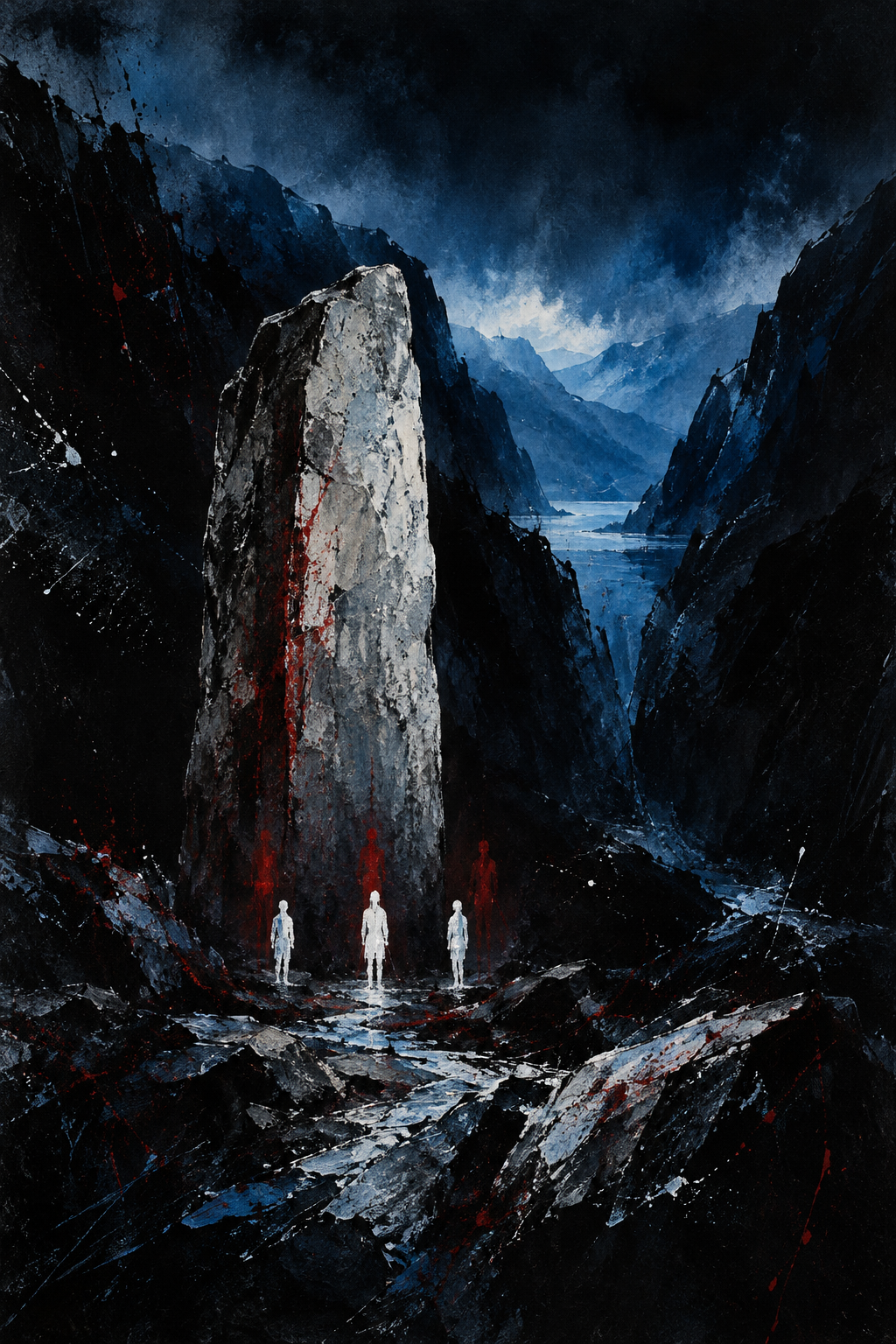
An old story can return through a place without leaving the people living there free to treat it as distant history. The Owl Service makes that relation central to a contemporary setting in the Welsh valleys, where a young trio encounter a myth whose pattern threatens to organize their own lives.
The television adaptation began transmission in December 1969 and continued into February 1970. Alan Garner adapted his own novel for Granada Television. The dates matter because a label using only 1969 or 1970 can make different sources appear to describe different works when they concern the same winter serial.
For librarians, the interpretive question begins with the description. What disappears when a place-specific work is presented only as eerie children’s television? Its mythology, social relations, and adaptation history can become harder to discover even while the title remains easy to find.
The valley carries a relation, not only an atmosphere
The BFI’s account of stone-circle and related screen works identifies the Welsh setting, the Stone of Gronw, and a young trio repeating a love triangle associated with the Mabinogion. That gives a specific relation between location, older narrative, and present characters.
The Atlas interprets the valley as a place where contemporary life and mythic recurrence become difficult to separate. The setting does more than provide an old object for the characters to inspect. A prior pattern becomes active within the relations they are trying to understand.
I find the difference between remembering a myth and being assigned a position within it important. Someone can know a story without accepting that its roles determine what they must do. The threatening relation develops when the available account of the past begins to govern the possibilities of the present.
The standing stone locates the older narrative within the valley, but the comparison does not depend on treating it as a doorway into another world. Its force comes through the relations among the young people and the older pattern they encounter in a place they already inhabit.
Gary Couzens’s production history and criticism identifies the eight-part serial, Garner’s involvement, and Peter Plummer’s production and direction. That context helps distinguish the adaptation from the novel without reducing the television work to an illustrated version of the book.
Robert Shail’s chapter on Welshness, class, and sexuality identifies a further set of questions for the adaptation. The accessible record establishes its thematic scope. A reading of its detailed argument requires the chapter rather than an inference from its title.
Those concerns make the setting’s specificity difficult to replace. A generic description of ancient forces returning would leave out the social positions through which the recurrence is encountered, including the questions about class and Welshness that the critical literature asks readers to investigate.
Describe the version and the place
A catalogue or programme entry can support that investigation by identifying the television serial and its relation to Garner’s novel. The description should make the version clear before linking to criticism whose title uses a different year.
The IFLA Library Reference Model provides a conceptual account of bibliographic relationships and user tasks. It supports careful distinctions among related resources. It does not decide the interpretation of the valley or establish one preferred subject description for every collection.
I would check whether a reader following a reference to The Owl Service can identify which object is being discussed. A novel, a particular television episode, a full serial edition, and a critical chapter have different roles in the inquiry even when all are retrieved under the same title.
Then examine the description of setting. Naming Wales and the relevant mythic relation gives a reader more information than an unexplained folk-horror label. The label can remain useful, but its convenience should not replace the particular context that gives the work its form.
This also affects a programme comparison. A screening and reading session could select one bounded relation between an older story and a present character. Ask how the medium makes that relation available: through dialogue, performance, image, sound, or the arrangement of a written passage.
The exercise should not require participants to accept a single predetermined interpretation of Welsh culture or of the myth. Give them the source material and the critical question, then require their claims about the adaptation to remain attached to what they can actually inspect.
Leave room for a changed relation to the past
The Atlas’s theory is strongest here when recurrence remains a problem of relation. An inherited account can constrain people while also becoming something they interpret, resist, or understand differently. Describing the mechanism should preserve that possibility rather than turn the characters into automatic repetitions.
For a public library, the work may interest readers following Garner, Welsh mythology, or television history. For an academic library, it can support inquiry into adaptation and cultural setting. Those routes can coexist without making one reader’s purpose the correct reason to encounter the serial.
The recommendation is a small piece of descriptive work. Connect the exact version, its setting, and the source of the mythic relation in a way that helps someone continue their own enquiry.
After revising the record or programme note, follow one of those routes from the reader’s starting point. Check that it reaches the intended version and an inspectable source for the older story, while keeping the library’s interpretive description attributable as an interpretation.