Routes, desire, and the Room in Stalker
Tarkovsky makes arrival depend on a destination whose promise cannot be separated from uncertainty about desire, a problem that sharpens the ethics of helping someone formulate a question.
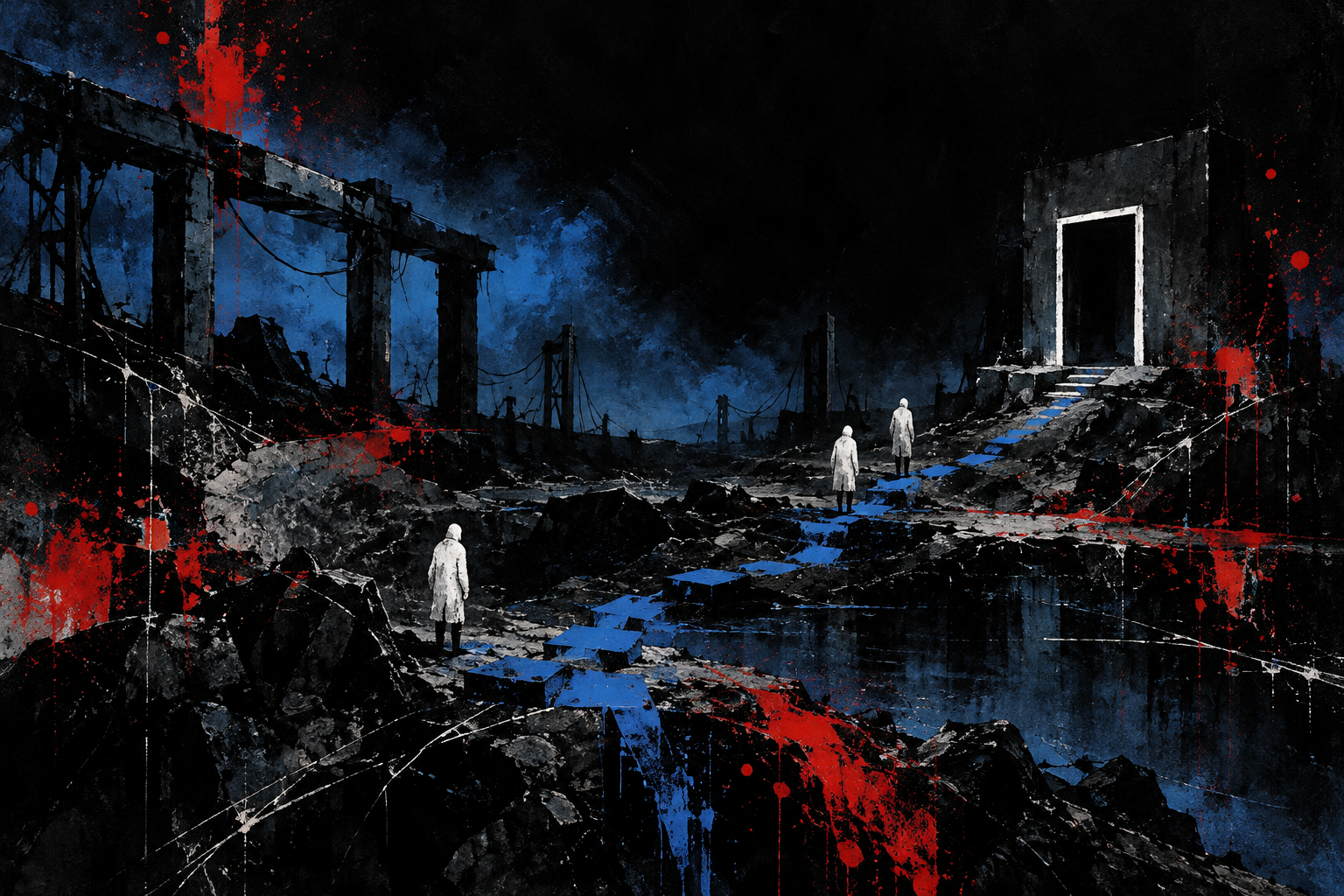
A guide can take someone toward a destination without being able to guarantee what arrival will do. In Andrei Tarkovsky’s Stalker, the destination is the Room, whose reputed capacity to fulfill a person’s deepest desire makes the journey depend on a question that a map cannot settle: what desire would actually be fulfilled?
The film’s route matters because the visitors cannot separate where they are going from what they think they seek. The Writer and the Professor arrive with different positions and expectations. Their guide’s knowledge concerns passage through a place whose promise remains difficult to verify.
Scope note: this essay considers Tarkovsky’s 1979 film and its interpretation in the Atlas. It compares the formulation of a purpose with professional reference work while preserving the difference between the Room’s fictional promise and a library’s bounded assistance.
A destination whose promise changes the journey
The Criterion edition’s description establishes the guided movement through the Zone toward the Room. Mark Le Fanu’s critical essay places that journey within the film’s adaptation and metaphysical concerns. Neither makes a single explanatory solution compulsory for the viewer.
I take the uncertainty about desire as central to the route’s meaning. A destination that promised to provide a specified object would raise questions about whether it could deliver. A destination associated with a deeper desire introduces another uncertainty: whether the person can know what their own request would become when fulfilled.
That uncertainty affects the authority of the guide. Knowing how to approach a place does not necessarily establish an ability to define another person’s purpose. The film makes knowledge, faith, motivation, and trust part of the journey without granting any participant an uncomplicated position outside it.
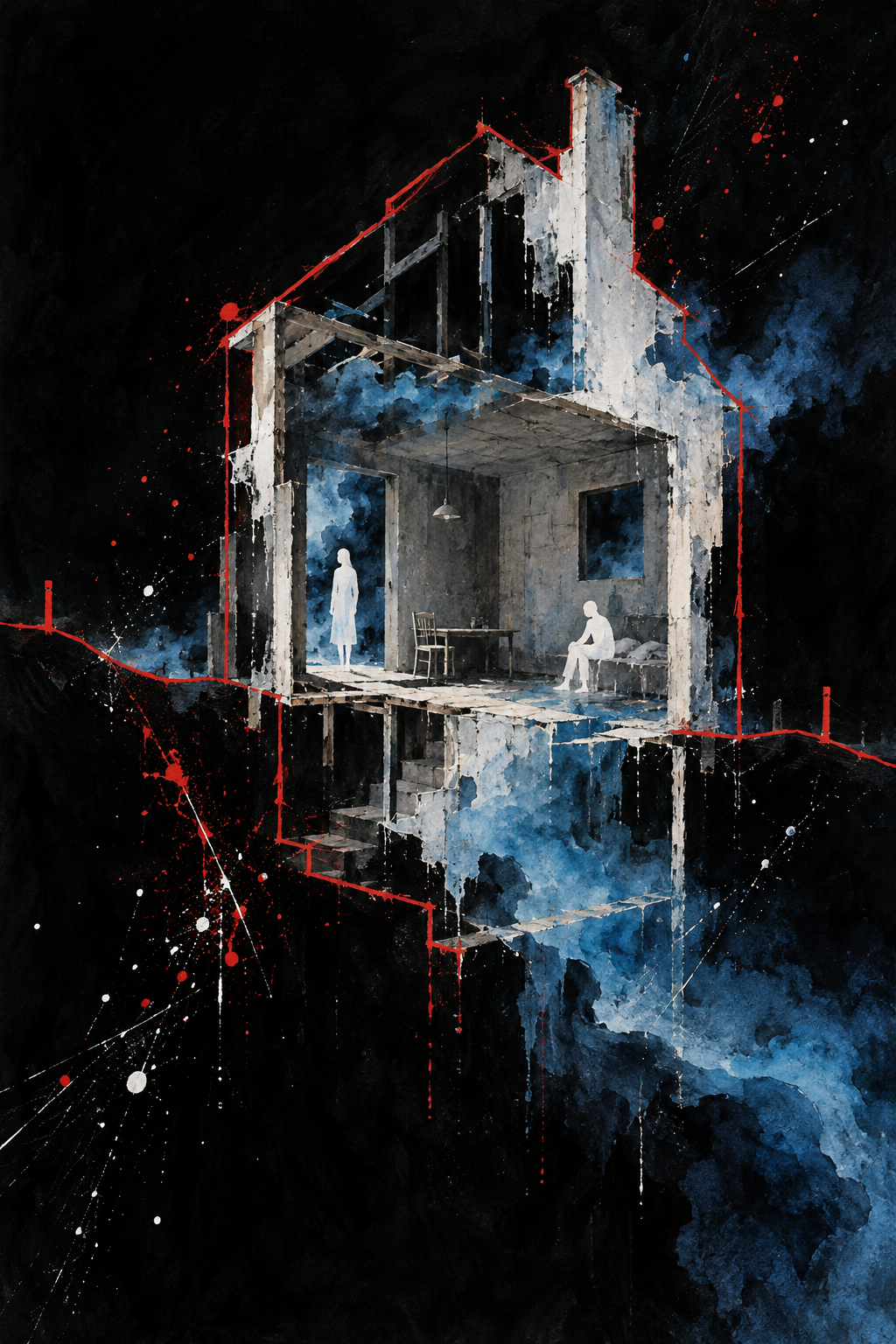
The Atlas reads the Zone and the Room through this unstable relation between passage and expected transformation. The environment offers a destination, but the meaning of a successful arrival remains open. Its ruined and industrial forms contribute to that relation without reducing the landscape to an empty setting that automatically produces fear.
A useful viewing discussion can therefore begin with a modest distinction. What does each participant say they want, and what evidence does the film provide for that account? Keep the stated purpose, another character’s interpretation, and the viewer’s inference separate. The differences give the argument something to inspect.
A question can change without becoming someone else’s
Library reference work encounters a more ordinary problem of formulation. A reader’s first request may identify a source, a topic, or an intended task. Subsequent discussion can clarify the relation among them. The professional responsibility is to support that clarification while keeping the reader able to reject the librarian’s interpretation.
Marcia Bates’s account of evolving searches gives an information-science basis for expecting a search to develop through encounters with material. A changing question can be evidence of learning rather than a defect in the first request. The theory describes a process; it does not authorize an intermediary to declare what someone secretly needs.
That distinction is where the comparison with Stalker becomes useful. The guide’s knowledge of a route and the visitor’s purpose remain different forms of authority. In a reference encounter, expertise about resources should not silently become ownership of the enquiry. A librarian can propose a reformulation and explain why it might help, then ask whether the reader recognizes their purpose in it and whether the revised question still includes the part of the task that brought them to the desk.
The RUSA professional competencies describe collaborative reformulation within reference work. That professional expectation supports a concrete practice: repeat the proposed question in ordinary language before pursuing it, and identify what the revised wording adds, removes, or assumes. A reader should be able to say that the original request was already the right one.
This can matter in both public and academic settings. A person asking for a named document may need that exact document, even if a related source seems easier to obtain. A student exploring a broad topic may welcome alternatives. The conversation establishes which condition applies; the librarian’s preference should not decide it in advance.
Record the change that made the search useful
A small review of reference practice could compare the first request with the question eventually pursued, using only information the library has a legitimate reason to retain. Ask whether the reader agreed to the change and whether the resulting work served the task they identified. This is a local inquiry, not a claim that one style of interview always produces a better result.
The review should also include cases where no reformulation was needed. Otherwise, the institution may mistake visible intervention for professional value and reward unnecessary changes to an already precise request. Successful assistance can consist of recognizing that the reader has supplied the exact instruction the task requires.
For a film programme, place that question beside a bounded exchange among the travelers. Which participant changes the account of the destination, and what gives that change authority? The comparison stays close to the work when it preserves disagreement about what the journey is meant to accomplish.
At the next reference encounter where a question genuinely changes, state the revised version and its reason before continuing. Keep the reader’s answer attached to the decision. Their confirmation, correction, or refusal establishes which route the librarian has actually been asked to help pursue.