Shelter and exposure in Courage the Cowardly Dog
Courage the Cowardly Dog puts a home in the middle of exposure. Its frightened caretaker gives librarians a way to discuss fear, care, and agency without reducing a character to a symptom.
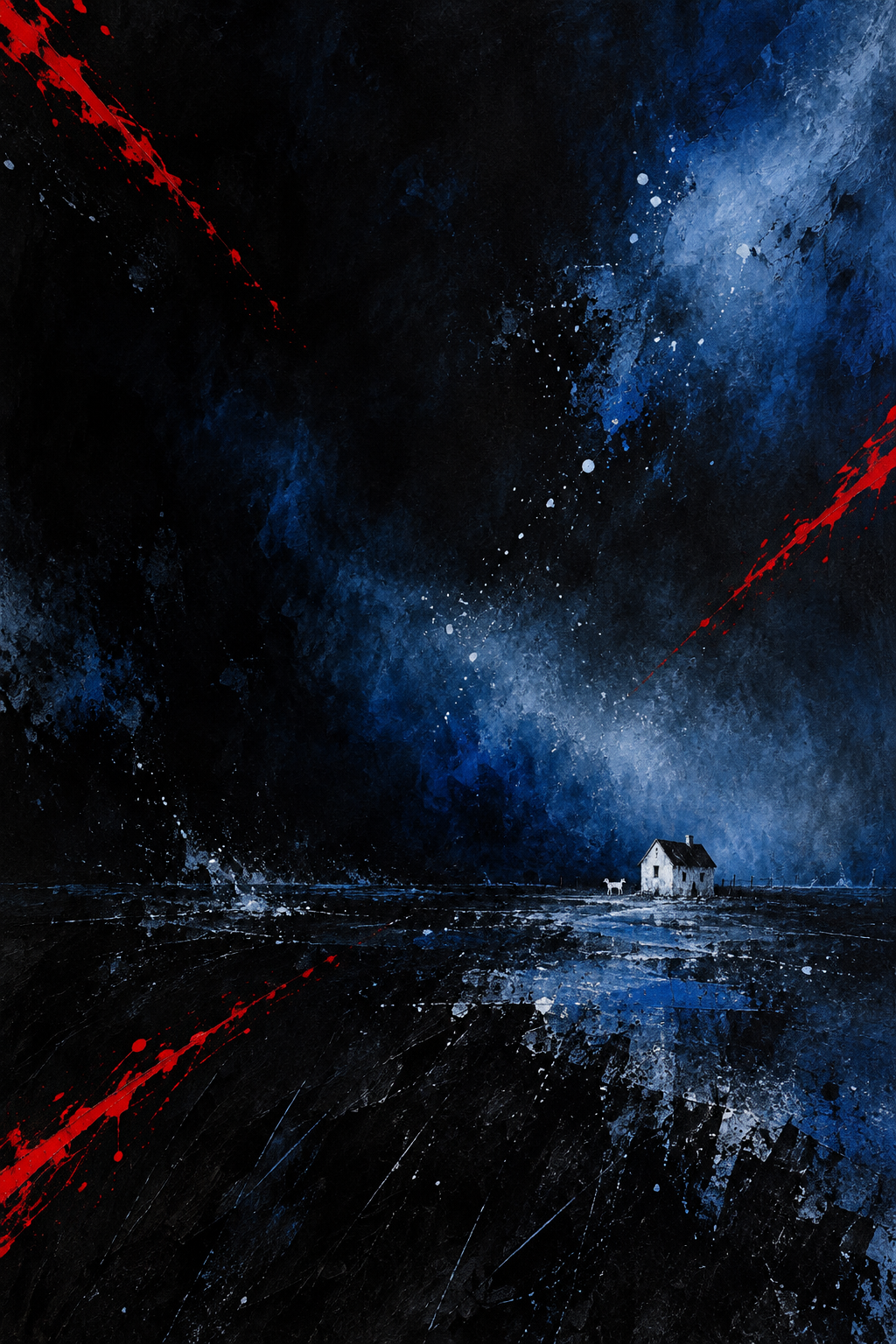
A house stands in the middle of Nowhere. An older couple live there with a dog who is frightened and keeps trying to protect them. The home gives his efforts a purpose while its isolation leaves the household exposed.
That arrangement is the starting point of John R. Dilworth’s Courage the Cowardly Dog. In a contemporaneous interview with Animation World Network, Dilworth describes the series and its production before its November 1999 premiere. The original television series is the work considered here, rather than the earlier short or later returns to the property.
A librarian recommending the series has more to describe than a high or low level of fright. Courage is afraid, and Courage acts. The relation between those facts is part of the work’s appeal and a useful subject for conversation.
A home can matter without securing its boundary
The Liminal Atlas reads the isolated house as a shelter whose expected protection repeatedly becomes uncertain. Its placement makes the household legible as a small domestic unit with a very large outside. That is a narrative arrangement, not a claim that real rural homes have the same effect on their inhabitants.
The series’ premise also makes care unusually visible. Courage has someone to protect, and his fear does not release him from that attachment. Reading him only as a coward loses the work he performs for the household.
For the Atlas’s account of passage, this matters because a domestic threshold can promise a transition into security without making that security dependable. Crossing the boundary and achieving its expected result become different events. The question extends beyond what might be waiting outside to what the home can actually do for those within it.
Dilworth’s interview supplies a production context for the mixture of comedy, suspense, and visual invention. It supports attention to the constructed programme rather than a single still image circulated online. A frightening image detached from its scene can omit the comic action, the return of a character, or the relation that makes the threat consequential.
I would keep Courage’s protective work beside the isolated house in a description, because the combination tells a reader more about the series than an atmosphere label that leaves the central character’s continuing purpose out of view.
The title gives the discussion another exact point of entry. The character’s name and his apparent fear sit together from the beginning. A group can ask how the available material distributes those terms without requiring a final judgment about whether he has earned one and overcome the other.
Describe what a frightened character does
In advisory work, an adult may ask whether a programme is too frightening for a child. That request deserves a concrete conversation about the child’s interests and the material under consideration. It does not require a claim about what all children can manage at a given age.
The ALSC competencies support knowledge of children’s interests, development, and materials across formats. For this series, that professional responsibility includes describing the relation between threat, comic treatment, and the dog trying to protect his family.
Those are characteristics a reader can consider. They remain different from a measured finding that the series builds resilience or causes distress. The production interview does not provide an audience-effects study, and a librarian’s remembered childhood encounter cannot stand in for one.
A useful description can therefore be specific without pretending to predict the reader. Name the isolated setting and the protective character, then use a selected episode or reliable episode record to discuss more detailed content when the enquiry requires it. Do not let the series premise do the work of an episode description.
That last distinction is practical. A family may want a particular kind of humour while avoiding a particular image. An accurate answer needs the relevant work in view, rather than a general reputation accumulated around the programme over decades.
Leave room for care inside the fear
A library discussion could begin with a bounded sequence selected from the licensed work. Ask participants what Courage is trying to protect and which actions show that purpose. A second question can examine what his fear changes about those actions.
This keeps the conversation close to the character. It also gives a participant who remembers the programme as funny a way to contribute alongside someone who remembers its unease, without requiring either memory to become the official account of everyone else’s response.
The distinction matters when librarians mediate between adult recollection and younger viewers. An adult’s memory may be vivid, affectionate, or uncomfortable. The child encountering the work now still deserves a description and a choice grounded in their own interests.
For a collection display, I would pair the isolated-house premise with a short account of Courage’s attempts to look after the household. That description can support a conversation about why fear and care appear together here, while leaving each visitor free to decide whether this particular combination is what they want to watch.
If the next advisory question concerns an episode’s specific threat, the next step is to inspect that episode. The house in Nowhere establishes the relation. The particular encounter determines what else a reader needs to know.