Domestic improvement as capture in Coraline
Coraline's improved duplicate home makes welcome inseparable from its terms. The film gives librarians a precise way to discuss attention, choice, and participation that can still be refused.
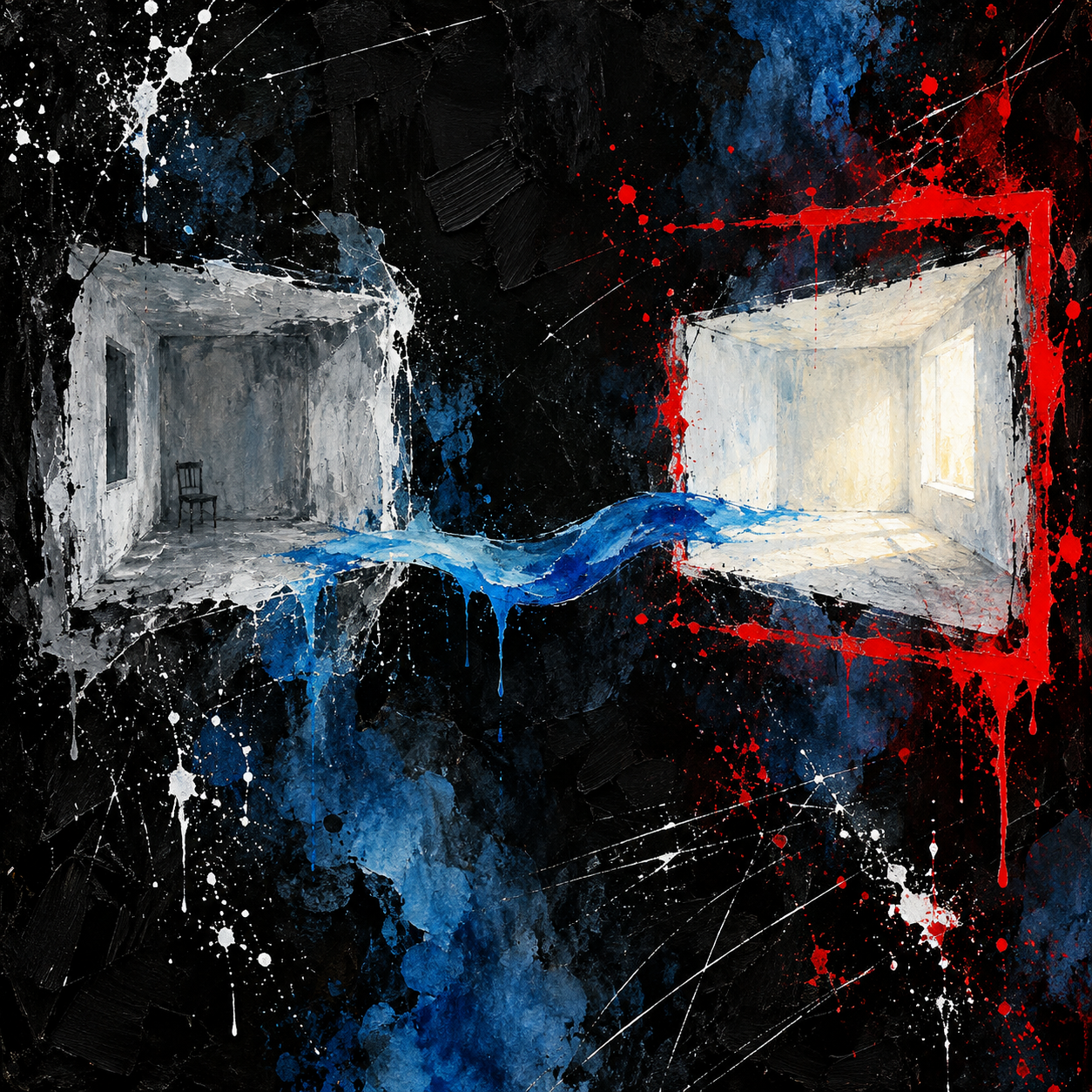
The other home seems better. Someone has noticed what Coraline wants and arranged a world that appears to offer it. The attraction belongs to the threat: the welcome helps make staying imaginable.
Henry Selick’s 2009 LAIKA film Coraline adapts Neil Gaiman’s 2002 novel. The official film synopsis describes a door into a seemingly improved parallel world and an Other Mother who wants Coraline to remain forever. This article concerns that film.
For librarians, the duplicate home opens a precise question about welcome. What is being offered, and what freedom does the guest retain after accepting it? The answer has to account for the attractive offer as well as the eventual condition.
Improvement makes the invitation work
The Atlas interprets the other home as a false form of care that turns a promise of belonging into capture. The comparison depends on a recognizable domestic arrangement. An entirely unrelated place could be threatening, but it would not make the same claim to improve this particular home for this particular child.
The duplication also gives dissatisfaction a role, because a wish for more attention can help explain why the other home attracts Coraline without requiring the discussion to dismiss that wish before the danger becomes intelligible. A reader can recognize a reasonable wish for attention while examining the terms under which this version of attention is supplied.
I find that relation more productive than a lesson that wanting anything different leads to trouble. Such a lesson would allow the threatening offer to settle the legitimacy of the original desire. The film’s arrangement gives us grounds to inspect the offer itself.
Ana-María Pérez-Guerrero and Andrés Forero-Serna’s 2019 comparative study of four LAIKA films places family and growing up within its scope. The accessible abstract supports that critical context. It does not supply evidence that particular viewers acquire a prescribed lesson from Coraline.
The Atlas’s theory of passage adds another distinction. Moving through the door changes the environment, but it does not grant Coraline secure standing within that environment. The apparent arrival still leaves someone else controlling the conditions under which belonging can continue.
That control is what makes the improved home worth discussing beyond its visual strangeness. A brighter room or a more attentive host can make an invitation appealing without answering whether the visitor can leave, disagree, or prefer the ordinary arrangement.
Give the offer and its condition equal attention
A programme description should preserve the initial attraction. Describing the film only as a child meeting an obviously dangerous figure removes the question of how that figure gains an audience. It also makes Coraline’s interest harder to understand.
For an advisory conversation, I would identify the duplicate home, the apparently greater attention, and the demand to stay. Those details give a family something concrete to consider alongside the film’s United States PG classification, which should be named as a jurisdiction-specific classification rather than a prediction of an individual response.
A discussion can work through two stages. First ask what the alternative home appears to provide. Then examine how the available choice changes once its terms become clearer. Keep the character’s knowledge at each stage separate from the audience’s knowledge after the story has unfolded.
That approach leaves room for disagreement about what Coraline initially hopes to gain. Participants should be able to ground their account in the film without being asked to reveal dissatisfaction with their own homes, families, or relationships to make their interpretation count.
This is a professional choice about the discussion itself. The IFLA guidelines for library services to children give children’s needs and participation a place in service planning. They do not require turning every fictional family into an invitation for personal disclosure.
Participation includes the ordinary alternative
The film also suggests a useful question for a library reviewing a participatory programme. What remains available to someone who declines the special invitation? A programme can welcome a child enthusiastically while still making the alternative unnecessarily awkward.
I would inspect one real point of choice: joining an activity, sharing a piece of writing, appearing in a display, or contributing a personal account. State what participation involves and make the available alternative visible at the same time, so a reader can understand the offer before being drawn into its social expectations.
This proposal does not equate a library activity with the Other Mother’s world. It uses the film’s carefully constructed relation between an attractive offer and its terms to ask a bounded service question. The local answer requires looking at what staff actually ask and what a participant can actually decline.
For an academic seminar, the same relation can support comparison between adaptation choices in the novel and film. Keep the two objects identified and inspect the relevant passages or sequences before claiming that both make the invitation in the same way.
For a public programme, the film can carry the whole discussion. A participant may simply want to talk about why the other home is appealing. That is already a serious question about the work, with no need to replace it with an institutional exercise.
Before inviting personal responses, give participants an equally usable way to speak about Coraline’s choices. The discussion should leave them with the freedom that its analysis asks them to notice.