When a fantasy portal becomes a failed threshold
A doorway into another world becomes a different narrative device when the world withdraws the conditions that made crossing worthwhile.
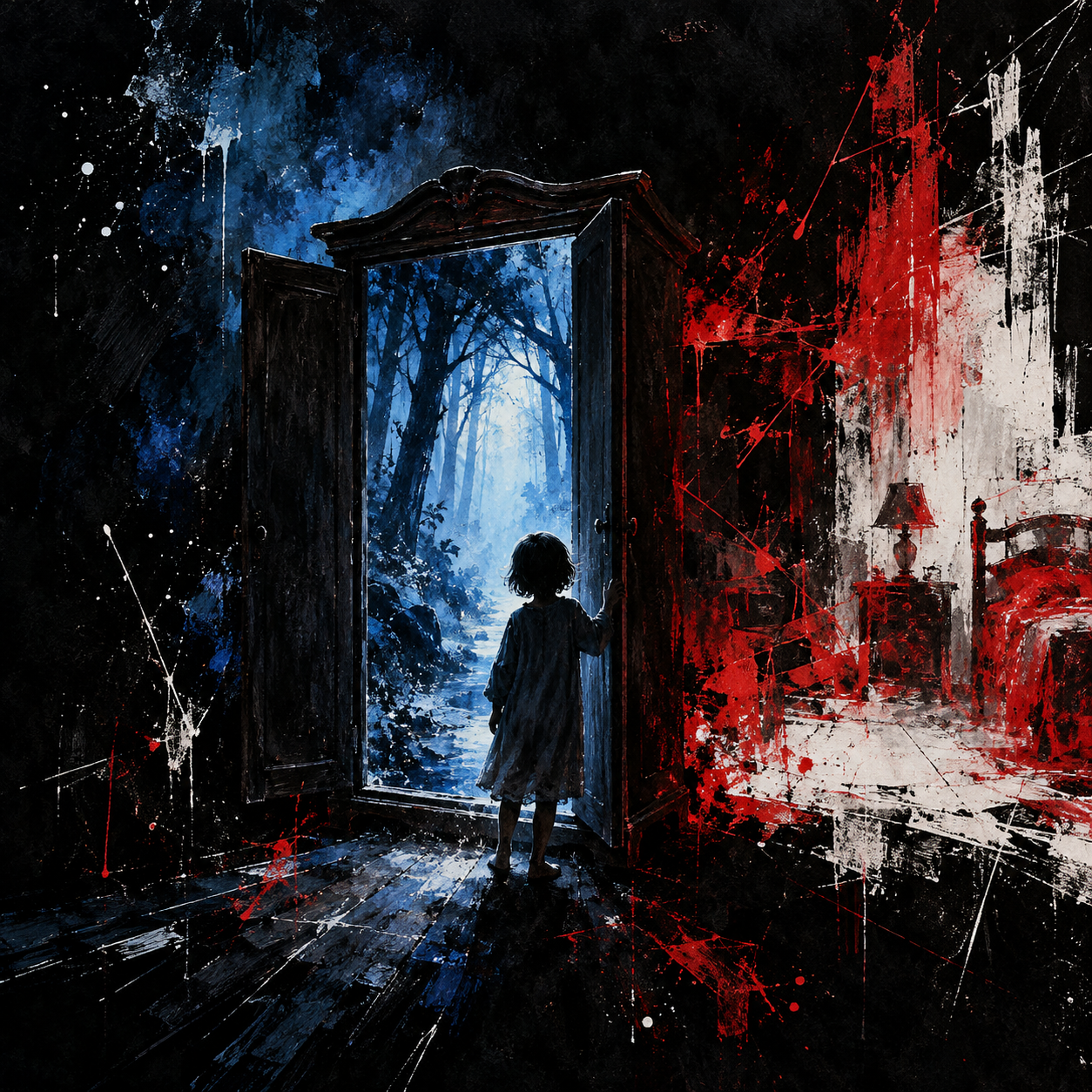
A wardrobe opens onto a forest and a small door leads to another version of home, two passages that violate the ordinary dimensions of a room without telling us what kind of experience their destinations will offer. The difference develops through the terms on which the visitor can understand the destination, act within it, and return.
That distinction matters when a reader asks for another book with a secret door. They may want discovery, a coherent alternative world, the satisfaction of learning unusual rules, or the uncertainty of finding that familiar promises no longer hold. The doorway supplies a shared beginning without settling any of those preferences.
Scope note: portal fantasy and liminal horror are compared here through narrative structure. Individual works can combine them, and the comparison does not predict what children of a particular age will find frightening.
An elsewhere can become intelligible
In C. S. Lewis’s The Lion, the Witch and the Wardrobe, the wardrobe makes another world accessible through an ordinary domestic object. The crossing is impossible by the rules of the house. What follows has inhabitants, histories, obligations, and conflicts that become available to understanding.
Danger in that world does not make the passage itself a failed promise. The narrative can ask its characters to learn how to act within a destination that has a social and moral organization. A reader’s growing understanding of that organization is part of the pleasure.
The Liminal Atlas’s childhood lineage keeps this distinction explicit. A portal can be a threshold device without making a work an instance of liminal horror. Its analysis asks whether crossing introduces a destination or preserves a familiar invitation whose guarantee becomes deceptive, recursive, unavailable, or coercive.
This is an interpretive boundary rather than a test that a work must pass to be interesting. A fantasy may deliberately leave much unexplained. A horror story may contain a perfectly legible alternative world. Close reading must establish which relation organizes the particular passage.
A better home can change its terms
The secret door in Henry Selick’s film Coraline introduces a world that initially resembles an improved version of the protagonist’s own life. Recognition makes the invitation persuasive. The threat develops through what accepting that improvement would require and whether its recipient can still refuse.
I read this as a change in the conditions of welcome. The visitor is offered attention and apparent responsiveness, then discovers that the relation is organized around keeping her there. The home remains recognizable while the expectation of shelter and reciprocal care becomes unreliable.
The useful contrast with a straightforward portal adventure concerns the continuing promise. The problem is not merely that an unfamiliar world contains dangers. Familiarity itself helps secure participation, and the apparent fulfillment of a desire becomes part of the means by which that participation is made compulsory.
That reading leaves other interpretations available. The film also concerns family dissatisfaction, attention, bravery, and judgment. Calling its passage a failed threshold should clarify one relation within the work, without claiming to replace those other concerns or explain every viewer’s response.
Ask what the reader enjoyed crossing into
For librarians, the distinction supports a more precise readers’ advisory conversation. Ask what the secret passage made possible. Did the reader enjoy encountering a richly organized world, testing a deceptive welcome, or finding that an ordinary object could no longer be trusted? The answer can lead toward different companion works.
The ALSC competencies place children’s interests, abilities, and independent choices within professional advisory practice. That is a reason to listen to the child’s account of the encounter. A professional classification should help articulate a preference rather than override it.
A child might describe the frightening part with surprising precision, identifying the inability to return, an adult’s unexplained authority, a familiar person behaving differently, or a rule that changes after agreement as the condition that made the encounter disturbing. The librarian can use that detail to select material without assuming that a single measure of intensity captures the experience.
In an academic context, the same distinction can support analysis of children’s media across editions and adaptations. Ask students to identify which promises the threshold establishes, then trace where the work confirms or alters them. Differences between versions should be documented rather than merged into a composite story.
Compare the terms of entry and return
A reading group could place two short threshold scenes together and ask participants to record what each visitor expects before crossing. Return to those expectations after the ending. Which were fulfilled, revised through learning, or made impossible to satisfy? Give participants room to disagree about what the initial invitation actually promised.
That exercise grounds theory in a sequence the reader can inspect, while the disagreement reveals how tone, narration, and familiar objects produce different expectations. It can also show why a seemingly ordinary return matters more than a visually spectacular entrance.
For selection and description, preserve the discovery that makes the work worth reading. An annotation can say that a welcoming alternative world changes the terms of staying without explaining every revelation. The reader then has enough information to choose the kind of uncertainty they want to encounter, and the secret door can remain a secret until the story opens it.