Loxjie A30 Review: The Input and Output Matter
Twelve firsthand writers document useful speaker playback while input switching, headphone hiss and conflicting USB playback reports keep the full system in the verdict.
Scope note: This literature review concerns the Loxjie A30, using twelve distinct writers’ original measurements and actual-use accounts. Speaker and headphone outputs, analog and digital inputs, computer software and television sources remain separate conditions. Nearby Loxjie and SMSL models are not substitutes for A30 evidence. Every performed action belongs to its named writer; the proposed comparison remains unperformed.
One small box can replace several devices and still work differently through each connection, as the Loxjie A30 drove speakers successfully in several published systems while owners also described headphone hiss, troublesome USB playback and a television optical connection that interrupted the sound.
The twelve-record sample supports useful speaker amplification and practical source switching. Its strongest caution is specific: a successful speaker system does not establish quiet headphone output, and a working optical connection does not settle USB compatibility. The input and output actually used belong in the verdict.
The current A30 offer is $145.99 USD
The catalog ID is 00a1a88a6143f720212c. On 13 October 2026, HiFi Express’s exact A30 listing offered its standard option for $145.99 USD. The retailer’s live product data marked it available, and the store currency was USD. This is the item price before checkout charges.
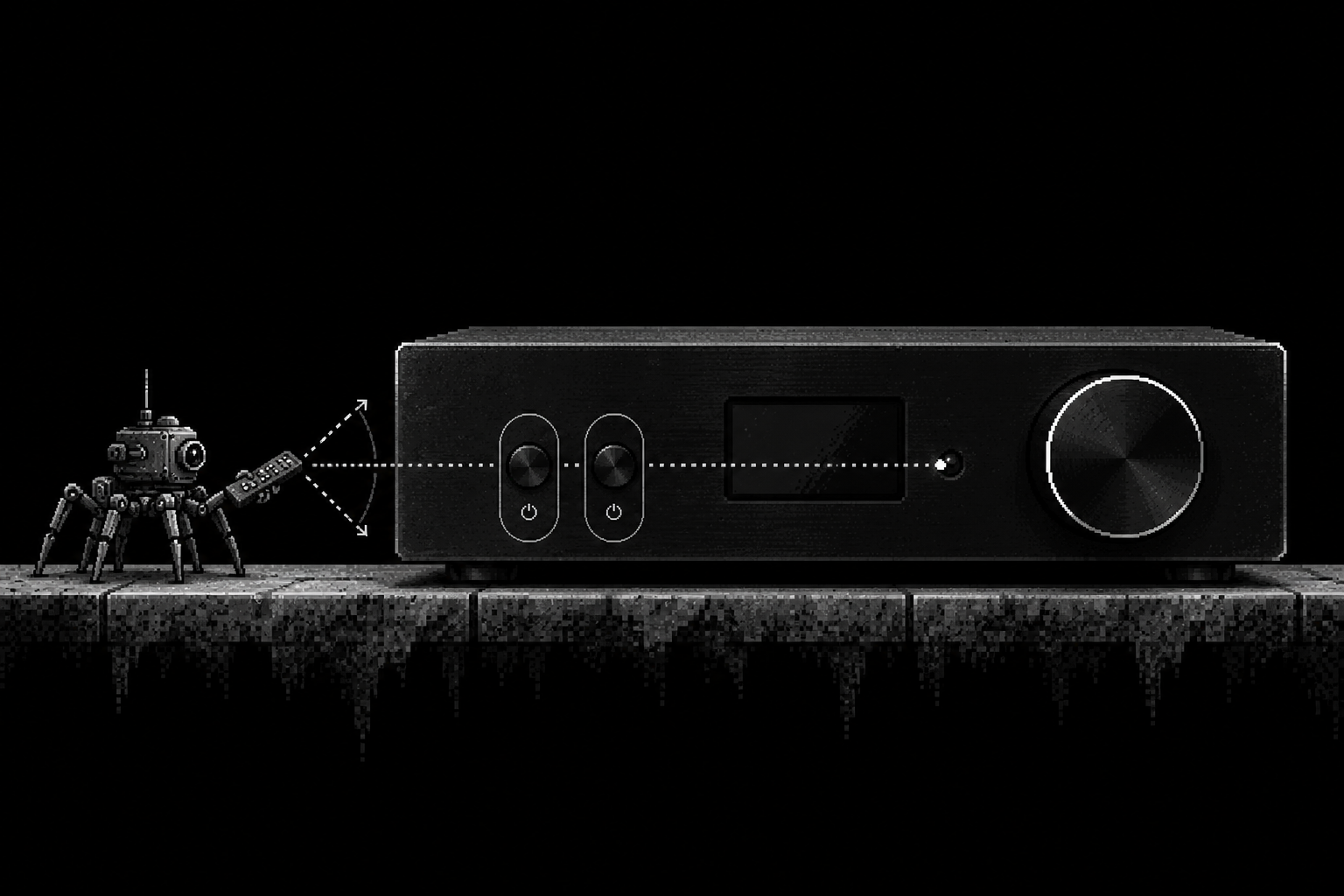
Loxjie’s original product specification describes USB, optical, coaxial, analog and Bluetooth inputs, remote control, tone adjustment and a pre-out for an active subwoofer. The A30 includes speaker and headphone amplification. Manufacturer material supplies specifications only; its sound descriptions remain outside the field evidence.
Two substantial reviews and ten shorter owner accounts qualify, spanning November 2020 to September 2023. The writers tried different speakers, listening distances, headphones and source software. Their experiences do not verify that today’s retail units have identical production revisions.
Amir tested a member-loaned unit. Jarvin disclosed a Loxjie sample. The selected owners’ financial affiliations remain unstated. Several accounts arose in troubleshooting discussions, so the sample can identify failures and working alternatives without estimating how often buyers encounter them.
Speaker success has a level and a room
Amir at ASR measured about 40 watts per channel into four-ohm loads and found useful speaker performance. In desktop listening with a PSB Alpha P5, Amir reported ample loudness; demanding deep-bass passages began to crackle when he advanced the control beyond the earlier comfortable range.
That observation establishes a limit under his particular load and level. It does not turn ordinary successful listening into evidence of unlimited room-filling power.
The Capstan used KEF LS50 speakers with a Dynaudio subwoofer in a bedroom and found the combination satisfactory. JohnnyN liked the amplifier generally but felt that JBL Studio 530 speakers needed more power in a living-room/kitchen area. JohnnyN also noticed lower volume through USB.
Listening distance, speaker demand and the selected input make those experiences different. JohnnyN’s impression does not document clipping, but it prevents a desktop success from becoming a promise for every larger listening space.
The listening review includes an external DAC
Jarvin’s Headfonics review, with its pairing page, used a Loxjie D30 into the A30’s analog input and selected direct equalization mode. Jarvin preferred Monitor Audio Monitor 100 speakers to a warmer Wharfedale Diamond 9.4 pairing, whose bass became excessive in that system.
Jarvin also compared the internal digital/Bluetooth route with the external DAC and preferred the latter. That is a performed listening judgment with the whole chain attached. It does not prove that every external DAC improves the A30.
Amir’s bench record contains a correction that matters here. His initial analog-input measurement looked worse than digital, but changing the analog input level and amplifier setting produced a matching result. Repeating the first graph alone would create a settled input disadvantage that the revised test did not support.
One analog noise report changed after a substitution
kernelpanic heard high-pitched noise through analog input that had not appeared with an Emotiva amplifier and the same cables. A replacement A30 power supply did not remove it.
The next-day follow-up changes the diagnosis. When kernelpanic removed an upstream L30 headphone amplifier and connected the SU-8 DAC directly to the A30, the analog noise disappeared. The writer had narrowed a system interaction, without proving which component or electrical mechanism caused it.
ctakim reported a quiet analog connection from a miniDSP 2x4 HD fed by a Mac Mini. Both records belong in the assessment. One documents a troublesome chain and its working substitution; the other provides a concrete quiet counterexample.
A replacement power supply is therefore a tested failure in kernelpanic’s sequence, rather than an established remedy that a buyer should add automatically.
Headphone silence has conflicting firsthand evidence
Jarvin found sufficient volume with HD600 and Ananda headphones and reported quiet playback with FiiO FD3 and Mangird MT4 earphones, while Amir’s headphone measurements were much less favorable than his speaker results, with limited power and poor distortion performance.
NOROB heard hiss with Grado SR60 headphones through USB while speaker playback stayed quiet. The owner changed to Bluetooth for acceptable headphone use at moderate settings.
stefan0n heard hiss with 16-ohm earphones across inputs, including when an input was disconnected. Follow-ups tied its increase to the A30’s own volume setting and found a cheaper USB adapter quieter.
These accounts leave headphone choice, input and gain in the question. Jarvin’s successful earphones and the two noisy owner systems have no shared measurement protocol that resolves their difference, so neither quietness nor hiss can honestly become an unconditional model description.
Switching inputs changed practical results
cazzesman’s StereoNET update, dated 19 January 2022, describes a used A30 serving Audioline wall speakers in a craft room. The writer successfully connected television optical audio and phone Bluetooth, used headphones and built a small MDF stand. This is ordinary use with a clear purpose, beyond an isolated opinion about sound.
kniff had a less straightforward sequence. Changing from USB to Bluetooth removed garbled sound and extreme volume behavior, but a later update reported Bluetooth dropouts and video delay. Switching to optical then produced working playback. The route changes are established; an internal cause is not.
amazingreg’s original PTT account describes an A30 speaker system whose LG C2 optical source interrupted audio. An external E30 II changed that route, while further DAC and tone-control changes altered the writer’s listening preference. The account’s theories about cables and power remain theories, because several variables changed without a controlled comparison.
Audible playback does not identify the decoded format
UpTo11 found some USB formats unsupported in Audirvana on a MacBook Pro, and DSD-over-PCM playback produced no sound. The Capstan reported successful Daphile playback with files at rates that appeared to conflict with that account.
A file playing audibly does not establish the format that reached the converter; software may transform it first. The source software and endpoint report therefore belong beside both claims, with the exact conversion behavior unresolved.
An unperformed comparison would fix speakers, distance and playback level, then test every intended input separately. Headphone noise would receive its own checks, with software format reports, television source behavior and each chain substitution recorded.
The A30’s convenience is supported in several documented systems. It remains a purchase to judge by the actual speakers, headphones and source routes required, because the useful single-box arrangement depends on those connections continuing to work together.
The twelve firsthand records
All originals were inspected on 13 October 2026. Each number represents a distinct writer, with follow-ups counted inside that writer’s record.
- amirm — bench, revised input-level test and PSB listening, November 2020.
- Jarvin — speaker/headphone and input comparison, November 2021, with pairing page.
- cazzesman — craft-room optical/Bluetooth use, named update dated 19 January 2022.
- amazingreg — television, DAC and speaker-system comparisons, September 2023.
- The Capstan — bedroom speakers and Daphile follow-up, November–December 2020.
- UpTo11 — Mac/Audirvana USB playback test, December 2020.
- JohnnyN — living-room JBL and USB level account, March 2021.
- kniff — USB, Bluetooth and optical switching, July 2021.
- kernelpanic — analog noise and direct-DAC follow-up, July 2021.
- ctakim — quiet Mac/miniDSP analog chain, July 2021.
- NOROB — USB headphone hiss and Bluetooth workaround, July 2021.
- stefan0n — earphone hiss and input/volume checks, March 2021.