A character sheet can change the game
Mini-zine character sheets and player aids show how document form organizes attention, reference and personal records.
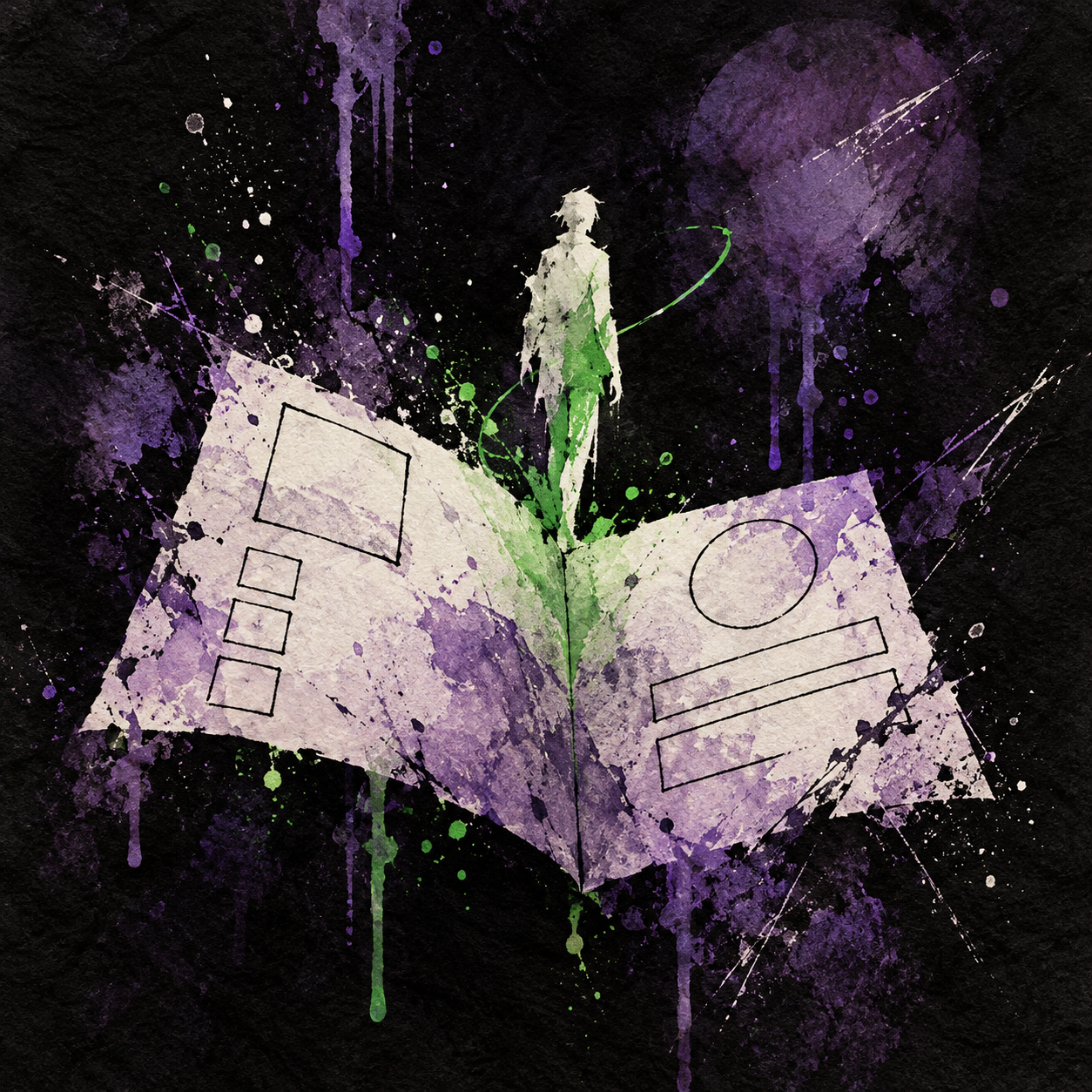
The character sheet tells a player what deserves a place on the page. Its boxes invite some records, its headings make some information easy to retrieve, and its empty spaces leave room for what the designer did not anticipate. A player can ignore those invitations, but the document still participates in the organization of play.
RPG zines make this relationship particularly visible because a character sheet can itself become a small booklet. The result complicates the idea that the book contains the game while everything else is packaging. A librarian selecting a usable copy needs to inspect the parts through which readers actually interact with it.
Scope note: This essay examines a creator-described mini-zine sheet and a dated player aid. Their form supports analysis of available cues and actions, rather than a claim about how every group behaves.
A booklet the player completes
Tomes of Woe is described as an eight-page mini-zine character sheet for MÖRK BORG. Its creator’s listing explains that a two-page PDF prints double-sided on one US Letter sheet, including folding instructions. The description credits Ven Buttons, while the account displays Val Buttons. Those are the displayed credits; the page does not authorize a biographical explanation of the difference.
Several kinds of page coexist in that description. There are PDF pages, the two sides of a physical sheet and the pages of the folded booklet. Counting them without specifying the unit can make a correct statement appear contradictory. It can also lead someone preparing a library session to print or assemble the wrong thing.
The booklet is designed to receive a player’s entries. A blank copy offers a structure; a completed one records a particular character and perhaps the consequences of particular sessions. Their physical similarity should not hide the change in function. One is a reusable form, while the other may become a participant’s personal record.
Michael Buckland’s “Information as Thing” helps explain why both can matter to a collection. He examines the tangible objects and representations regarded as informative, with their relevance depending on circumstances and purpose. A blank sheet can inform someone studying design. A completed sheet can supply different evidence about its use, provided the context is known.
A sequence on the page
The dated Cloud Empress player’s aid presents talk, run, hide and fight as prominent options. It also groups checks, stress and recovery information. The arrangement makes several responses to danger available for quick reference instead of presenting combat as the only obvious procedure on the page.
That is an observation about the document. It does not demonstrate that players choose those responses in the displayed order or that the aid changes their behavior. Establishing either effect would require observation of actual use. The distinction lets us analyze the design closely without pretending that a page is a completed playtest.
Norman’s discussion of signifiers gives the analysis a useful term. Labels and arrangements can make possible actions perceivable. In a player aid, the position and grouping of instructions help a reader recognize what they might do and where to look next. Whether that cue succeeds for a given reader remains a question to investigate.
For a librarian preparing a game session, the immediate task is concrete. Check that the aid belongs to the edition being used, that participants can read it in the supplied format, and that the facilitator can explain its relationship to the fuller rules. An attractive sheet from another version may introduce an unnoticed discrepancy.
What the form asks the reader to supply
A sheet also establishes an allocation of space. A short field encourages a different kind of entry from a full page, and a repeated track makes change easy to mark. These are possibilities created by the form. Players may adapt them, add extra paper or use a digital record instead.
I would examine those adaptations as part of use rather than automatically treating them as failures. A player who adds a page may need more space for something the published form makes secondary. The useful enquiry is what they are trying to record and whether the new arrangement helps them retrieve it. The designer’s intention and the player’s practice can be studied together.
An academic exercise could compare the blank form with a consenting participant’s account of using it. Students would distinguish what the document requests from what the participant actually records. A public-library activity could invite players to make a blank aid for a procedure they find difficult to remember. Either exercise should have a clear purpose beyond producing an attractive page.
A usable copy and a personal copy
These distinctions become practical when materials circulate. The library needs to identify whether a publication assumes a separate sheet, whether a blank copy may be reproduced under its terms, and whether a loan should include an instruction for obtaining that copy. Owning a booklet does not by itself answer every reproduction question.
A completed sheet requires a different conversation. It may include names, personal references or material the participant did not intend to retain publicly. The Zine Librarians Code of Ethics provides a professional basis for considering creators’ circumstances and permissions. Its relevance here lies in deciding how a new institutional audience changes the use of the record.
I would make retention a separate choice from participation. Someone should be able to take part in a library game without implicitly donating their character record to an archive or display. If a collection does seek such records, explain the intended access and description, record the agreement, and preserve enough context for a future reader to understand what the sheet can establish.
The character sheet belongs to the history of RPG publishing because it converts selected rules and possibilities into something a player can handle and complete. A good collection record should help the next reader distinguish the blank form, its printing instructions, the relevant edition and any personal record made through use. Those distinctions make the small document available for both play and serious enquiry.