SMSL AO200 MKII Review: Start With the Analog Inputs
Twelve firsthand writers support compact analog amplification while disagreeing about internal digital inputs, EQ and the audible benefit of balanced connections.
Scope note: This literature review concerns the SMSL AO200 MKII, also sold as MK2, driving passive speakers. Twelve distinct writers document actual use; original AO200 and AO300 accounts do not substitute for MKII evidence. One reviewer used a preproduction sample. The named testers performed every reported listening or operating action, and the proposed controlled comparison remains unperformed.
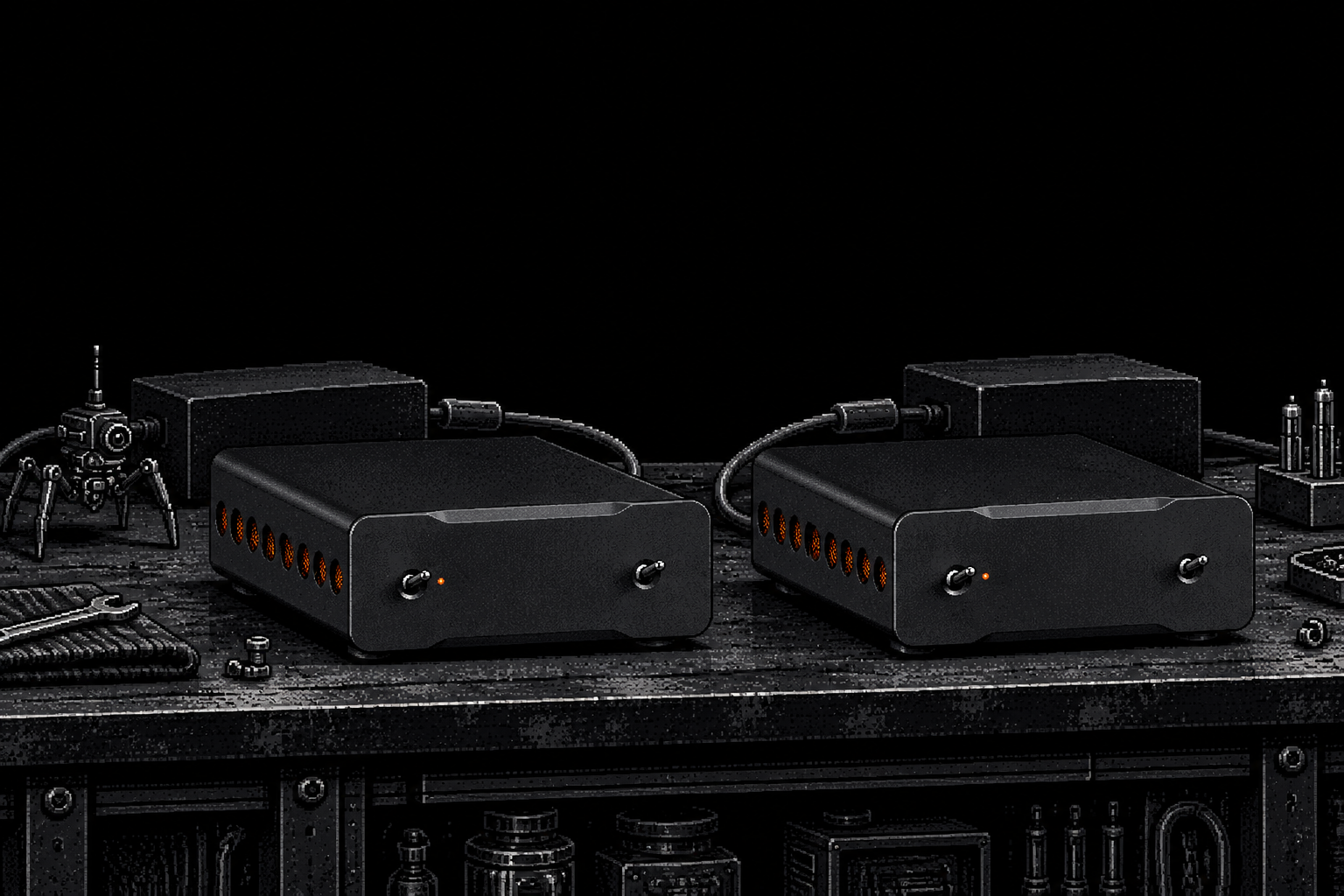
An existing converter and a pair of passive speakers leave a fairly clear job for an amplifier. It must accept the converter’s signal, drive those speakers and provide usable volume control. The AO200 MKII adds USB and Bluetooth, but the strongest recurring praise in these twelve writers’ accounts concerns its analog inputs.
Five writers explicitly preferred an analog route over at least one internal digital route. Other writers enjoyed Bluetooth or found useful EQ settings. That disagreement helps define the purchase: a compact speaker amplifier with additional connections whose performance still depends on the source, settings and room.
The current offer costs $255 USD
Catalog ID fad74d298d473f105141 identifies this exact model. On 15 October 2026, HiFiGo’s AO200 MK2 listing marked its named variant available for $255.00 USD. The current product response and store currency establish that item price before checkout charges, without conversion.
SMSL’s original manual specifies RCA and balanced XLR analog inputs, USB, Bluetooth, subwoofer pre-outs, an internal supply and selectable Direct, Tone and preset EQ. Bass and treble adjustments each span minus ten to plus ten decibels. Balanced connections carry a differential signal; the connector alone does not establish an audible improvement.
The selected records run from August 2023 through October 2026. Aoshida supplied the samples reviewed by Riccardo Robecchi, Michał Sommerfeld and George Dobrescu; Sommerfeld explicitly received a preproduction unit. Affiliate or purchase links accompany several editorial reviews. Indiana Lang’s biography identifies audio installation work and ownership of Emptor Audio. The owners’ financial affiliations are unstated, and the selected sample contains no common independent continuous-power test.
The recurring preference concerns the input route
Paul Cash at HiFiTrends used Wharfedale Diamond 11.2 speakers and music from Tidal. Cash enjoyed Bluetooth playback but heard brighter treble through the internal digital routes; a WiiM Pro feeding RCA provided the bass character Cash preferred.
Srboljub Stojanovic at iiWi described lively, neutral analog amplification and less convincing resolution through USB and Bluetooth. His written review names competing amplifiers but leaves the speaker load unstated. That omission limits how far its judgments can travel to another room.
michal.urbaniak used ELAC Debut B5.2 speakers and a Tannoy SFX subwoofer, preferred the MKII’s CD playback to an SA300, then returned the MKII after disappointing Bluetooth use. The account’s separate AO300 problems concern a different product.
These comparisons change more than a socket. An external converter, its output level and the amplifier’s selected input all participate. Without a matched blind comparison, the recurring preference supports trying the analog route but cannot identify one internal part as the cause.
Speaker size and room still change the demand
Michał Sommerfeld at Ear Fidelity used KEF LS50 Meta speakers in a 16-square-metre room and Harpia Acoustics Amstaff speakers in a larger room. Sommerfeld found useful drive and a relatively cool presentation, while the larger speakers exposed limited subbass. The preproduction sample and different systems remain attached to those judgments.
George Dobrescu at Audiophile Heaven reported satisfying drive with KLH Model Five and NHT C3 speakers while using several converters and adjusting EQ. Dobrescu also heard faint hiss at maximum volume that receded after lowering the setting.
Those reports support examining the intended speaker and listening level. They supply neither a shared load nor an identical room, so a nominal wattage cannot reconcile the different bass judgments. Sommerfeld’s estimate of continuous power remains an estimate, and the manufacturer’s rated figures remain specifications.
A useful EQ setting can change with familiarity
Riccardo Robecchi at Soundphile used Q Acoustics Concept 20 speakers, including an external DO300 converter through XLR. Robecchi described a neutral default presentation and found the SDB preset useful at low levels.
Indiana Lang at Home Theater HiFi used a DO300 and Jamo S801 speakers. Lang initially found that EQ changes altered vocals and bass in confusing ways, then obtained a more neutral result through adjustment. The same menu can therefore be a useful control and a source of uncertainty, depending on the setting and the listener’s target.
The controls deserve time during an audition. A comparison that leaves SDB enabled on one pass and Direct selected on another tests different frequency balances, with little basis for assigning the result solely to amplifier hardware.
XLR did not produce a shared verdict
Lang heard no meaningful RCA/XLR difference in the tested system. Dobrescu preferred XLR, but his converter and input comparisons do not isolate the connector. A common level-matched protocol would be needed before either report could settle the question for another system.
Four Audiophonics customer write-ups add useful limits. Patrick A. preferred XLR with an Eversolo and Tannoys, then reduced SDB after a month; the claimed burn-in mechanism remains unproved. Christophe F. heard quiet detail through an SU8 but retained slight timbre reservations and declined to judge imaging from a compromised dining-room layout.
Jean louis B. enjoyed lively playback with a D400ES and Triangle BR08 speakers. Eric B. favored analog playback with Audax speakers while finding USB disappointing. These four named owners contribute separate records, with no shared blinded or calibrated comparison.
The controls matter after the first track
gasolin at AVForums used a WiiM Ultra through RCA with ELAC Debut 3 DB53 speakers. The owner reported useful bass and volume, quiet operation and a knob that felt too short. Small dimensions can preserve desk space while making the control itself less comfortable.
An Audiophonics post with the same date, speaker combination and closely matching language is conservatively treated as a crosspost of this account. It contributes no thirteenth writer. Patrick’s two dated reports likewise count once, preserving the change of preference instead of inflating agreement.
The next comparison would hold the speakers and level fixed
A controlled follow-up would use a retail unit, one speaker pair, fixed positions and the same recordings. Direct mode would establish the baseline, with measured playback levels matched across USB, RCA and XLR before switching. A separate pass would compare Direct with fixed tone adjustments, logging hiss and clipping at the intended listening distance.
That test remains unperformed. The closest counterexamples to a blanket rejection of digital convenience are Cash’s enjoyable Bluetooth playback and Robecchi’s useful low-level EQ. The literature supports an analog amplifier audition with the buyer’s source and speakers, leaving the internal digital inputs and preferred EQ setting to earn their place during that same trial.
The twelve firsthand records
- Riccardo Robecchi, Soundphile, 12 September 2023; updated 13 September.
- Michał Sommerfeld, Ear Fidelity, 16 August 2023; preproduction sample.
- Paul Cash, HiFiTrends, 24 August 2023.
- Indiana Lang, Home Theater HiFi, 26 October 2023.
- George Dobrescu, Audiophile Heaven, 23 October 2023.
- Srboljub Stojanovic, iiWi, 21 March 2024.
- michal.urbaniak, personal comparison, 6 December 2023.
- gasolin, AVForums owner account, 3 October 2026.
- Patrick A., Audiophonics, 4 April and 10 May 2024; one writer.
- Christophe F., Audiophonics, 3 March 2024.
- Jean louis B., Audiophonics, 1 September 2026.
- Eric B., Audiophonics, 19 December 2024.