Finding a film language in thirty seconds
Short films tested new art, editable music and the value of keeping both results and corrections.
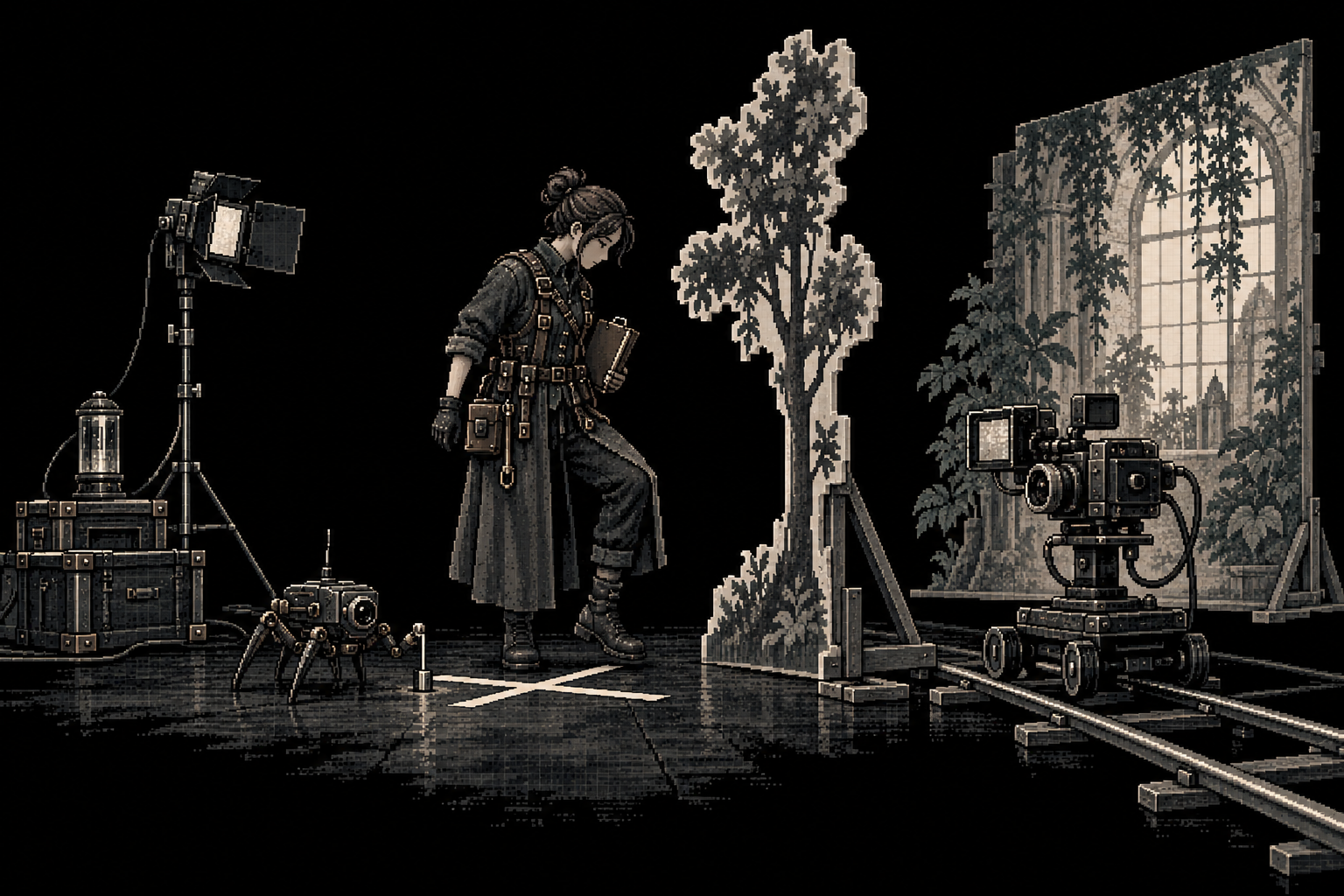
A short film gave us a small enough piece of work to finish, inspect and carry forward. The early trials changed their stories and artwork while keeping a useful construction: complete character drawings, scenery arranged at different depths, and a camera with somewhere to go.
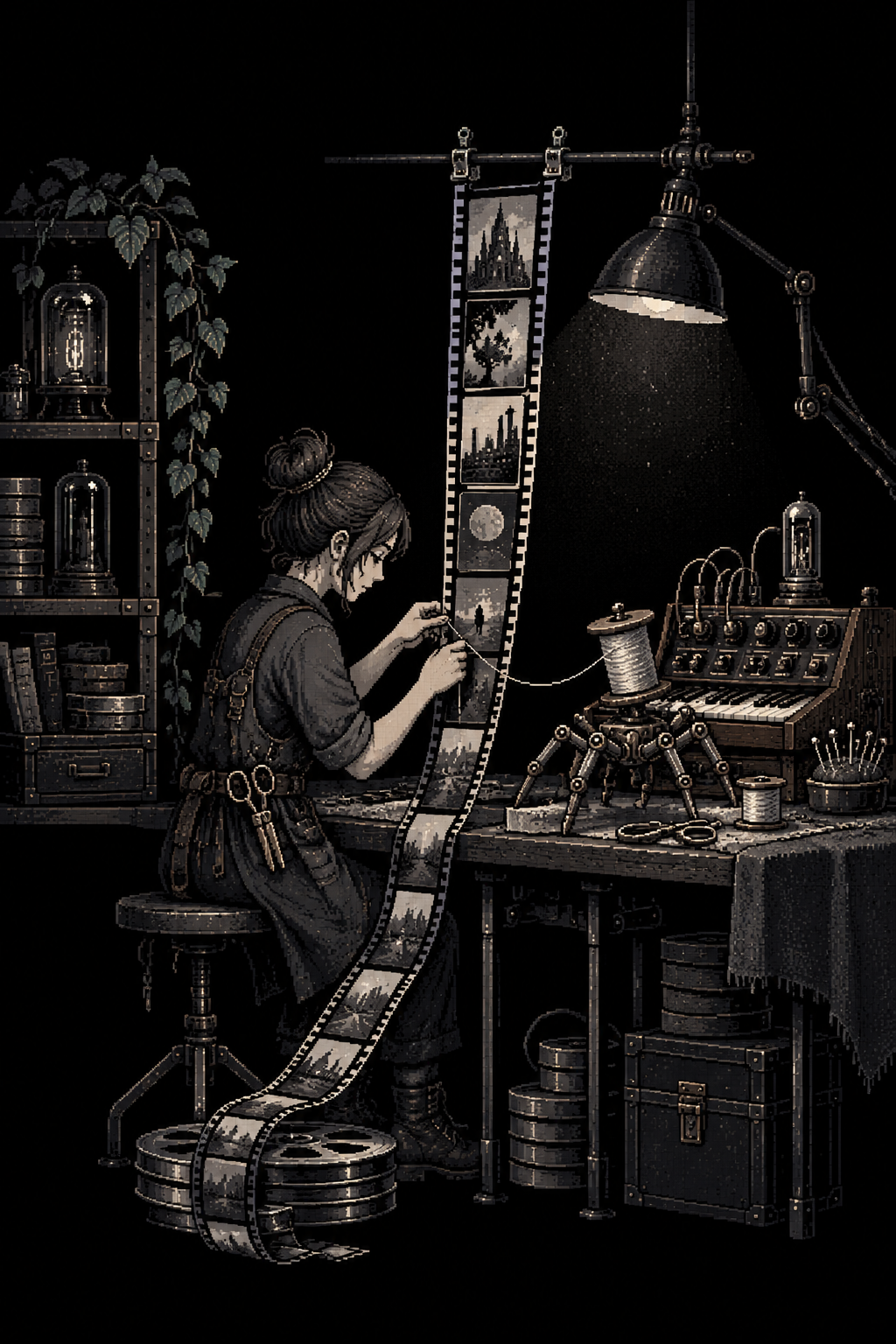
For The Last Stitch, I supplied a weathered illustration and requested new scenery and characters. When a proposed idea stayed too close to the reference, I corrected it. The film became a seamstress repairing a tear in the evening sky. Her last pull opened an enormous eye, and its blink darkened the scene.
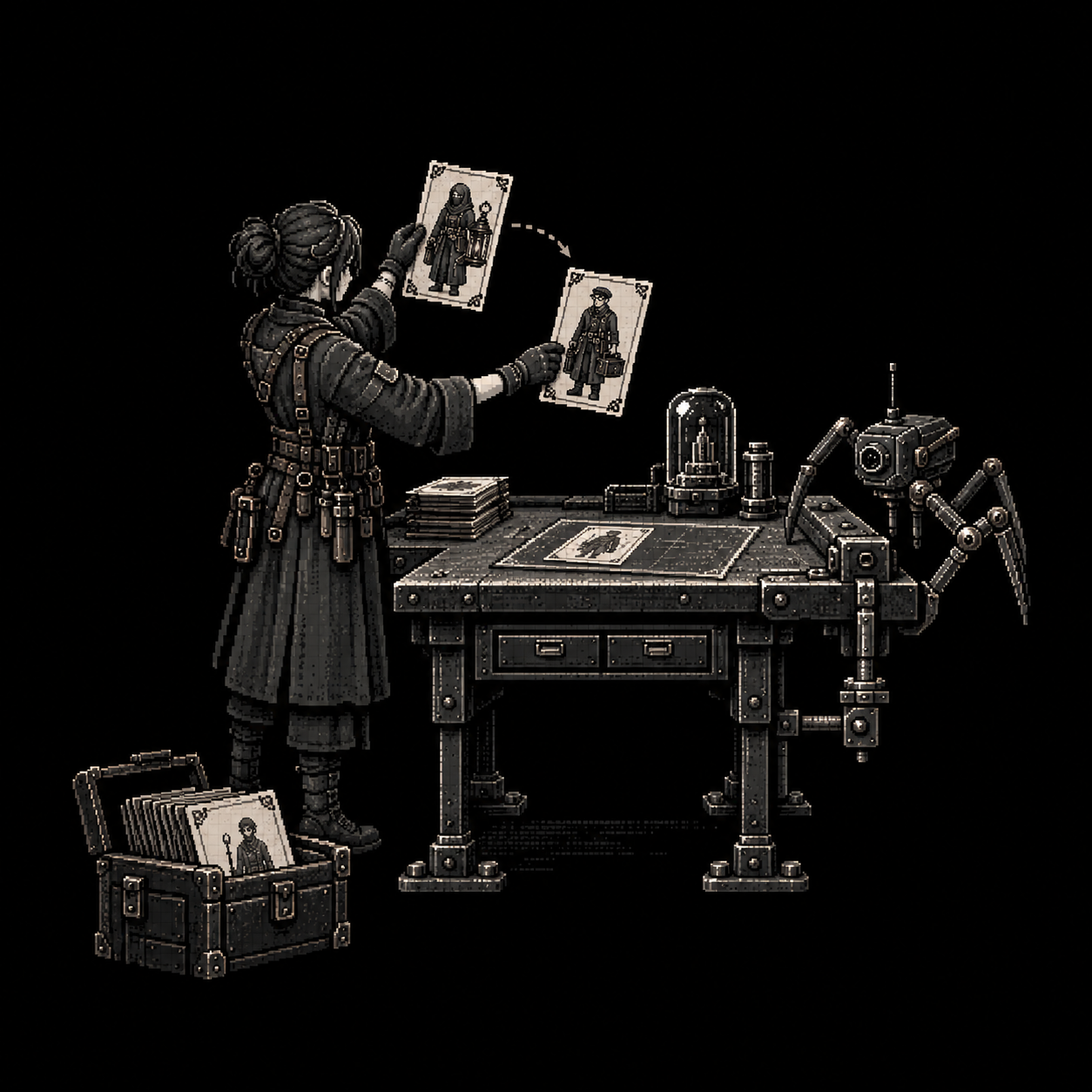
Twelve complete drawings of the seamstress and stool carried the action. Thorn trees and the sky occupied separate planes. The camera could approach the sewing, then withdraw toward the opening above it. The reference informed the surface and line quality without supplying a borrowed character.
Keep the editable work
A composition from my analog-synth application supplied separate instrument tracks for the thirty-second score. Those tracks, the final mix and the composition remained with the production, giving the film a retained musical source whose editable parts could be inspected alongside the sound file at the end of the folder.
The delivery record joined the movie to its editable scene and prepared art:
- `the-last-stitch.mp4`: 30 seconds, 720 frames, 24 fps, 1280 × 720, stereo sound.
- `the-last-stitch.blend`: editable Blender scene with packed pictures and score.
- `the-last-stitch-cels.zip`: 22 prepared assets, registration manifest and generation prompts.
- `audio/the-last-stitch-score.wav`: separate 30-second stereo score.
Public source excerpt. Repository snapshot, requiring repository access.
These are recorded deliverables from that short. They establish the files and their stated properties. They do not establish a fresh listening pass by someone who only inspected images or decoded the exported media.
One early check failed before rendering because it misunderstood Blender’s relative image paths. Resolving those paths through Blender’s own API repaired the check. The art and camera did not need changing to accommodate the mistake.
Two Taps Below enlarged the form to ninety seconds and adapted material from my writing store. It used two staged locations, whole replacement figures, close views and words in balloons. An oboe came from an installed instrument bank, while other music came from the synth. The records kept those sources separate.
I had requested the oboe and certain additions to the adaptation. Later, I objected to the oboe and invented dialogue. Both events belong in the history. My later correction shaped the Robins direction, where exact manuscript words and individual synth identities became more important. It did not erase what the earlier production had been asked to try.
Keep the correction beside the film
I asked for a Film Notebook with playable films and notes on how they had been made. The retained site grew to include early shorts, later experiments and rejected versions. A film could remain accessible while its entry explained why the result had been rejected.
That changed the notebook’s usefulness. It could show a method developing through actual choices, instead of presenting only a row of agreeable results. A reader could follow a request, the produced object and the later correction without needing the entire conversation.
The notes were prepared from the build records in my voice, and their first-person wording needed to remain attached to my actual requests and judgments, rather than implying that I personally wrote the agent’s code or performed its checks. The retained pages and publication receipts document the historical notebook; they do not establish that its old hosted address still serves the same edition today.
The short films supplied a working vocabulary: intact drawings, physical depth, useful camera movement and music with an editable source. They also supplied limits. The next adaptation would ask whether that vocabulary could carry a much longer piece of writing without losing the objects, thoughts and choices that made it worth adapting.