SMSL SA300 Review: A Small System With Specific Limits
Twelve firsthand writers document desktop playback, threshold-specific power measurements and source-dependent problems with USB, speaker wiring and remote control.
Scope note: This literature review concerns the standard SMSL SA300 driving passive speakers. Twelve distinct writers describe their own measurements, listening or operational checks; follow-ups count once per writer. Stock and altered power supplies remain separate, and historical computer reports retain their dates. The named writers performed the reported actions. The proposed comparison remains unperformed.
A computer, two passive speakers and a volume control make a fairly modest audio system. The SA300 can provide that control and speaker power while accepting USB, an existing converter’s analog output or a phone’s Bluetooth connection. Several owners found that combination sufficient for a desk or bedroom.
The awkward reports concern the same ordinary system. One owner’s gamepads disconnected on a shared USB controller. Another owner heard clicking that changed with speaker-wire length. Two remote-control accounts ended differently. Together, twelve writers support a compact amplifier with useful connections and some setup-specific limits, with no basis for estimating how often those limits appear.
The available black model costs $149.99 USD
Catalog ID a4c96b8dd395bcd4e57b identifies this component. On 15 October 2026, HiFi Express’s exact SA300 offer listed the Black variant as available at $149.99 USD. The retailer’s current product data and store currency establish that item price before checkout charges; no currency conversion is needed.
SMSL’s original manual specifies USB, RCA analog and Bluetooth inputs, a subwoofer output, a 24-volt power connection and selectable Direct, Tone and preset EQ modes. EQ adjusts the balance of frequencies. A subwoofer output needs a powered subwoofer, while the speaker terminals drive passive speakers.
The records span January 2020 through December 2023. Archimago’s site discloses affiliate links; the selected owners’ financial affiliations are unstated. Toku explicitly used a nonstock 26V/10A supply, so those impressions cannot certify stock-supply performance or justify changing the specified supply.
Several simple connections worked
mrbenn at AVForums connected Tannoy F1 Customs and found that Ubuntu recognized USB immediately; phone pairing also worked. In a later post, mrbenn reported satisfactory RCA playback from a Chromecast Audio. wolfytom described two months of useful Bluetooth and EQ operation but found the recessed USB connection too tight to try.
NgtFlyer at ASR used Windows 10, Winamp and FLAC recordings with Phase Technology Teato 2.5 speakers. Windows selected the device without intervention. NgtFlyer heard clean quiet passages in the bedroom and explicitly avoided testing the amplifier’s limits.
ceausuc bought the SA300 for remote control and Bluetooth, then preferred its sound with Q Acoustics Concept 20 speakers to a modified FX-Audio amplifier. The comparison lacks documented level matching. michal.urbaniak described satisfied daily background listening with ELAC Debut B5.2 speakers and a Tannoy SFX subwoofer before seeking more connections and power.
These accounts establish useful operation in named systems. They leave louder rooms, different speakers and present-day host software for separate checks.
The power figure needs its distortion threshold
Archimago’s original measurements used the stock supply, both channels and 4- or 8-ohm loads with series inductors. Below 0.1% total harmonic distortion plus noise, Archimago reported about 12 watts into 4 ohms and 4.5 watts into 8 ohms. Allowing just under 1% raised those results to approximately 49 and 30 watts respectively.
Those thresholds describe how much unwanted signal accompanied the output. A wattage divorced from that condition cannot settle clean headroom. Archimago also reported six weeks of satisfactory nearfield use with KEF LS50 and Spendor SA1 speakers, while a larger system exposed more hiss and hum. The bench result and desktop experience support a modest application; room-scale suitability still depends on the connected speakers and required level.
Toku preferred RCA from external converters to the internal USB route and reported quiet power transitions, with faint hiss at maximum volume. Toku’s altered supply and uncontrolled comparison limit any claim that another converter will improve a stock system.
One shared USB route produced a different result
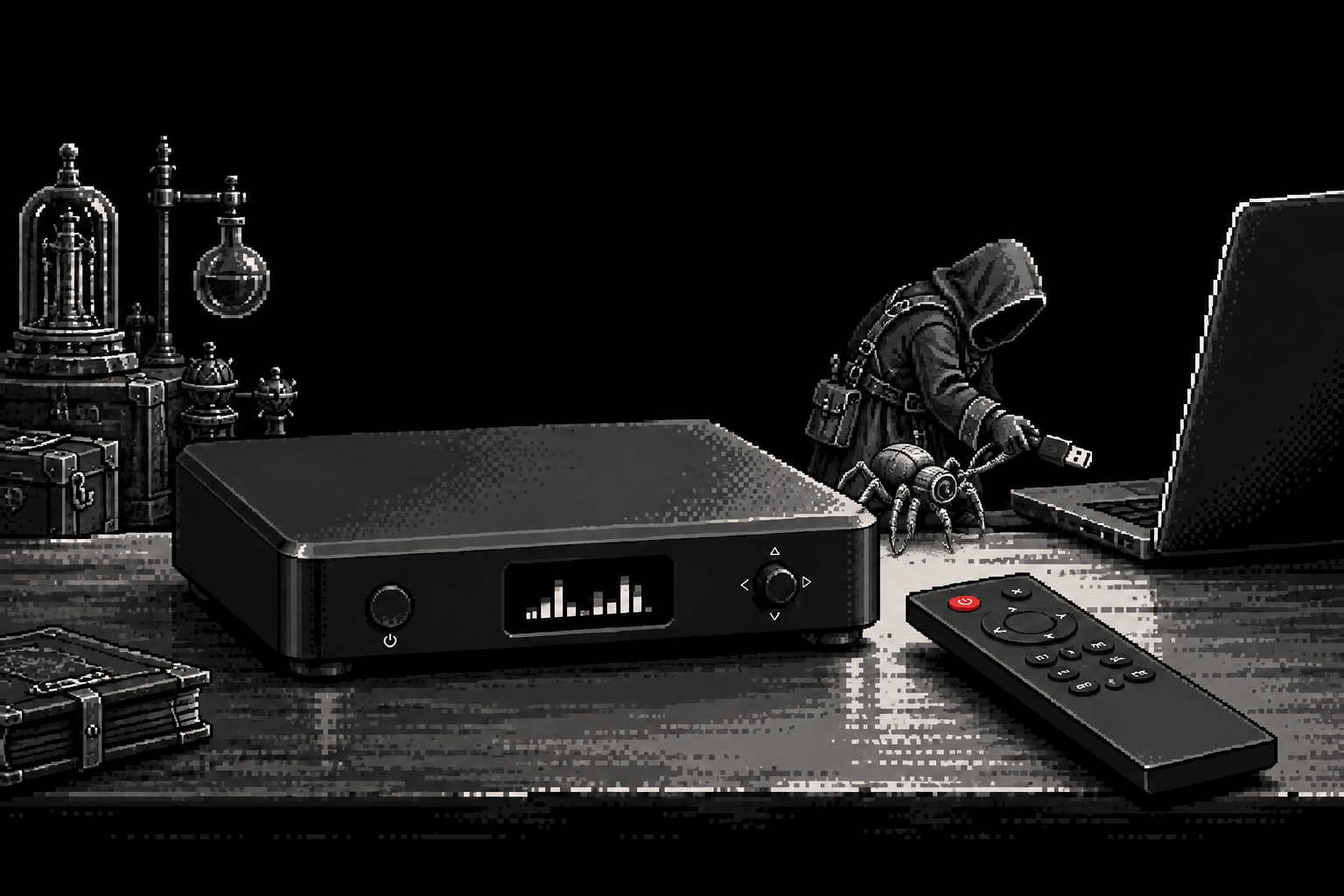
lyz initially reported automatic Windows 10 setup and only close-up tweeter hiss. Later, lyz found that gamepad rumble repeatedly disconnected devices sharing the SA300’s USB hub or controller; another converter did not reproduce the trouble.
The owner suggested a power-related explanation, but the account contains no electrical measurement establishing that cause. Its useful result is narrower. The connected USB arrangement changed behavior, although other writers’ computers played normally, and the historical report cannot establish the behavior of every current computer.
lucadoc likewise supplies a practical qualification. With Divatech Diva 18 speakers, lucadoc found RCA satisfactory below high volume, then used an active subwoofer whose own filter controlled its frequency range. Merely adding a subwoofer connection does not establish that the main speakers receive a filtered signal.
The clicking report remained unresolved
milan616 first encountered clicking with a Pioneer FS52, then reproduced trouble with newly built Affordable Accuracy Plus monitors. A Denon receiver drove both monitors successfully. With the SA300, changing outputs did not make the troublesome speaker behave.
The subsequent posts matter. By 30 March 2021, milan616 had found that very short speaker leads caused immediate trouble and longer leads permitted more volume before clicking returned. An engineer friend’s proposed explanation involved the output stage and cable capacitance, but the writer supplied no measurement proving that mechanism and no confirmed repair.
That sequence is the strongest counterexample to an uncomplicated desktop verdict. The account documents a failed combination and several performed changes, with uncertainty still attached to the cause. It cannot establish a general rule that longer speaker cables repair this amplifier.
The remote reports require different conclusions
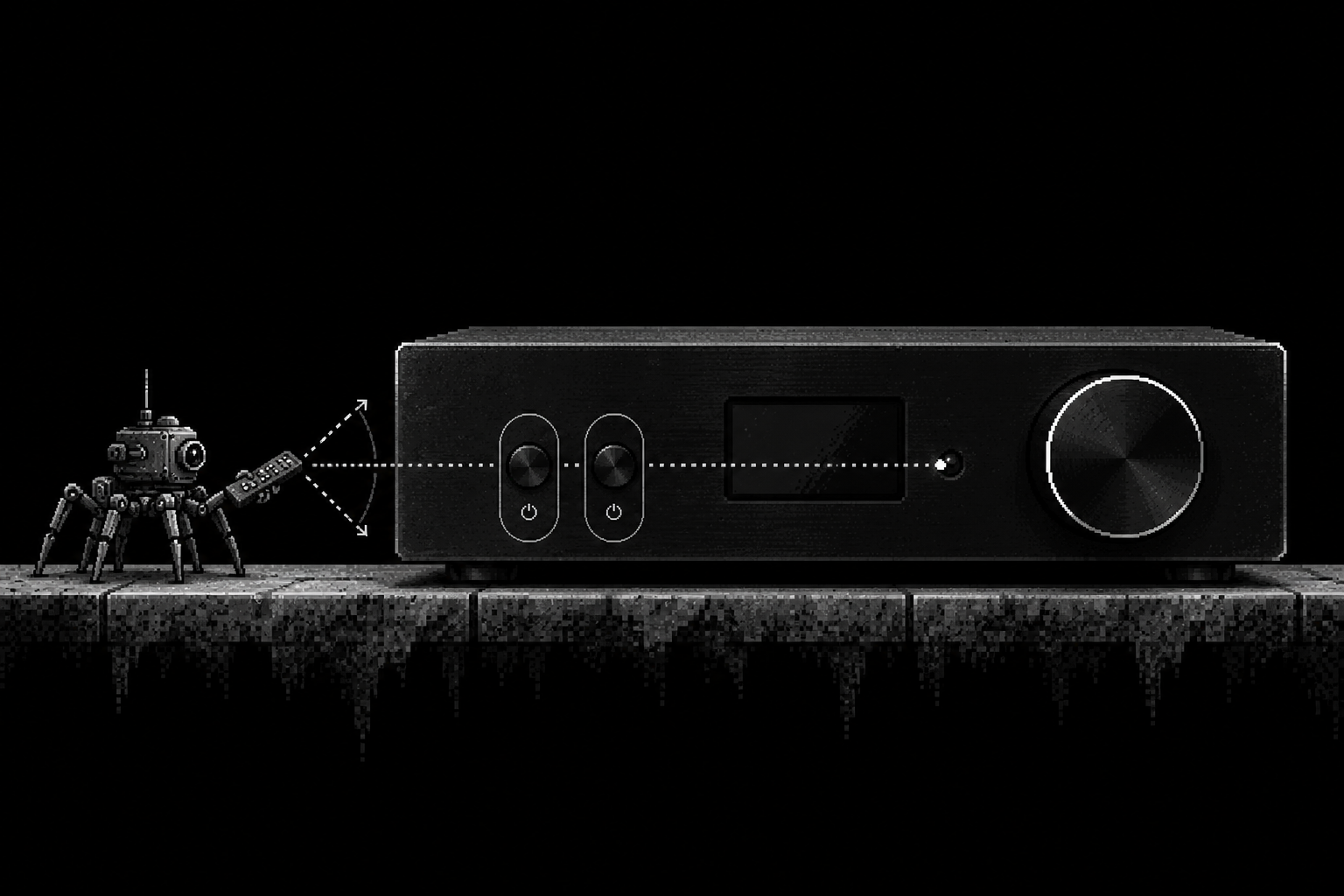
eXistenZ78 described almost a year of satisfaction before the SA300 stopped responding to two remotes. Both still operated an M300, and the owner had selected the SA300’s control mode. A failed receiver was the owner’s suspicion.
SaltyCDogg restored a nonresponsive remote by changing batteries, while noting that the old batteries still tested powered. Battery condition and reseating remain unresolved alternatives. That successful intervention does not diagnose eXistenZ78’s unit.
A useful trial would preserve the intended system
The next controlled comparison would retain the stock supply, one speaker pair, fixed positions and Direct EQ, then match measured playback levels between USB and RCA. A second pass would compare a shared USB controller with a separate connection, logging disconnections. Speaker-wire length and remote battery condition would be recorded before assigning any malfunction to a particular part.
No such combined test has been performed for this article. The literature supports the SA300 for a modest passive-speaker system whose actual connections can be checked during a return period. Its strongest evidence concerns named desktop and bedroom combinations, with headroom and operational behavior judged in the source-and-speaker arrangement the buyer intends to keep.
The twelve firsthand records
- Archimago, stock-supply measurements and desktop use, 14 November 2020.
- michal.urbaniak, ELAC system comparison, 6 December 2023.
- mrbenn, Ubuntu and Tannoy use, 26 January 2020; March follow-up.
- wolfytom, two-month Bluetooth account, 10 March 2020.
- Toku, external-converter and altered-supply use, 10 April 2020; 2021 follow-ups.
- lucadoc, Divatech and subwoofer use, 30 April–1 May 2020.
- NgtFlyer, Windows and Phase Technology playback, 30 May 2020; February 2021 follow-up.
- ceausuc, Q Acoustics listening, 27 December 2020.
- lyz, Windows USB and shared-controller behavior, 5–26 May 2020.
- milan616, clicking and cable-length follow-ups, 22–30 March 2021.
- eXistenZ78, remote response checks, 7 October 2021.
- SaltyCDogg, battery-change intervention, 7 October 2021.