Topping D10s Review: USB Bridging and Power Conditions
Twelve original written accounts separate the D10s's measured DAC performance from disputed listening differences, useful USB conversion and unresolved power or reset problems.
Scope note: This literature review examines twelve distinct writers’ original written accounts of using or measuring the Topping D10s, inspected on 27 October 2026. Eight extended reports and four shorter bench or owner accounts cover analog conversion, USB bridging and host-specific faults. Drew has not performed these equipment tests. The original D10 and D10 Balanced are separate models; shared graphs and cross-posted reviews count once.
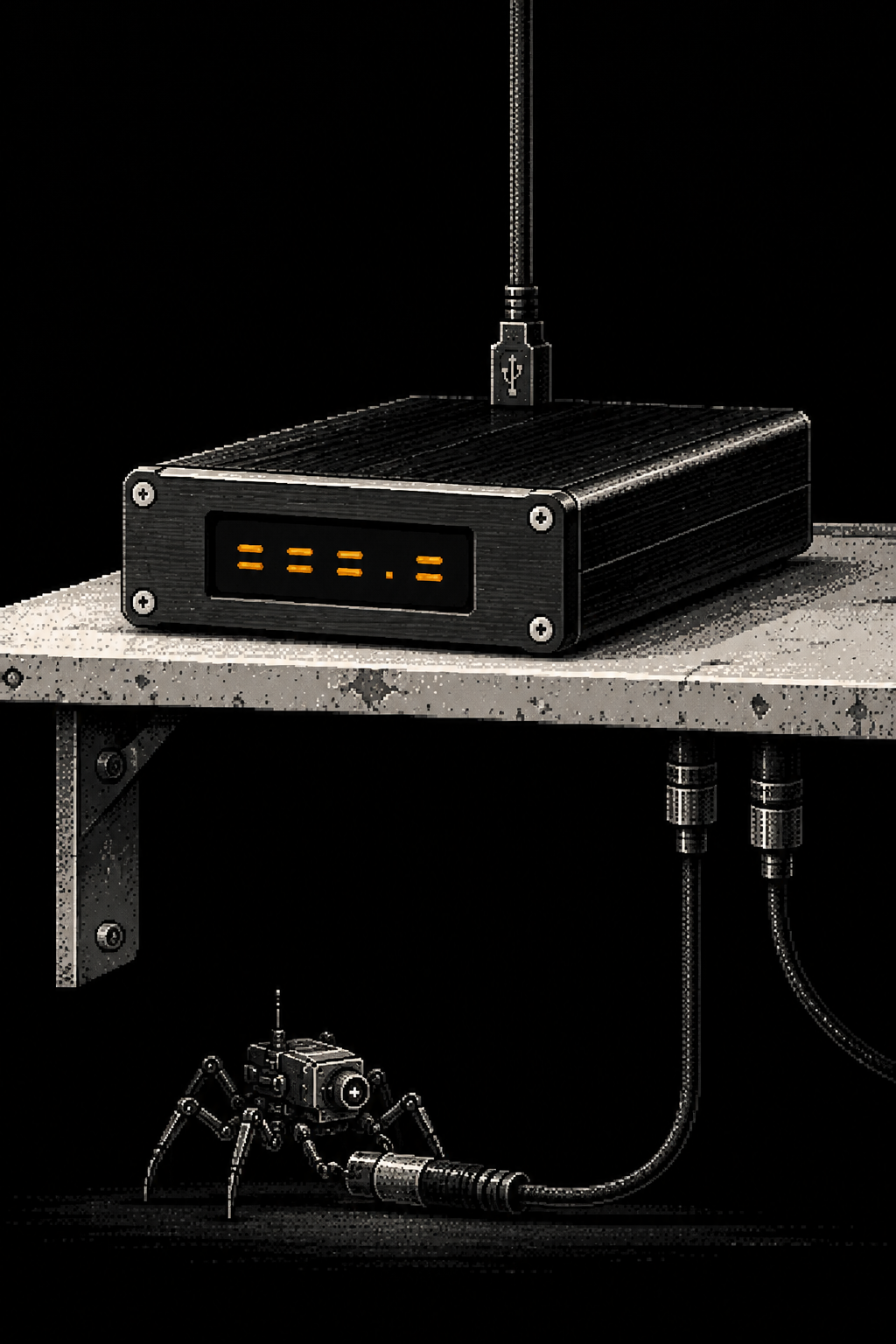
An older amplifier may have useful analog inputs and no way to accept computer USB audio. Another DAC may accept optical or coaxial audio but lack USB. The Topping D10s addresses both situations, with one connection rule that decides whether either system will work: USB goes in; analog, optical and coaxial audio come out.
The twelve accounts provide independent evidence of low noise and distortion, several successful digital connections and conflicting listening impressions. They also contain interruptions that required a USB reset, a temporary powered-hub improvement and a later failed unit. Good bench results do not resolve every host connection.
Catalog entry 5a2c77cba974f44a33f4 identifies the D10s reviewed here.
The same hardware appeared under a different catalog listing in the 14 October review. This later literature review adds further independent bench reports and later owner fault histories. The hardware model remains the standard D10s.
The digital sockets are outputs
The manufacturer-authored D10s manual, hosted by Parts Express, specifies USB input, RCA line output and optical and coaxial digital outputs. USB supplies both data and power. The specified RCA level is 2 volts RMS, a line-level signal intended for an amplifier or active speakers; the D10s has no headphone amplifier or physical volume knob.
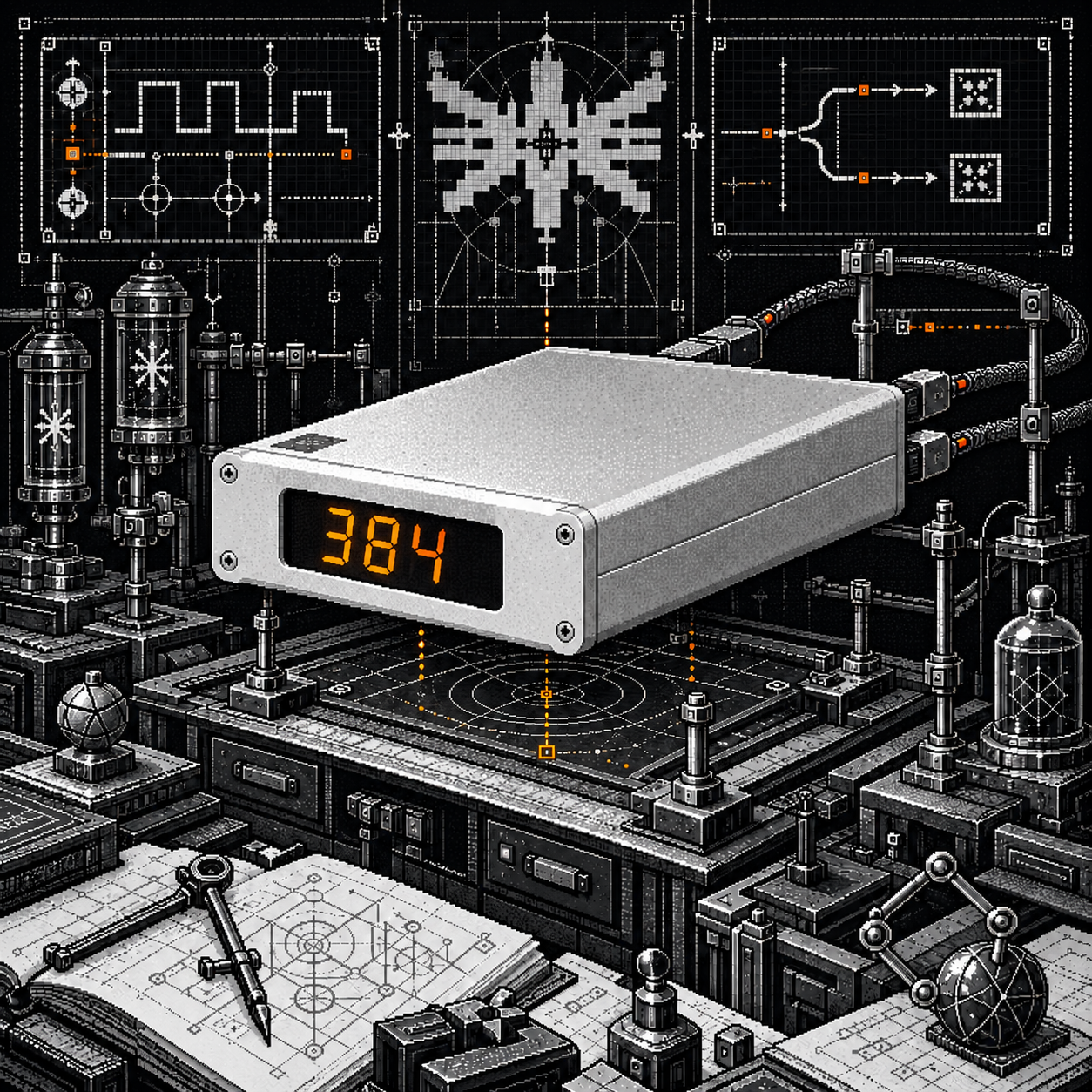
The same manual specifies USB PCM audio up to 384 kHz and 32 bits, with native DSD256 support. The optical and coaxial outputs stop at 192 kHz and 24-bit PCM, or DSD64 carried through DoP. Those different ceilings matter when the unit serves as a USB-to-digital converter.
Jarvin Cassidy Co initially obtained no coaxial signal when feeding an E30 at an excessive sample rate. Reducing the rate to 192 kHz restored playback. Trav Wilson used computer USB through the D10s’s coaxial output into a Soncoz LA-QXD1 and valued the visible sample-rate indication. These are actual connection reports, rather than a promise that every rate supported over USB can leave through every output.
Jarvin’s connection trial and Wilson’s displayed-rate use
Independent measurements support the analog role
Amir Majidimehr, writing as amirm at Audio Science Review, measured the D10s supplied by Topping and found low distortion and strong linearity. USB operation worked directly in his trial, though he expressly limited that observation rather than guaranteeing all users’ reliability. His measurements are one record; their reproduction inside another article does not create another laboratory test.
Majidimehr’s DAC and bridge measurements
Carlo Lo Raso used a Surface 3 Pro running JRiver, a Lynx 2B audio interface and SpectraPlus, with a QuantAsylum QA401 used for the noise measurement. He measured a 2-volt RMS output and a 120-decibel A-weighted signal-to-noise ratio. A specific 16-bit, 44.1 kHz intersample-over test also produced no additional artifacts in that setup. That result concerns the documented test signal, rather than every possible recording or level.
Lo Raso’s measurements and listening
Archimago bought a D10s, inspected its board and measured it through an RME ADI-2 Pro FS with a Raspberry Pi source. Low distortion and an output around 1.95 volts supported the basic conversion job, while a small frequency-response ripple remained visible. pma, using a separately purchased sample, measured less than two microvolts of unweighted output noise over the stated audio band. The instruments and weighting differ, so these figures should not be collapsed into a single score.
Archimago’s original bench report and pma’s owner measurements
The practical conclusion is limited but useful: several independently tested samples performed the analog conversion cleanly under their reported conditions. Those tests establish more than a DAC-chip name or a factory performance graphic.
Listening differences remain unsettled
Jarvin used an SMSL SP200 headphone amplifier with Sennheiser HD600 and Hifiman Ananda headphones and wanted more bass weight and depth. Srboljub Stojanovic found the D10s lively and fuller through the middle frequencies than the older D10, although spatial depth remained a weakness. Archimago, listening through speakers and several headphones, described successful bass reproduction. Their systems and comparisons differ; these impressions do not establish one shared tonal defect.
Stojanovic’s comparison with the earlier D10
SenyorC, at Acho Reviews, compared the D10 and D10s from two Raspberry Pi sources through a JDS Labs Atom. The writer expressed a slight sighted preference but doubted an ability to identify the difference blind. Coaxial output into an SU-8 and an optical splitter feeding multiple systems also worked. The review’s two-year ownership history belonged to the older D10, not the newly tested D10s.
SenyorC’s original D10s review
Dunring enjoyed music through a D10s and Drop THX 789 but found gaming treble sharp. Shadrach reported satisfaction with a D10s, JDS Labs Atom and Genelec system while finding DAC differences difficult to distinguish. Neither short account supplies controlled level matching or enough common equipment to settle the disagreement.
Dunring’s use report and Shadrach’s system
USB power can change a successful first result
Dr Richard Varey initially liked the D10s with Windows 10 and JRiver. Crackles and pops appeared through a two-metre USB cable, reconnecting temporarily helped, and a powered hub initially improved operation. The later amendment is decisive: the unit failed after six weeks, and ShenzhenAudio offered a full refund. A completed credit is not documented in the retained account, and the digital-bridge use mentioned there was still a plan.
Varey’s review and later failure update
Fullaval used a computer with PreSonus Eris 3.5 speakers and an Eris Sub. Winter static discharges coincided with stopped audio that required cycling USB power. A Fosi Q4 seemed more tolerant during a later one-day comparison, but that does not isolate the cause or establish long-term superiority.
Fullaval’s stopped-audio report and follow-up
pma described a different outcome: an Olimex USB isolator and a twelve-metre shielded analog cable reached another room without audible or measured hum. Those conditions differ substantially from the reset reports. A host, cable, isolator and downstream system belong in the assessment, while a diagnosed universal grounding defect does not follow from these accounts.
Price and the condition for buying
On 27 October 2026, ShenzhenAudio listed the black D10s at US$109, with Add to cart enabled. The retailer’s legacy URL names older hardware, but its current heading identifies D10S and ES9038Q2M, and the selected black variant is 31449021677700. This is a native USD offer before destination charges; no conversion is needed. The cover depicts the silver finish from an inspected product photograph, not that black-priced variant.
Interests vary across the twelve sources. Topping supplied Majidimehr’s sample, ShenzhenAudio supplied Jarvin’s, and SenyorC received a review discount from Topssale. Wilson, Stojanovic and Archimago disclose affiliate links; Archimago, pma and Varey describe purchases. Home Theater HiFi carries sponsor placements, while several owner reports leave relationships unstated. These differences remain relevant without turning every disagreement into a claim of paid influence.
The D10s fits a computer-fed system that already has volume control and amplification, or a separate DAC needing a USB bridge. It does not fit a source offering only optical output. A useful next test should log host, USB cable and hub conditions while repeatedly changing sample rates and sleep states, then check both analog playback and digital lock after each transition. That test remains unperformed here; it would examine the interruptions that the favorable analog measurements leave unresolved.
The twelve firsthand records
- Amir Majidimehr / amirm: supplied-sample DAC and bridge measurements.
- Jarvin Cassidy Co: SP200 listening and a corrected coaxial sample-rate mismatch.
- Trav Wilson: Soncoz connection, visible sample rate and physical inspection.
- Srboljub Stojanovic: earlier-D10 comparison and spatial limits.
- Carlo Lo Raso: independently measured output, noise and a specific overload test.
- Archimago: purchased sample, board inspection and RME-based measurements.
- SenyorC / Acho Reviews: two Raspberry Pi sources, Atom comparison and digital routing.
- Dr Richard Varey: temporary hub improvement followed by failure.
- pma: independent noise measurement and isolated USB use.
- Dunring: D10s with THX 789 for music and gaming.
- Shadrach: D10s with Atom and Genelec equipment.
- Fullaval: computer audio interruptions associated with static discharge.