Find the sample value that changes the answer
Use a threshold-dependent connection to choose the next inspection.
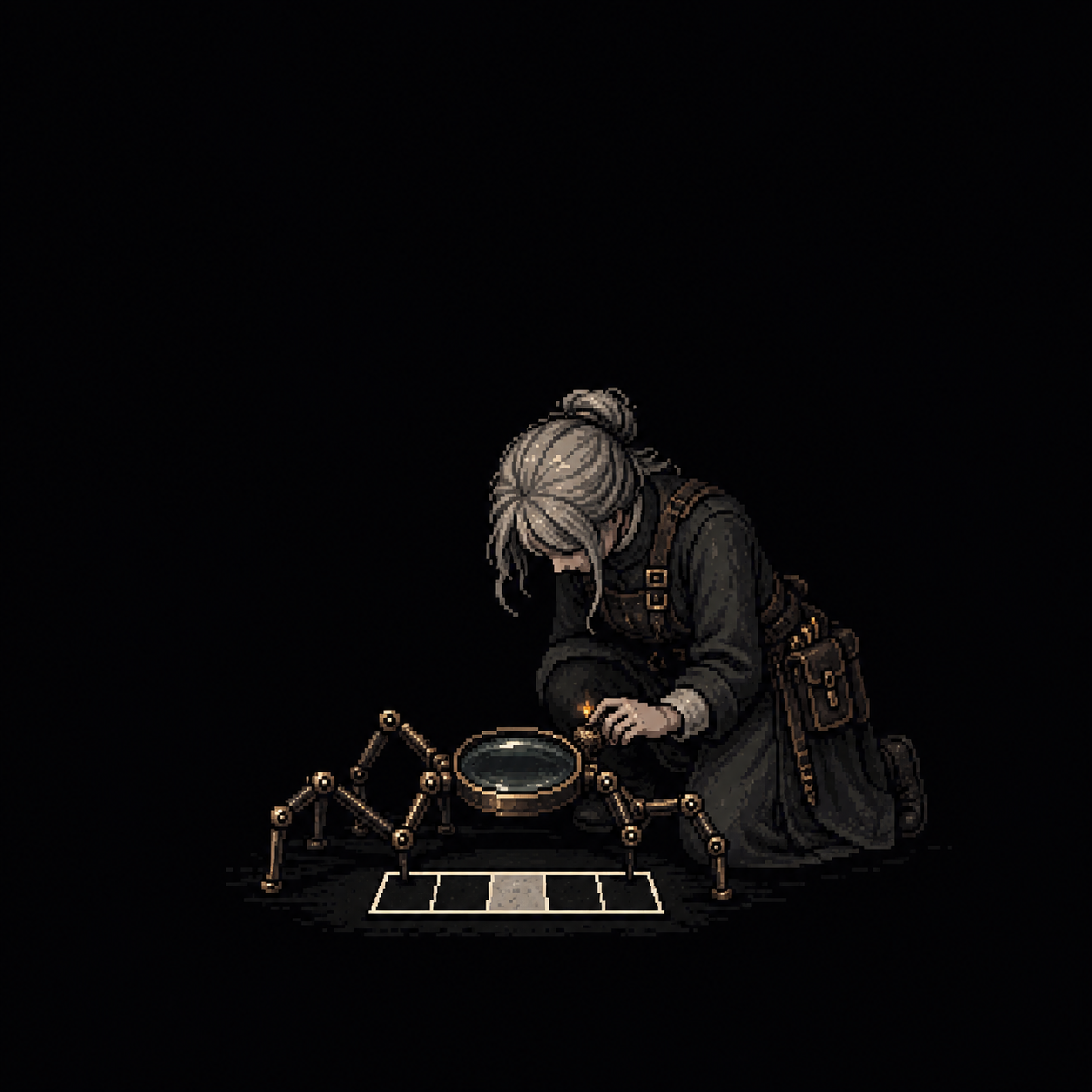
A faint section of a scanned line can produce two reasonable-looking readings. At one threshold the line breaks; at another it connects. Asking several agents to inspect the same image again may produce more interpretations without identifying which observation would resolve the disagreement.
WITNESS, a proposed drawing-evidence instrument, has a mathematical core with a more specific operation. It finds the lowest grayscale threshold at which selected endpoints become connected within the declared domain and neighborhood rule. That critical value identifies the sample condition on which the image result depends. It is not a probability that the engineering interpretation is correct.
The kernel’s self-tests were independently reproduced with 8,523 passing checks on October 18, 2026. The result supports the tested algorithms in their narrow domains. The complete drawing-acquisition system and its effect on real interpretation tasks remain proposed or unvalidated.
An illustrative threshold calculation
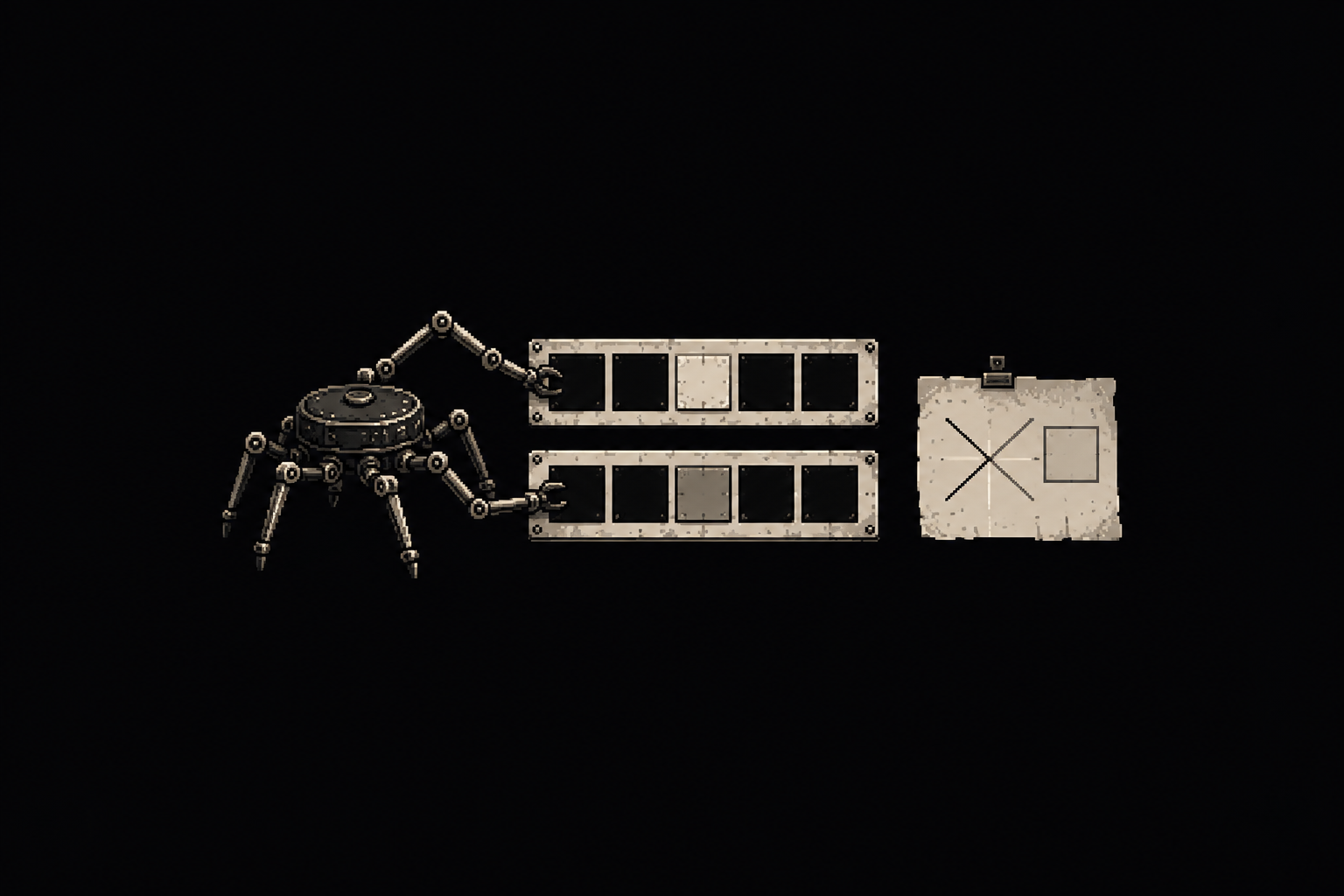
Take a five-sample horizontal line whose grayscale values are zero, zero, 140, zero, zero. Assume the endpoints are the samples at either end and there is no route outside this one-row domain. At threshold 139 the middle sample remains excluded. At 140 it is admitted, and the endpoints connect.
The first connecting threshold is therefore 140. This is a synthetic example, not a confidence estimate or a measurement from a real drawing. It lets the next investigation name a specific issue: the result depends on admitting the pale middle sample.
A larger image can contain several possible paths, each of which requires admitting its lightest necessary sample under the dark-foreground convention, and the critical threshold is the lowest value at which any of those paths becomes available between the declared endpoints. It is useful to distinguish this question from finding the shortest path, since a longer dark route may connect before a shorter pale one.
The delivered algorithm activates pixels from darker to lighter values and joins neighboring active regions. It stops when the endpoints belong to the same region. Its returned evidence supports connection at the critical value and disconnection below it, making the transition available for separate checking.
Choose evidence that could change the result
Once the pale region is located, decide which observation could distinguish the remaining interpretations. A higher-resolution source may show whether the gap comes from scanning. A different color channel may separate marks that grayscale combined. A wider view may reveal another path, while a legend may establish how a deliberate break should be interpreted.
Those choices answer different questions. Increasing resolution cannot by itself establish the meaning of a dashed leader. Reading a legend cannot recover sample detail that was never captured. State the unresolved proposition before requesting more evidence, identifying what a clearer source or additional context would need to show so the acquisition step has a testable purpose and can return a useful unresolved result if the requested distinction remains unsupported.
For the illustrative line, suppose two candidates remain: a continuous drawn stroke degraded by scanning, or an intentional break. A clearer original could help distinguish them. Merely changing the threshold until the desired connection appears would instead alter the admitted image without providing new evidence about either candidate.
Keep the original image beside every diagnostic view. A thresholded image can make a result easier to inspect while concealing the gray values that made it uncertain. Save the transformation parameters and source location so another reviewer can return to the samples rather than relying on the transformed display.
Stop when the available source cannot decide
A critical threshold is exact only for the provided samples and declared computation. Different scans, compression artifacts, or crop boundaries may change it. It does not convert an inadequate source into an adequate one, and a numerical result should not force the downstream system to choose an engineering conclusion.
Define a stopping condition before requesting repeated inspections. If the available source has no additional detail and the required convention is unavailable, retain an unresolved result with the precise missing evidence. That is more useful for later work than a generic low-confidence label because it tells the next person what could settle the question.
Test the acquisition procedure with cases where additional evidence helps and cases where it cannot. Record whether the selected operation actually distinguishes the candidates, retaining the observation that supports that assessment so the workflow cannot score a request as successful merely because it returned another crop whose contents leave the original disagreement unchanged. Evidence collection has completed its purpose only when the relevant distinction is established or its current limit is documented.
For the five-sample example, preserve the critical value of 140 and the supporting certificate, then attach any subsequent observation to the same source question. If a better scan arrives, rerun the calculation on the new source version and compare the result without replacing the earlier evidence.
Source notes
Based on WITNESS’s recovered critical-threshold implementation and its independently reproduced synthetic self-tests. The five-sample example is illustrative; proposed acquisition steps are not reported field results.