Module case studies · T1
The Village of Hommlet
Atlas pages 21–22
In this chapter
Ordinary services, concealed allegiances
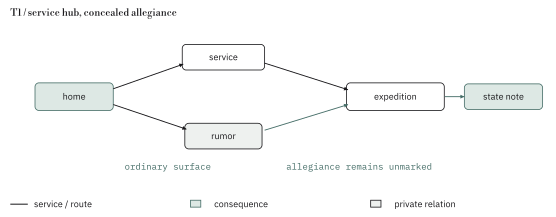
Hommlet gives the referee a village whose ordinary transactions can carry hidden consequences. The party can seek lodging, buy equipment and find companions, but the keyed descriptions also record affiliations and motives unavailable at first glance [T1 d6–7, d10–11]. The same visit that supplies rope or a bed can expose the party’s plans. An encounter layout can place the public service beside the private affiliation, allowing the referee to follow how an ordinary purchase or conversation reaches someone with an interest in the expedition.
T1 marks confidential material with bold type or parentheses, and its instructions encourage a referee who knows the material to present it in their own words [T1 d4–5]. The keys on the following pages put that distinction into practice. Comparing one of these passages with a boxed example shows two ways of directing the referee’s speech. A border groups an extended description for delivery; a change in weight or parentheses can distinguish private information within the running text, where the referee must notice it before continuing aloud.
The instructions also ask the referee to change the village map as play alters the place and to add details where needed [T1 d5]. A numbered building supplies a stable address as its inhabitants move, die or change their relationship to the party. A proposed state record keeps that address beside dated entries for the changes. The next visit begins from the latest entry, while the building’s position and its connections to neighboring places remain available on the map.
The Village of Hommlet
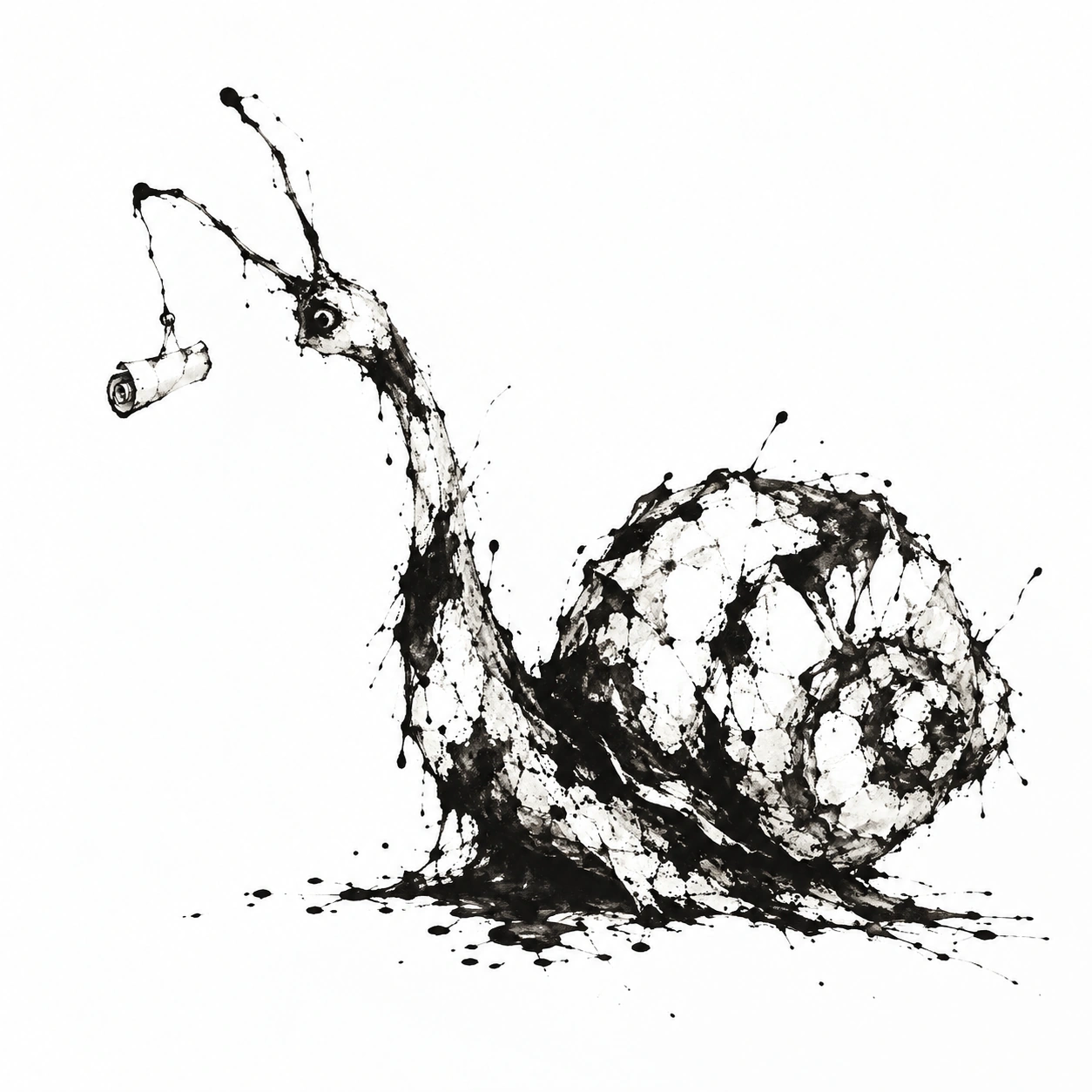
The transition to the moathouse changes the page’s job. Digital page 14 gives the ruin a broad exterior image beneath a new section heading, while the next page begins the encounter key and its random-event procedure [T1 d14–15]. The image introduces the place before the reader begins consulting individual locations. A threshold illustration in a new adventure can perform this work by showing the approach, entrances and surrounding ground, then giving way to the numbered entries used during exploration.
Inside the ruin, a physical trace can change a navigational decision. The torture chamber’s blood trail helps reveal a hidden route [T1 d16]; elsewhere the key permits bargaining and disguise and directs defenders to reinforce one another [T1 d17–18]. A relationship diagram can distinguish physical passages, evidence pointing toward a hidden route and movement triggered by an alarm. Possible repercussions in Hommlet after Lareth’s death reconnect the expedition with the village [T1 d18]. The return journey brings the party back to people whose affiliations and reactions can change the consequences of what happened at the moathouse.