Historical design comparisons
A grid that can be interrupted
Atlas pages 44
In this chapter
A referee looking for a room description needs the page to behave predictably, even when the room needs more space than its neighbour. The problem appears in a column of numbered entries. If every encounter receives the same rectangle, a short entry wastes paper while a long one spills into another box or forces the type smaller. Keep the column in a stable place and let the encounter determine how much of it the description needs, so that the next room number remains easy to find as the text above it grows.
In the RIT-hosted Vignelli Canon, Massimo Vignelli describes the grid as a way to organize information and sustain consistency. He warns against grids that are too coarse to offer choices or so fine that they offer little guidance, and gives horizontal divisions a role alongside the columns. His discussion of type assigns different weights to particular functions. In his account of sequence, the designer works both with the arrangement visible across a spread and with the succession of pages revealed as the reader turns them. [D01, printed pp. 40, 72, 84; digital pp. 21, 37, 43]
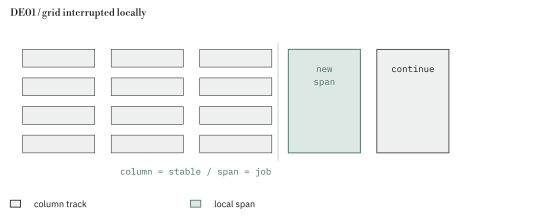
Most body-page families in the module study have two columns, while the examined 1983 Isle of Dread uses three. On X1 digital page 29, one section finishes in the first column while a new section begins across the other two. The change occupies a local part of the page. B3 also allows reading boxes to continue with open ends across a break. Both arrangements let a section change length within an established page structure, keeping adjacent material aligned while accommodating the uneven space that different encounters require. [L, pp. 3, 5; X1 digital p. 29; B3 digital pp. 11–12, 14–15]
Three kinds of boundary do different work here. The outside margin separates the publication from its surroundings. The column controls reading width and recurrent alignment. A box marks a change in the use or audience of its contents. A small referee-only consequence can sit directly beneath a player-facing description, with a clear label and enough space between them to separate the two acts of reading. An extensive equipment roster may need the full page width, while its labels retain the type and alignment used elsewhere in the book.
For a new encounter spread, keep two continuous text lanes and a narrow outside lane for keys. Let a wide threshold illustration interrupt the lanes once, then resume the prose on the same alignments beneath it. A table can span both lanes with its row labels at the left edge. To compare the arrangements, close the book, reopen it at the spread and locate the next key without reading the intervening paragraphs. Repeat with a short encounter and a long one, following the room number through any column or page break.