Module case studies · S2
White Plume Mountain
Atlas pages 35–36
In this chapter
Three objectives, with a problem at the point of return
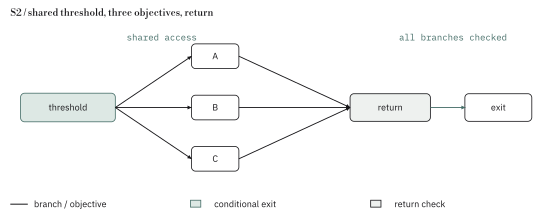
Three stolen weapons establish three concrete objectives before the party enters White Plume Mountain. The message supplied with the introduction gives each object a different set of environmental hints, and the owners recruit the expedition to recover them. The referee notes anticipate more than one session if the party investigates all three branches. The split map at the back of this file locates their routes. Each shares an entrance with the others, then leads through a different sequence of physical problems toward its reward. [S2, digital p. 3; introduction and referee notes; digital pp. 18–19, map.]
A flooded access route brings movement and observation into the same procedure. Mud hides the floor, slows progress and complicates probing, while a guardian at the intersection presents a verbal challenge before opening the routes. A diagram of the three retrieval branches begins with this common entrance and gate. A concealed connection below a pool adds a local alternative, so the larger branch arrangement contains choices within it as well as the initial choice among objectives. [S2, digital pp. 5–6; standard features and keys 1–2; digital p. 8, key 9.]
The individual encounters repeatedly ask players to reason about physical conditions. Hanging disks above boiling mud require attention to spacing, support and periodic eruptions. A rotating passage puts footing and exposure to attack together. A heat-induction corridor makes metal equipment a burden and lists several ways the referee might adjudicate attempts to carry it through. Each location changes the practical meaning of an ordinary action such as crossing, carrying or waiting, and the key keeps that changed condition beside the procedure for resolving it. [S2, digital pp. 7–10; keys 7, 11–12 and 19.]
White Plume Mountain
A local water circuit makes the difference between a branch and a loop especially clear. The suspended stream carries boats from one chamber to an ambush and then returns toward the starting chamber. Direction and current determine where a boat goes, and an arrow around the circuit records both. Nearby, a terraced room uses a section diagram to explain successive depths, retaining walls and the effects of a triggered release of water. The plan locates the terraces across the chamber; the section supplies the height differences needed to understand what happens when the water is released. [S2, digital p. 12; keys 23–26.]
The reward does not automatically end the journey. An optional end note permits a renewed barrier and a confrontation when a successful party tries to leave with multiple weapons. The referee may omit the episode if the group has already suffered heavily or intensify it for an unusually easy expedition. S2 also checks for wandering monsters each turn. These mechanisms put pressure on different parts of the journey: the branch obstacles govern particular crossings, recurring checks interrupt exploration, the water circuit carries travellers back, and the optional confrontation can obstruct their final departure. [S2, digital p. 5, wandering monsters; digital p. 15, end note.]