Module case studies · U1
The Sinister Secret of Saltmarsh
Atlas pages 25–26
In this chapter
An explanation beneath the haunting
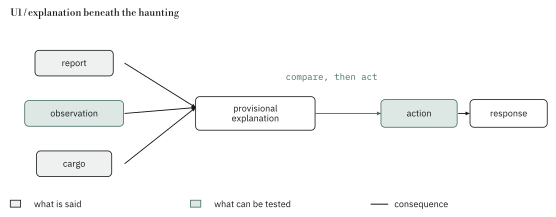
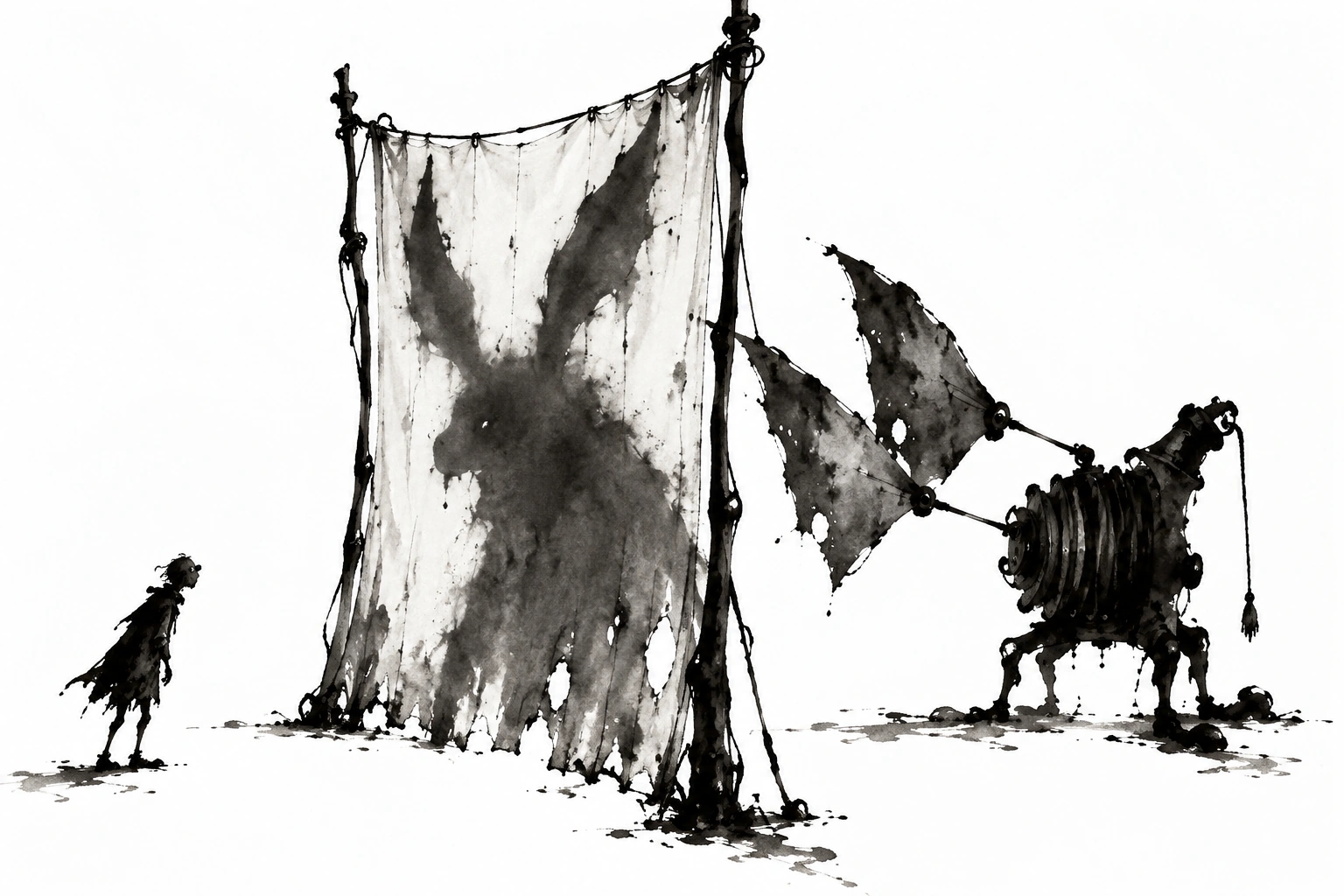
The Haunted House is introduced through a reputation that the referee already knows how to explain. U1 gives the referee the smuggling operation behind the apparent haunting while asking the players to discover that explanation through play [U1 d5–6]. Reports about the house shape the party’s expectations; visible conditions supply evidence to inspect; the private key describes the operation producing those conditions. An exterior illustration can establish what the party encounters on arrival, while a referee diagram connects the apparent disturbances to their concealed causes.
The two episodes also require different kinds of preparation. Saltmarsh serves as the place to rest and receive the next commission, and the module asks the referee to build much of the town’s local detail [U1 d4–5, d17]. The resulting hub-and-spoke structure joins two extensively keyed expedition sites through a settlement developed by the referee. Preparing the return to town therefore involves different work from preparing a visit to the house: the referee must supply the local people and services through which the next commission reaches the party.
The familiar split between boxed description and open referee information is stated explicitly, but the same guidance warns against treating people as permanent room furnishings [U1 d6]. Smugglers move, communicate and respond. A key establishes an initial condition that can be overtaken by events. A proposed response record links several room addresses to an alarm procedure. An unheard approach leaves the starting positions intact; an alarm changes the entries together, allowing the referee to track the response across several locations.
The Sinister Secret of Saltmarsh
Ned’s staged captivity provides a smaller and more local example of inference. The key gives the referee the deception, while the recently oiled lock creates a discrepancy the party may notice [U1 d11–12]. Inspection connects the physical condition of the door with the captive’s account. An original example could put a recently repaired hinge in an otherwise abandoned place, giving the players a visible detail to compare with what they have been told. The public drawing shows the repair, and the private note identifies who made it and why.
Before boarding the Sea Ghost, deductions about the signalling code and plans made with the excise men affect the party’s timing, approach and risk of discovery [U1 d17–19]. Once aboard, people, documents and cargo provide routes toward understanding the arms shipment, and the conclusion allows for missed or mistaken deductions [U1 d18, d24–25, d29]. A diagram can connect the shore evidence to a boarding plan, then connect the discoveries aboard the vessel to an explanation of the shipment and the next expedition. The party’s working account changes as it questions a witness, reads a document or finds the concealed weapons.